Designers (24)
Close
Michel Comte’s life in photography did not begin as a search for style. It began as a search for understanding. A discipline shaped not only by looking, but by learning how to see within context.
From the beginning, images were never isolated objects. They were connected to history, to memory, and to the cultural references that surround every act of looking. Photography, for him, was never simply a technical process. It was an intellectual one, grounded in research, observation, and the accumulation of knowledge that gave each image a place within a broader visual conversation.
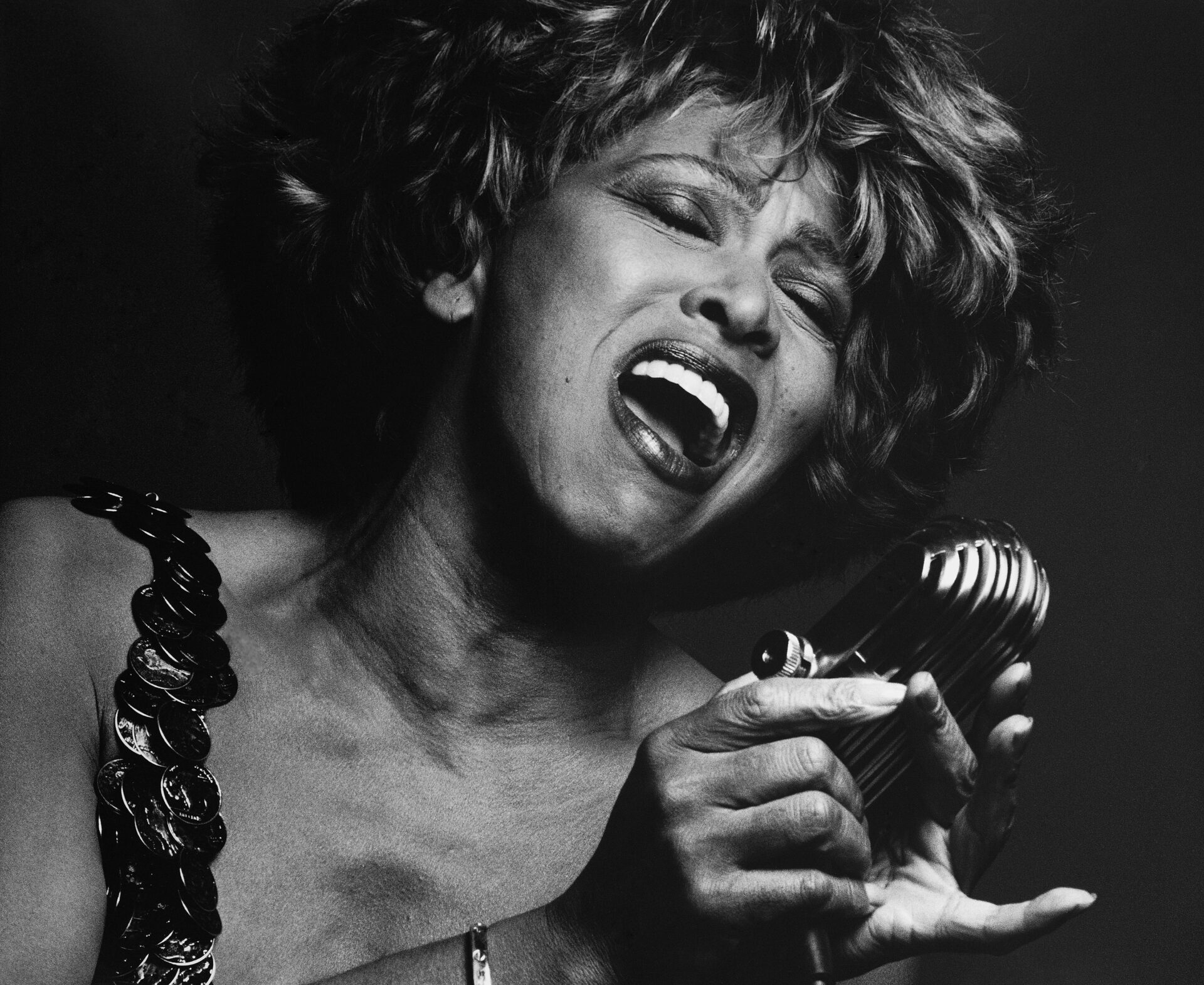
Tina Turner. Raw, fearless, and incandescent. © ÉDITIONS COMTE / Courtesy of CAMERA WORK Gallery
Preparation defined his method early on. Before arriving on set, before positioning a subject, before lighting was arranged, there was reading. Books became essential to the construction of his images. Over time, this habit expanded into a personal library that grew to several thousand volumes. These books were not collected as decoration. They were working tools — references that informed decisions long before the camera was lifted.
Before photographing a subject, he searched for connections across disciplines. Painting, sculpture, architecture, literature, and historical imagery formed the foundation of his visual vocabulary. The photograph did not begin at the moment of exposure. It began in research and in the careful accumulation of knowledge that allowed the image to carry meaning beyond surface appearance.
This discipline remained constant even as his professional life accelerated into one of the most demanding environments in photography.
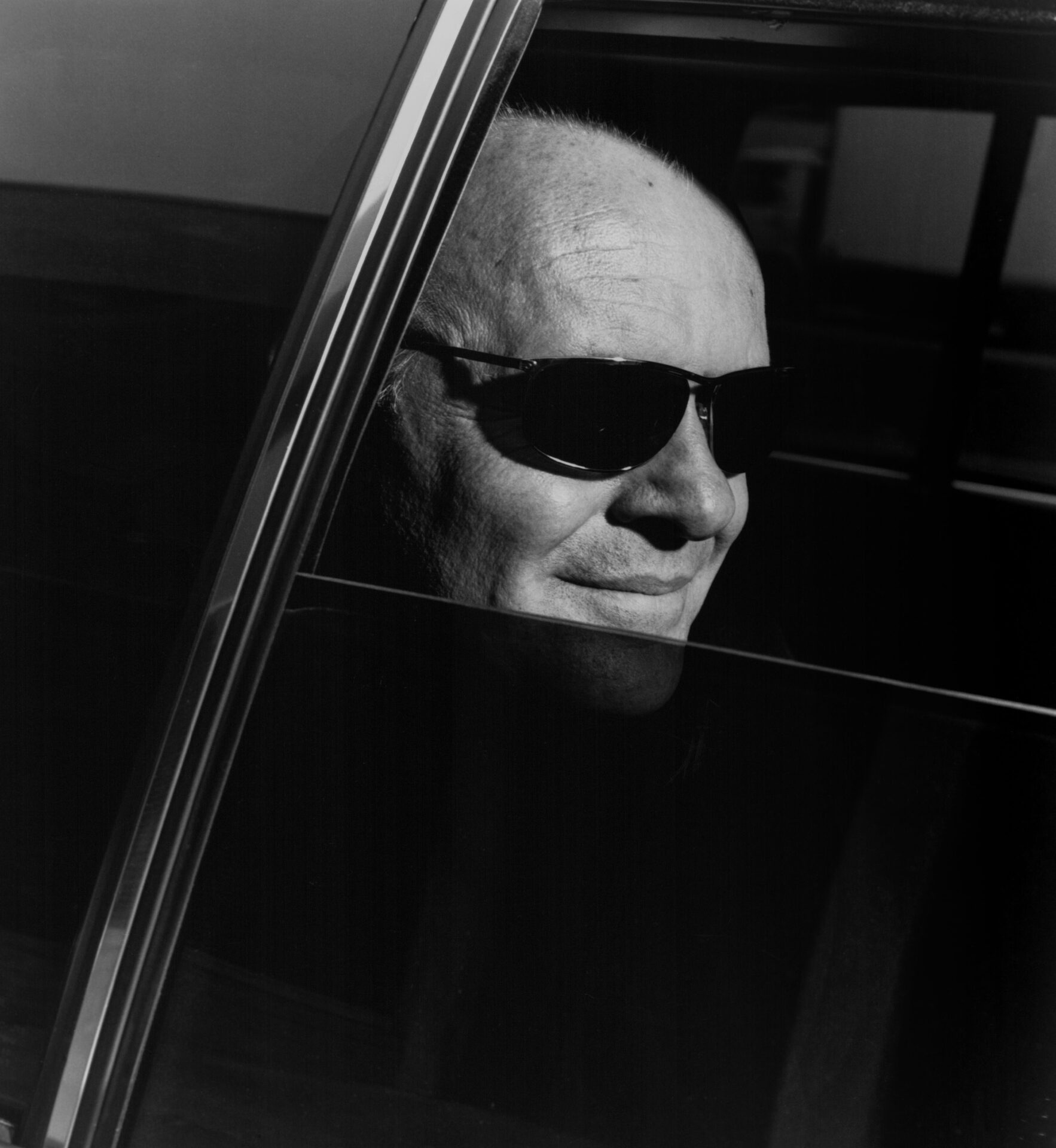
Half concealed behind glass, Anthony Hopkins becomes a portrait of quiet mystery, where light and shadow reveal as much as they conceal. © ÉDITIONS COMTE / Courtesy of CAMERA WORK Gallery
Working alongside Karl Lagerfeld introduced Michel Comte to an environment defined not only by creativity, but by extraordinary pace. At the time, he was very young, learning within a demanding professional setting shaped by individuals whose influence extended across fashion, publishing, and cultural production. The experience was formative, shaped by opportunity as much as observation. He has often described himself during those years as fortunate to be able to work within that environment — learning quickly while surrounded by figures whose discipline and curiosity defined the atmosphere of the studio.
Within this setting, Jacques de Bascher remained a constant presence. Closely connected to Karl, he gathered books, references, and materials that contributed to the intellectual preparation behind many projects. The environment functioned not simply as a place of production, but as a laboratory of ideas in which research, reading, and cultural exchange informed visual decisions.
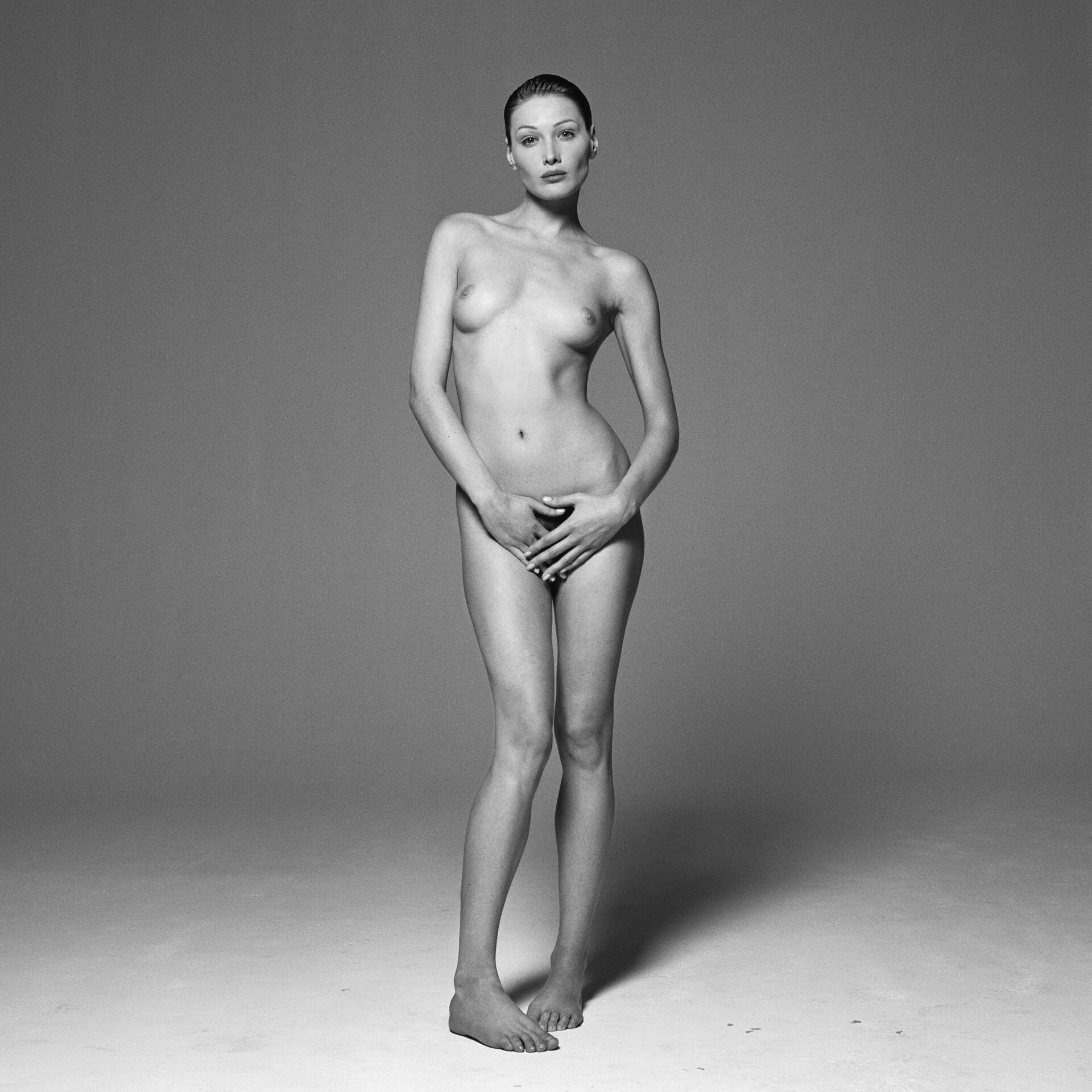
Carla Bruni. Stripped of distraction, the portrait becomes a study in vulnerability and quiet confidence. © ÉDITIONS COMTE / Courtesy of CAMERA WORK Gallery
Michel’s own work during that period extended beyond a single collaboration. He contributed to projects across several houses, including Ungaro, Givenchy, and Dolce & Gabbana, building relationships that broadened his professional experience. Karl remained instrumental in opening the earliest doors, recognizing his potential and giving him the opportunity to begin working at a professional level that demanded discipline, adaptability, and sustained effort.
Friendships also played an essential role. Connections with figures such as Paloma Picasso and Raphael Lopes Sanchez expanded his network and introduced new possibilities for collaboration. Through Karl, Michel later met André Leon Talley, beginning a friendship that led to numerous editorial projects, including work connected to The New York Times.
Through André Leon Talley, Michel was introduced to Tina Brown during her time at Vanity Fair, opening the door to further editorial opportunities and extending his presence within the magazine world.
Karl was the one who first recognized Michel’s potential and gave him the decisive first break that allowed his professional path to begin.
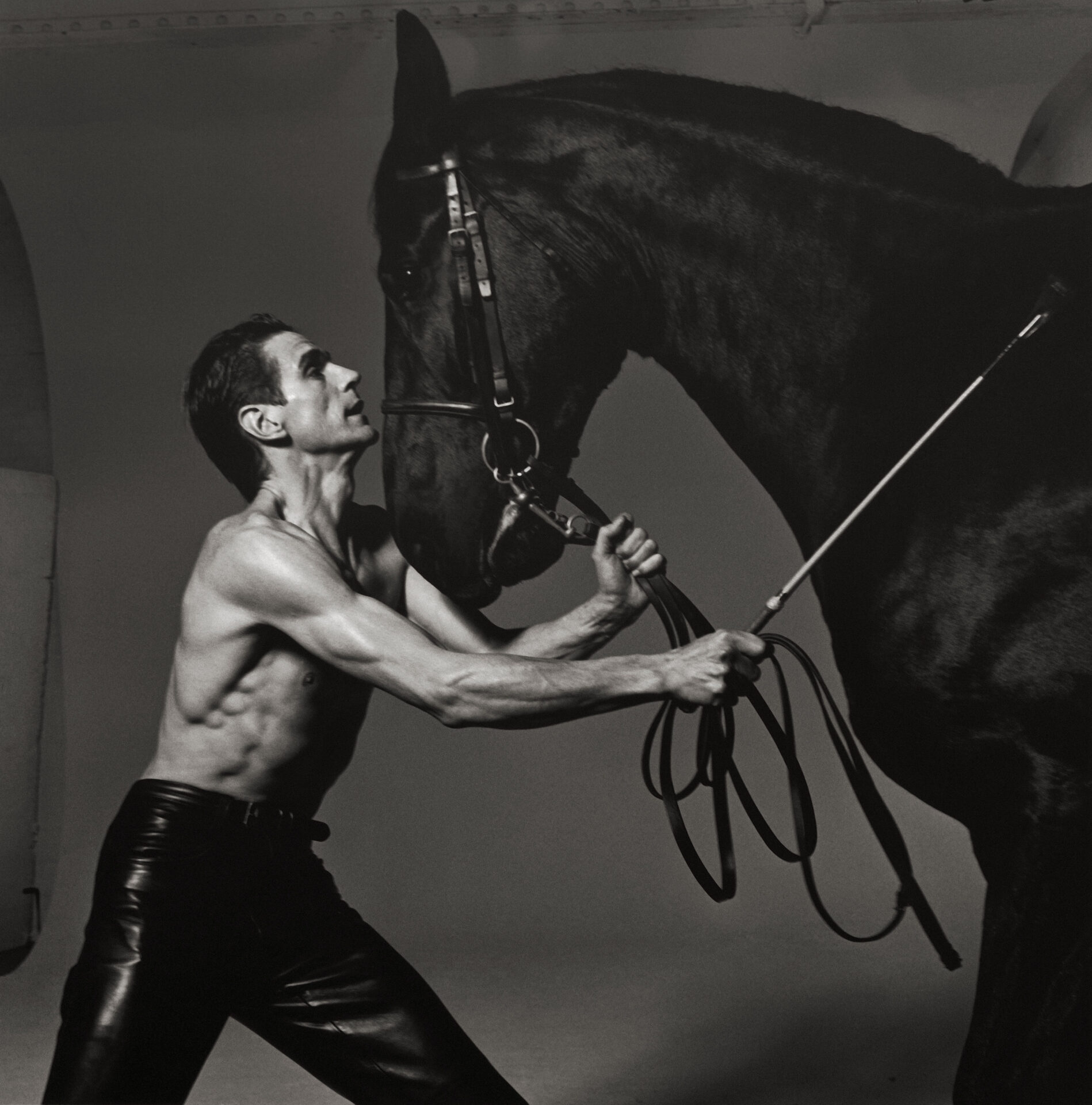
Jeremy Irons. Strength meets stillness. A portrait shaped by trust. © ÉDITIONS COMTE / Courtesy of CAMERA WORK Gallery
Movement defined those years. Travel between New York and Paris became part of the routine of life. Days were measured through production cycles rather than calendar time. Preparation followed execution, and execution gave way immediately to the next assignment. The pace created momentum, but it also demanded endurance.
Despite the pace, preparation never disappeared. Research remained central to Michel’s approach. Even within compressed schedules, reading continued to guide visual decisions. References were gathered before each assignment, allowing images to emerge from context rather than improvisation alone. Photography remained grounded in knowledge, not speed.
Over time, this sustained rhythm created both experience and pressure. The work accumulated without interruption, shaping a life defined by movement and expectation. What began as momentum gradually became intensity.
That intensity would eventually require distance.
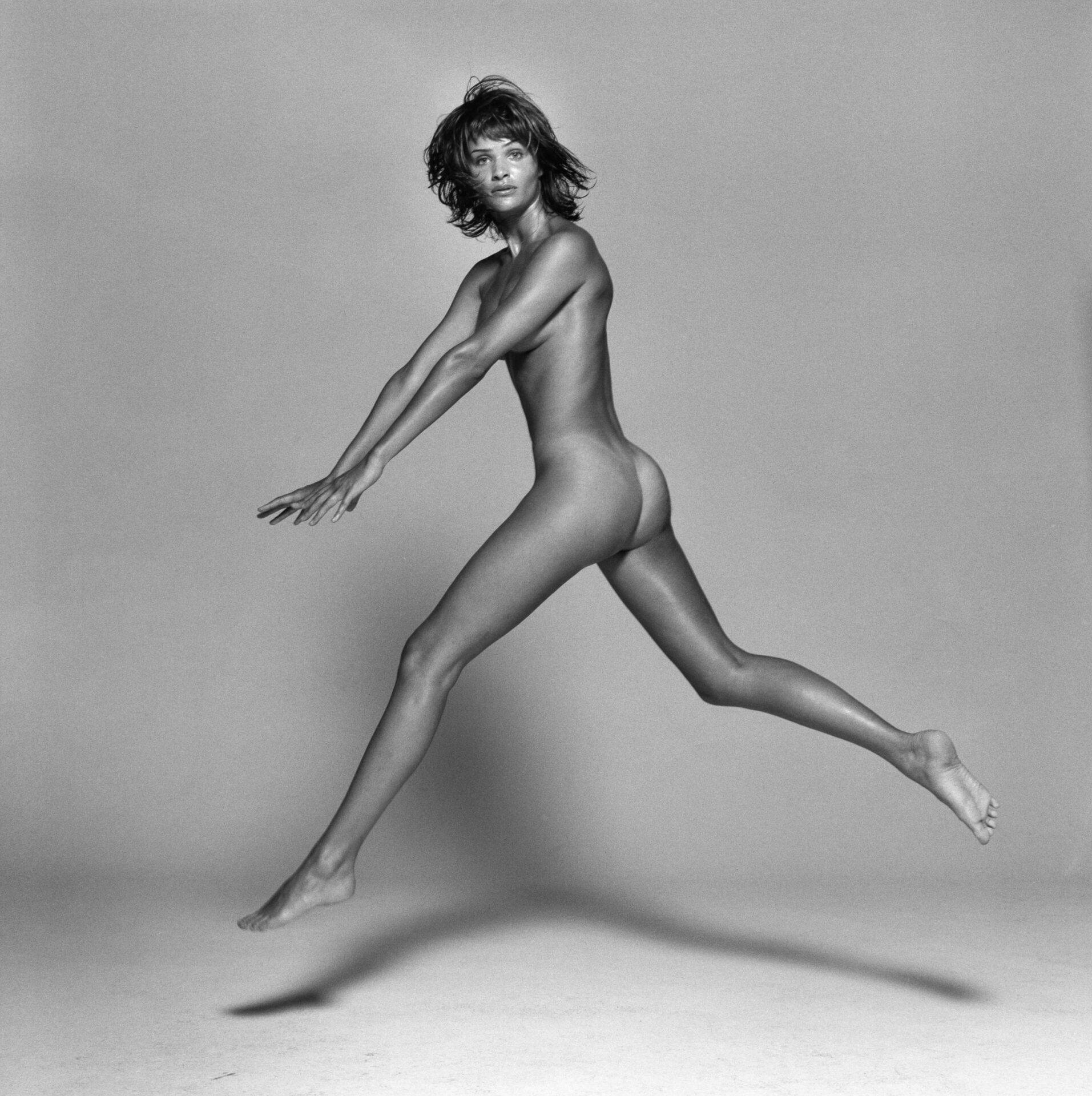
Helena Christensen. Weightless yet grounded, movement becomes form. © ÉDITIONS COMTE / Courtesy of CAMERA WORK Gallery
Editorial work gradually expanded alongside fashion production, introducing new collaborators and new forms of creative dialogue. Photography began to move beyond the controlled environments of campaigns into editorial spaces where narrative carried equal importance to image. Among those who shaped this phase was Alexander Lieberman, whose editorial vision reinforced the importance of clarity, discipline, and conceptual structure within photographic work. His presence marked an entry into a lineage of editorial thinking in which images were expected to communicate with precision and intention.
It was within this context that Michel began working closely with Franca Sozzani.
Their work together unfolded across many years, shaped through continuity rather than isolated commissions. Assignments followed one another in steady succession, each demanding discipline, preparation, and trust. Photography did not exist as a series of singular moments, but as part of an ongoing editorial dialogue in which each project contributed to the next.
Franca possessed a rare clarity of vision. She approached photography not as ornament, but as narrative — something capable of carrying meaning beyond appearance. Under her direction, images were expected to communicate ideas, reflect cultural tensions, and speak to the moment in which they were created. Photography was never treated as surface alone. It functioned as language.
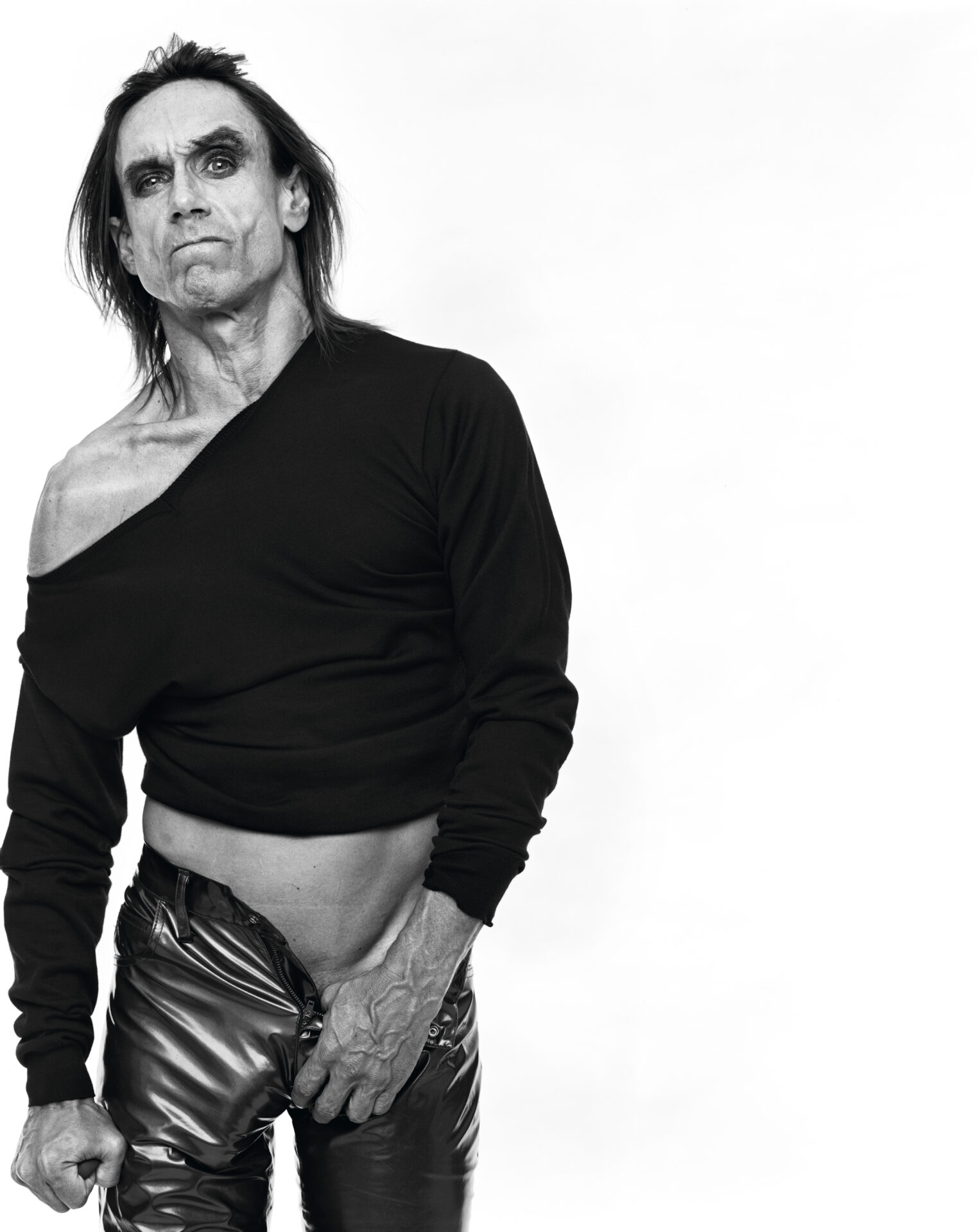
Iggy Pop. Character endures long after rebellion becomes legend. © ÉDITIONS COMTE / Courtesy of CAMERA WORK Gallery
Working with her required intellectual engagement as much as technical precision. Each assignment demanded preparation, research, and attention to context. Photography became part of a larger structure shaped by editorial intention rather than aesthetic impulse alone. The work gained depth through repetition, continuity, and the shared understanding that images carried responsibility beyond visual impact.
He worked alongside her for years, in a continuity that remained unbroken until her passing — bringing to a close one of the most defining chapters of his professional life.
The years they worked together formed a continuous body of work shaped through discipline, trust, and sustained engagement.
Her death marked the closing of that long chapter; not abruptly, but with the full weight of years that had given structure and direction to a significant portion of his life.
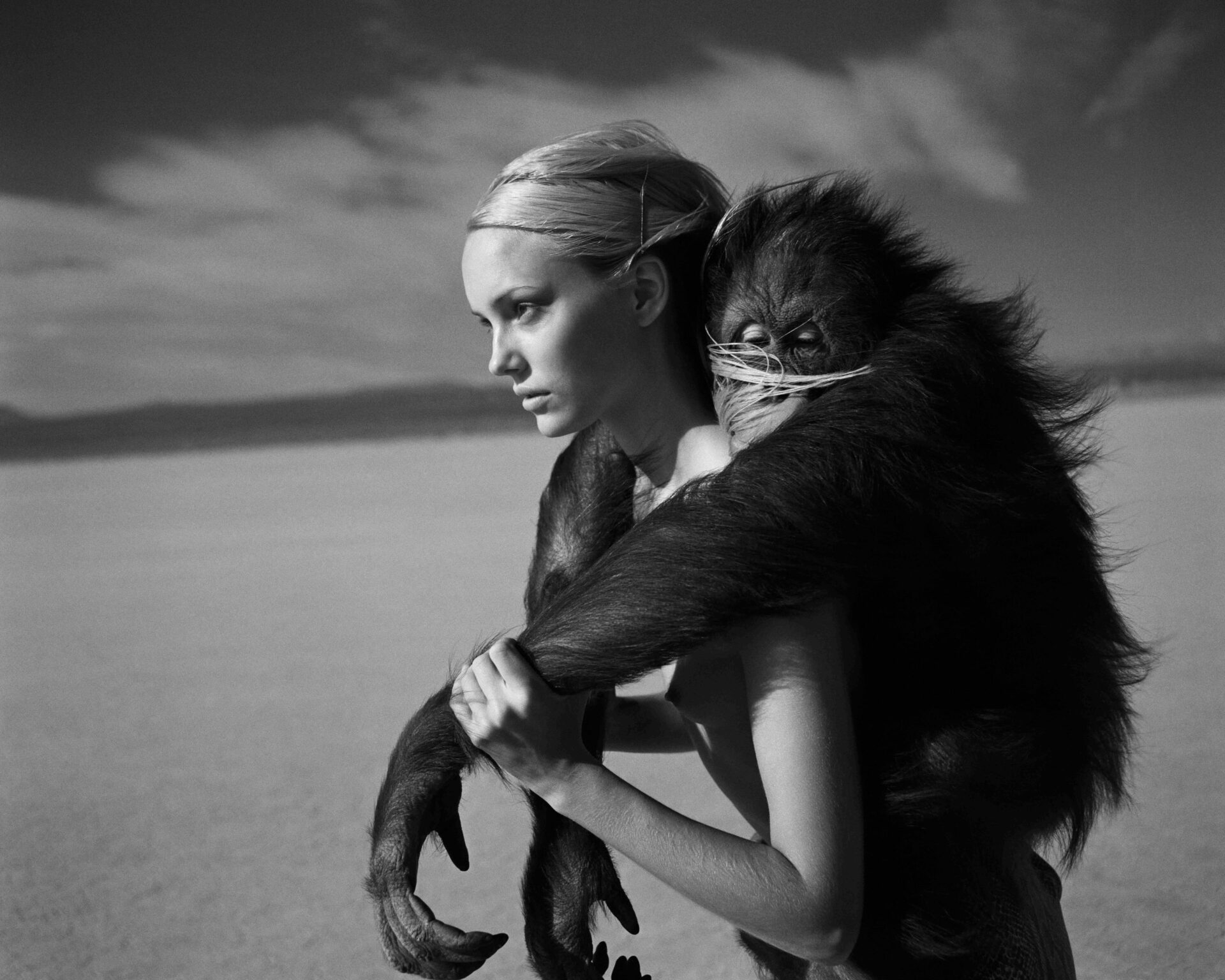
Beauty. Discovered through shared presence and trust. © ÉDITIONS COMTE / Courtesy of CAMERA WORK Gallery
During these years, movement defined daily life. Travel became constant. Cities shifted in rapid succession. Production followed production without pause, and expectations continued to accelerate. That accumulation intensified until distance became necessary.
By the mid-1980s, the pace that had defined Michel Comte’s life required interruption.
Years of continuous movement had created pressure without relief. Assignments followed one another without pause. Production cycles replaced ordinary time, leaving little space for distance or reflection. What had once felt energizing gradually became unsustainable.
He withdrew from that pace — not as retreat, but as decision.
He travelled to Tibet and remained there for approximately one year. The journey removed him from the environments that had structured his professional life. There were no studios, no deadlines, and no editorial demands pressing forward. The rhythm of daily life shifted completely.
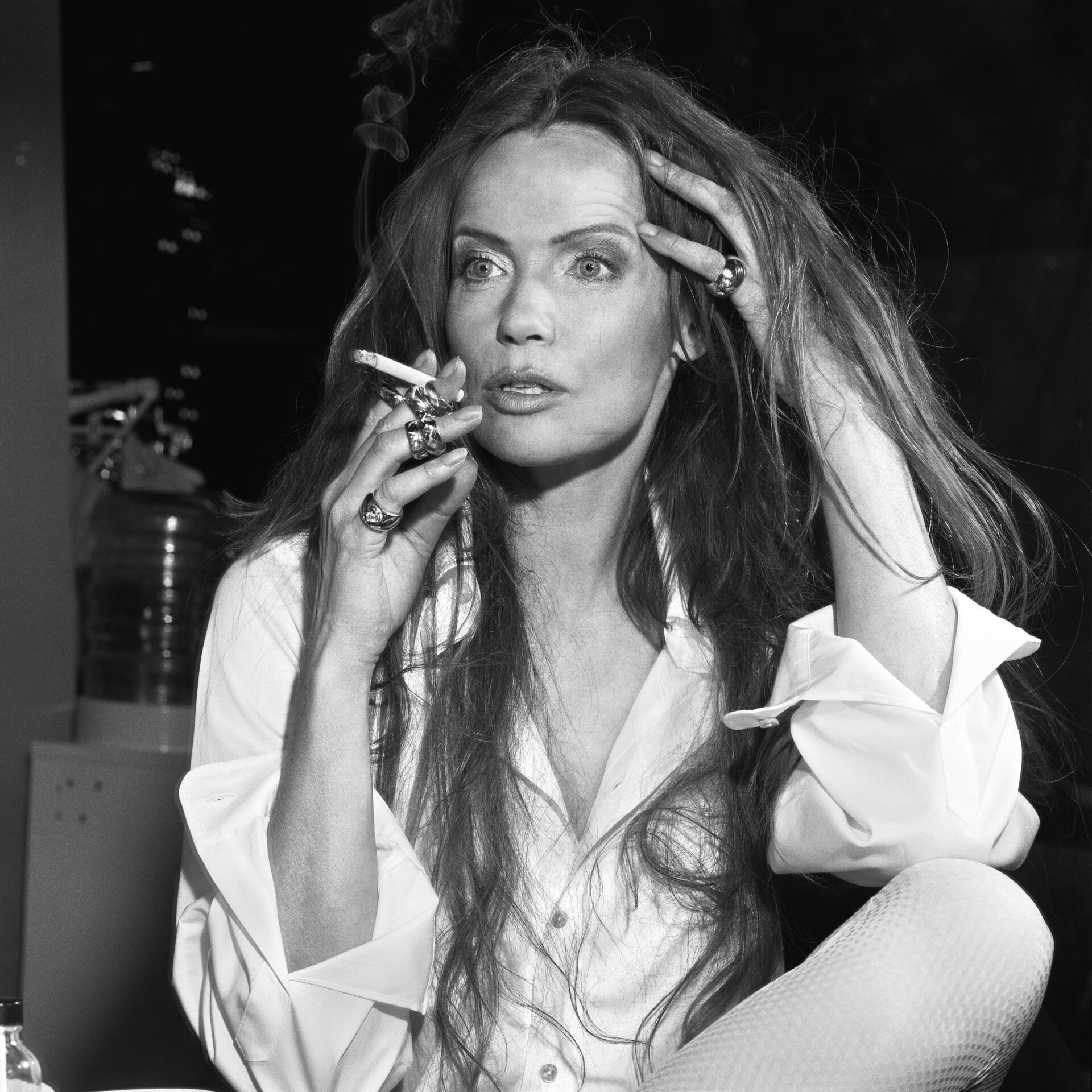
Time refines presence without diminishing mystery. © ÉDITIONS COMTE / Courtesy of CAMERA WORK Gallery
Time returned. Movement slowed. Observation became quieter and more deliberate. The landscape imposed patience, requiring attention rather than reaction. Days unfolded without urgency, structured by routine rather than expectation.
Silence became part of daily experience — not silence as absence, but silence as presence, an environment that required listening as much as looking. The stillness created distance from the pace that had defined earlier years, allowing reflection to emerge gradually rather than abruptly.
During this period, he encountered individuals whose presence shaped the experience further. Among them was the Dalai Lama. The meeting did not appear as spectacle, but as encounter — a moment grounded in conversation rather than ceremony.
The time spent in Tibet did not erase what had come before. It reorganized it.
The altered attention he carried home — quieter, more deliberate — would shape everything that followed.
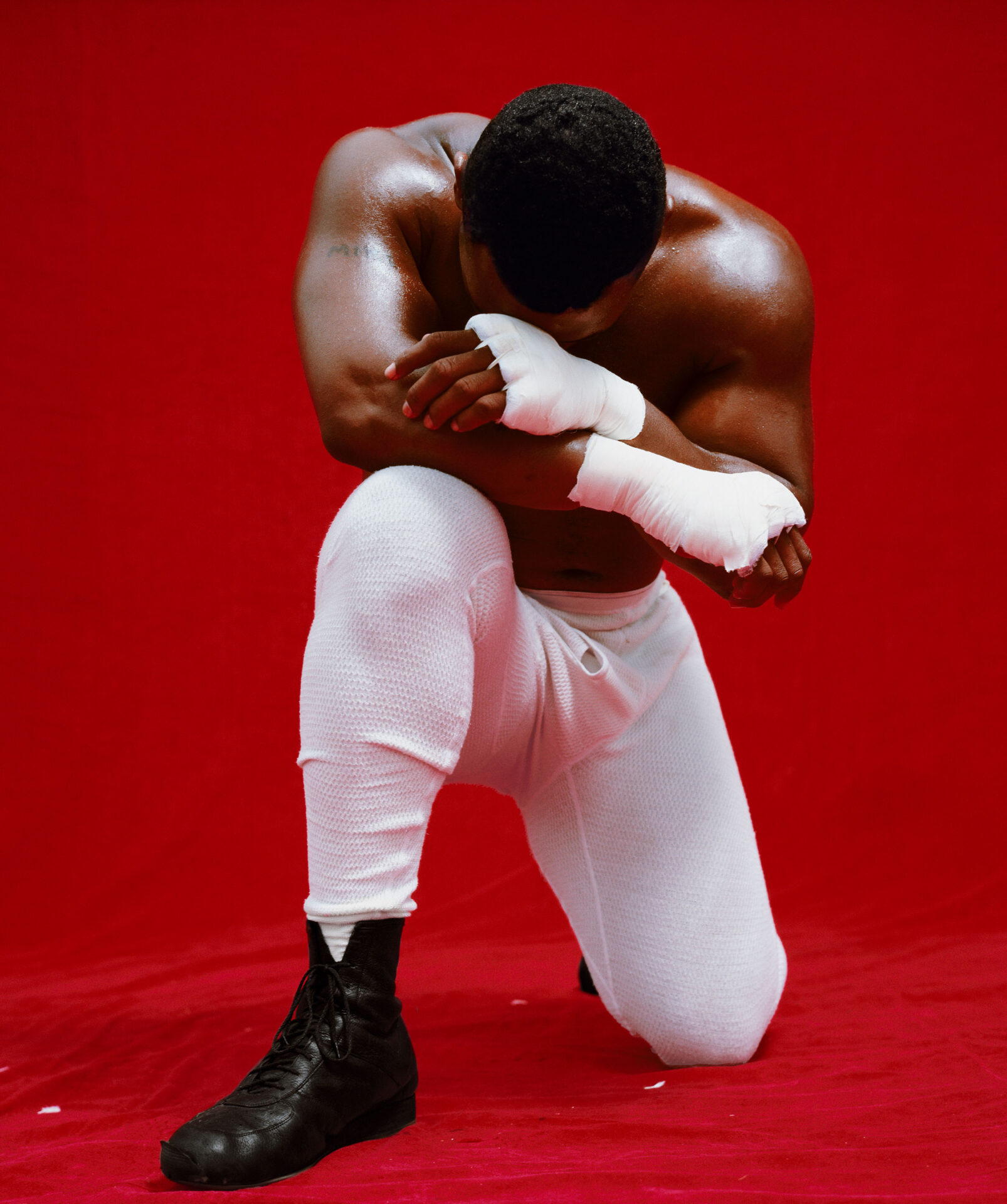
Mike Tyson. Power held quietly before the first bell. © ÉDITIONS COMTE / Courtesy of CAMERA WORK Gallery
Image Credits
Selected photographs reproduced courtesy of CAMERA WORK Gallery, Berlin, from the exhibition Michel Comte, on view from 11 July to 29 August 2026, and published with permission.
Studio Fenice extends its sincere thanks to CAMERA WORK Gallery for its generous support of this editorial.
This editorial exists thanks to Michel Comte’s generosity in sharing not only his photographs, but also his time, memories, and reflections. Studio Fenice is deeply grateful to Michel and Ayako Yoshida for their trust, encouragement, and the materials they so kindly made available for this publication.