Designers (24)
Close
In November 1971, at the age of twenty-five, Birutė Galdikas arrived in the rainforests of Indonesian Borneo to begin a study many believed could not be done. The place that would become Camp Leakey, reached after a full day’s boat journey up the Sekonyer River, was little more than a bark-walled hut with a thatched roof, surrounded by swamp forest. Somewhere above, moving through a canopy dense enough to conceal them almost completely, were the animals she had travelled so far to understand.
At the time, little was known about orangutans in the wild. Their largely arboreal lives, wide-ranging movements and comparatively solitary nature made them difficult to locate and even harder to follow. Galdikas learned to read the forest for signs of their presence: the movement of branches overhead, the sound of breaking vegetation, fruit falling through the canopy. Once she found an orangutan, she would follow for as long as the forest allowed, sometimes until the animal settled into its nest for the night, returning before dawn in the hope of continuing the observation. In her first four years in Borneo, Galdikas and her then-husband, photographer Rod Brindamour, accumulated more than 5,000 hours observing wild orangutans. What had seemed almost inaccessible began, slowly, to reveal itself.
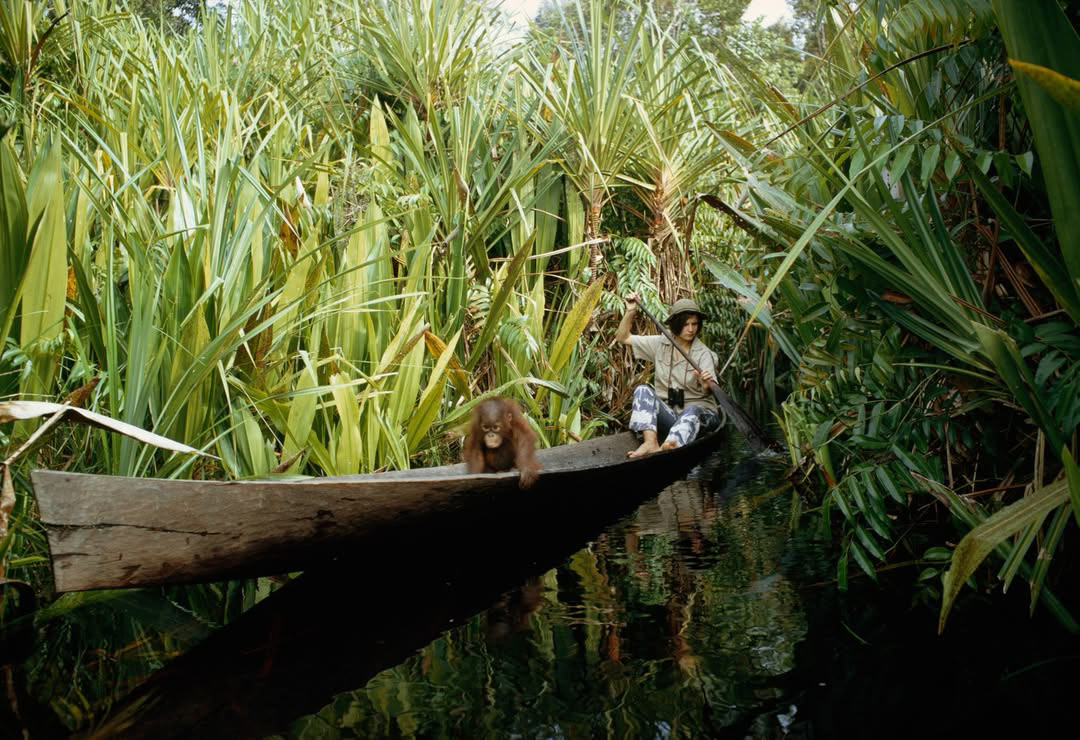
Birutė Galdikas navigating the waterways of Borneo. © National Geographic.
The journey to Borneo had begun years earlier. Born in 1946 in Wiesbaden, Germany, to Lithuanian parents who had fled Soviet control of their homeland, Galdikas was raised in Canada and went on to graduate work in anthropology at the University of California, Los Angeles. Her fascination with human evolution drew her towards the great apes and to Louis Leakey, the palaeoanthropologist who had already encouraged Jane Goodall’s study of wild chimpanzees in Tanzania and later supported Dian Fossey’s work with mountain gorillas in Rwanda. Galdikas wanted to undertake the equivalent study of orangutans. “I was born to study orangutans,” she would later write in Reflections of Eden.
It is easy, looking backwards, to turn what followed into a perfectly arranged history: Goodall with chimpanzees, Fossey with gorillas, Galdikas with orangutans. The three women would become known as the “Trimates”, their names joined through Leakey and through the field studies each pursued. Yet the neatness of the grouping can obscure how different their lives were. They entered different landscapes, worked among animals with profoundly different social structures and temperaments, and each found her own response to the boundary between scientific observation and personal involvement.
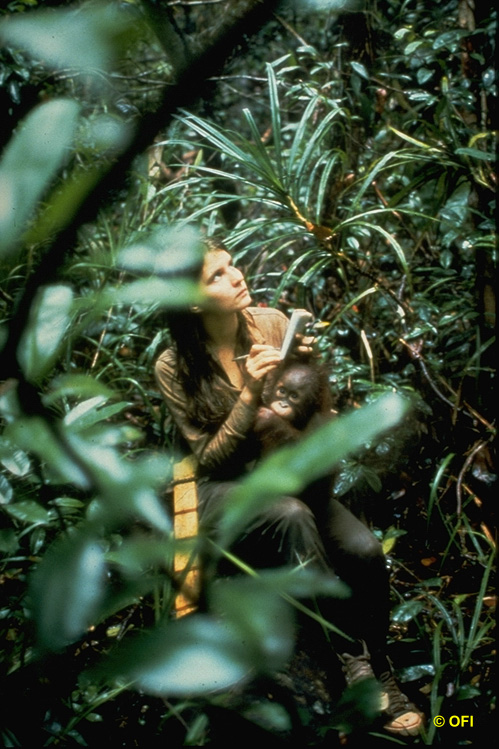
Birutė Galdikas with a young orangutan in the Borneo rainforest. © OFI.
For Galdikas, understanding came slowly, because orangutan life demanded it. Animals could vanish into the forest and not be seen again for long stretches, and their apparent solitude concealed a more intricate social world than earlier descriptions had suggested. Through patient observation, relationships emerged: the prolonged dependence between mothers and offspring, encounters between males and females, patterns of association and avoidance, individual temperaments, communication and learning. Orangutans were not simply isolated creatures moving independently through the canopy. Their social lives followed a different rhythm, one that only time could make visible.
Few relationships revealed this more clearly than that between a mother and her young. Orangutan infants remain dependent on their mothers for years, learning what to eat, how to travel through the canopy, where to find food and how to build the nests in which they sleep. Females reproduce exceptionally slowly. Galdikas was the first to document just how long the gap between births can be, averaging 7.7 years at Tanjung Puting, which makes each bond between mother and offspring especially significant. For her, remaining in the forest meant that observation could extend beyond isolated behaviours into individual histories. An infant seen clinging to its mother could later be encountered as an independent animal; individuals disappeared and returned; relationships changed. The forest was no longer simply a site of study but a place of lives unfolding across generations.
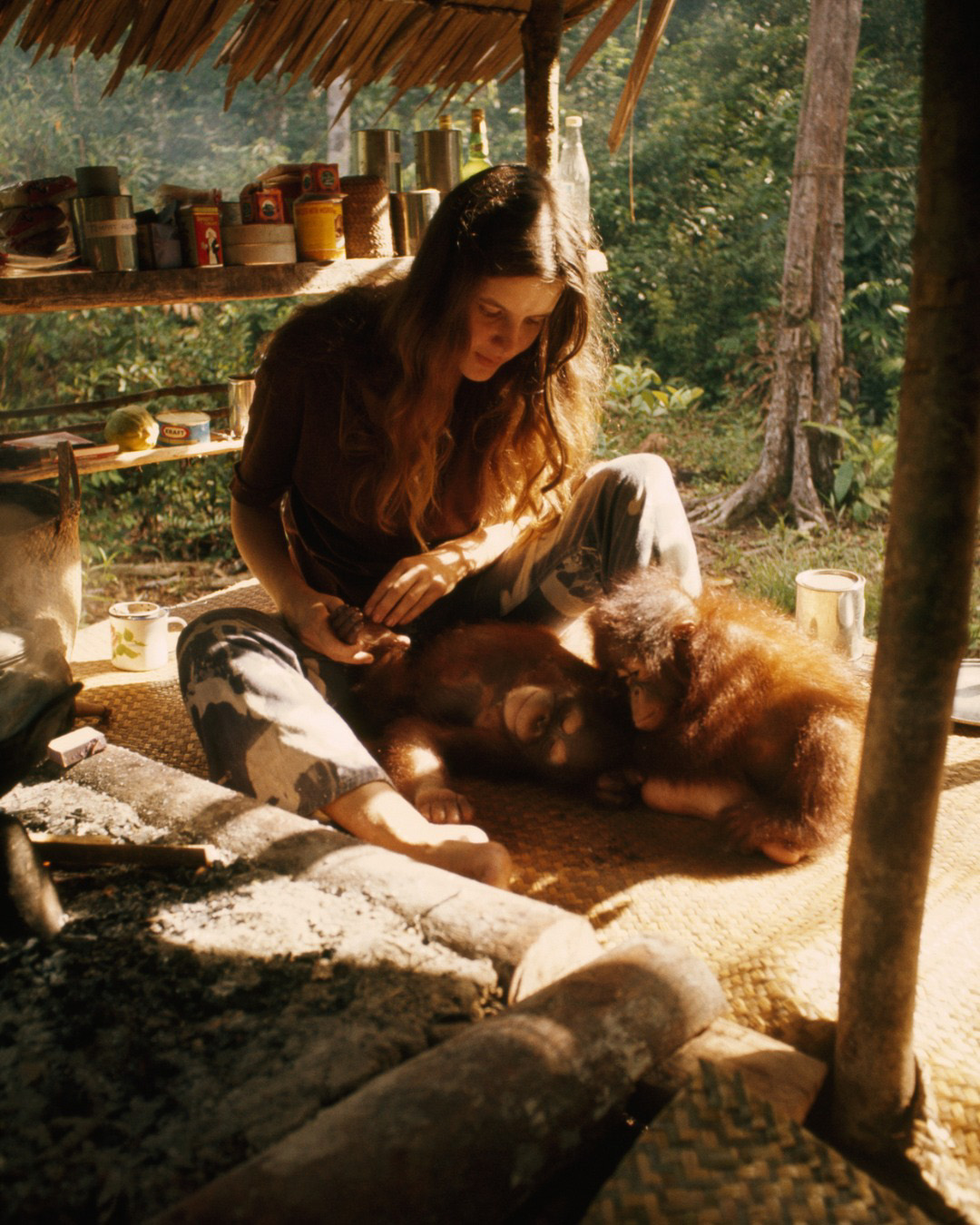
Birutė Galdikas with young orangutans at Camp Leakey. © National Geographic.
The longer she remained, however, the more difficult it became to separate those lives from what was happening beyond them. Orphaned and confiscated orangutans began arriving at Camp Leakey during the early years of the research. The first was Sugito, a year-old infant who had been kept in a small crate. Some were victims of the illegal pet trade; others had been displaced as forests were cleared. Galdikas had gone to Borneo to observe wild animals, yet increasingly she found herself caring for animals whose lives had already been altered by human activity. The distinction between research and responsibility was becoming harder to maintain.
Over time, her work expanded from observation into rehabilitation and conservation. In 1986 she founded Orangutan Foundation International, which carried the work on into habitat protection and reforestation. The survival of the species could not be separated from the survival of the rainforest itself. Logging, mining, fire and agricultural expansion were transforming landscapes across Borneo and Sumatra, and for an animal whose life is so intimately bound to the forest canopy, habitat loss meant the erosion of an entire way of existing. The trees were not simply surroundings: they provided food, shelter and pathways through the landscape, and formed the environment in which knowledge passed from one generation to the next.
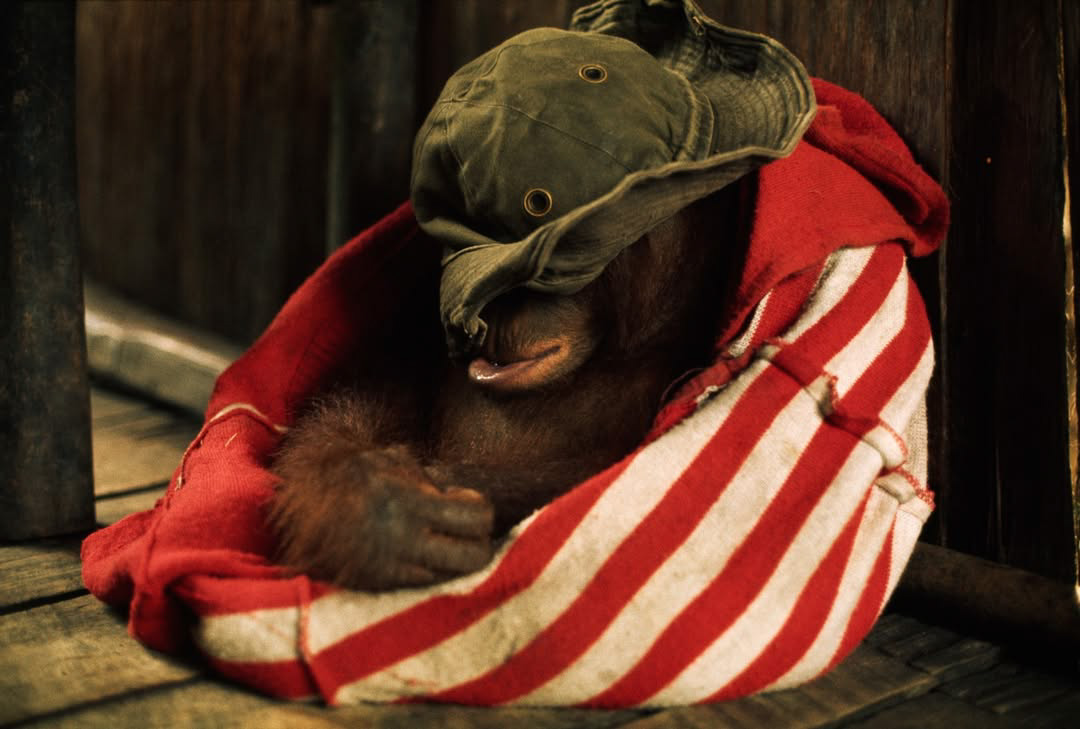
A young orangutan wrapped in a blanket. © National Geographic.
Galdikas’s work therefore moved gradually outward, from individual orangutans to the forest that sustained them. What had defined those earliest days at Camp Leakey remained constant: attention maintained over time. More than five decades of observation offered something that shorter field studies could not. Individuals aged and disappeared, demographic patterns shifted and pressures around the forest intensified. Changes that might have remained invisible within a few years became apparent only across decades. Duration itself became part of the knowledge.
There is something important in this persistence. Conservation is often encountered publicly through moments of crisis — a burning forest, a displaced animal, a species moving towards extinction — but the work that follows those moments is slower and far less visible. An animal that has been rescued must continue to be cared for; a damaged forest requires years to recover; land that has been protected must remain protected; and what is learned must be handed on to new researchers and conservationists. Galdikas’s life became intertwined with this quieter continuity, returning again and again to the same landscape long after the novelty of discovery had faded.
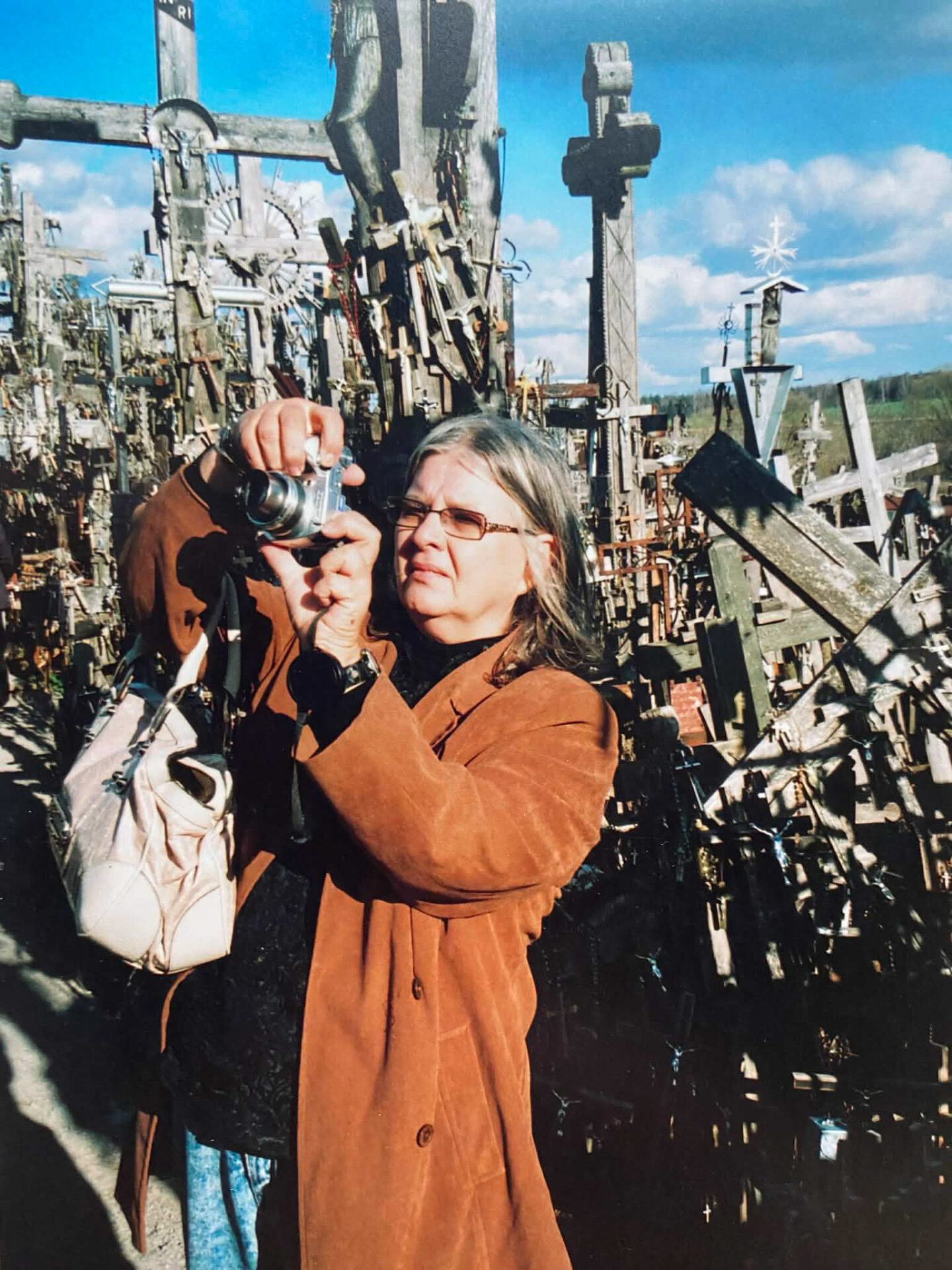
Birutė Galdikas photographing the Hill of Crosses in Lithuania.
Her path was not without complexity. The convergence of field research, rehabilitation and advocacy has long raised questions about intervention and habituation, and about how far an observer should become involved in the lives she studies. Such tensions are part of the history of primatology and conservation, and they resist simple conclusions. What is unmistakable in Galdikas’s story is the sheer duration of the commitment. A young researcher’s wish to understand an elusive great ape became a lifetime spent confronting what that understanding revealed.
It is here that her story returns to Jane Goodall and Dian Fossey. Their personalities, methods and circumstances differed, as did the animals and landscapes to which they devoted themselves. Together, though, their work altered the way great apes were perceived. Through years of close observation, animals once discussed largely as species became recognisable as individuals: beings with relationships, histories, intelligence, memory and distinct ways of inhabiting the world. The significance was not that chimpanzees, gorillas or orangutans should be understood as human, but that sustained attention made the old certainty of human exceptionalism increasingly difficult to maintain.
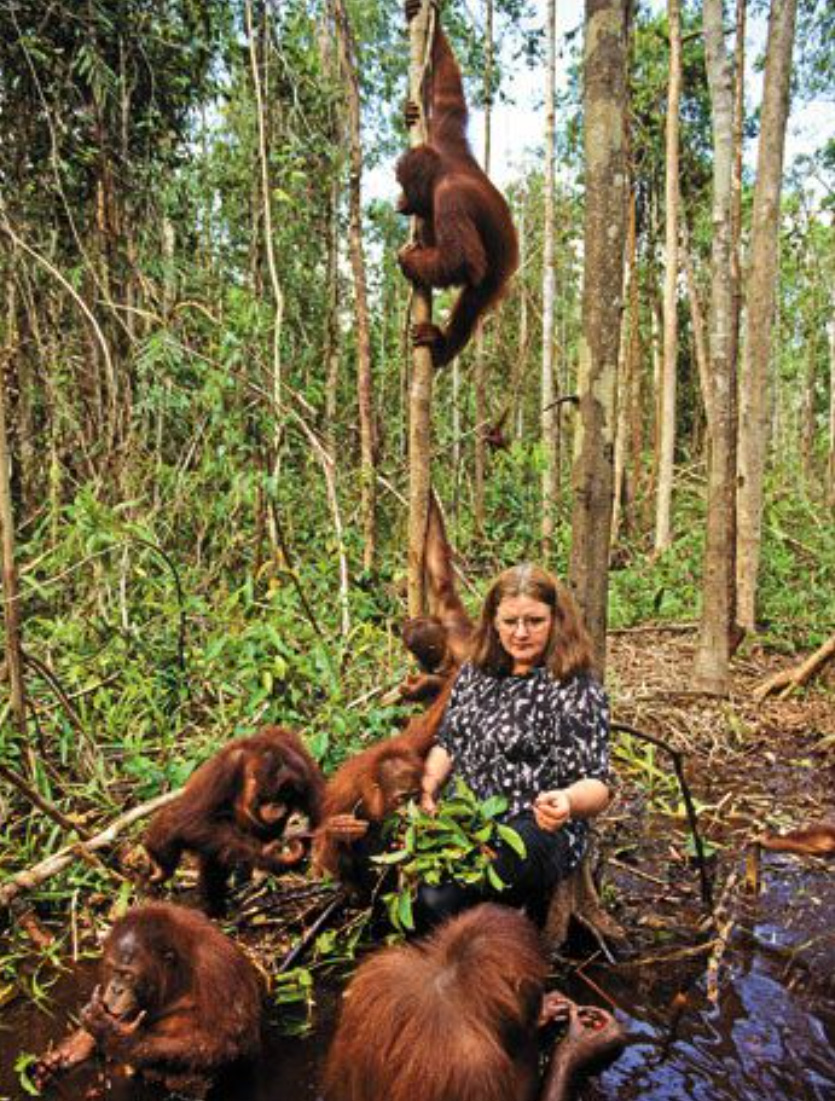
Birutė Galdikas surrounded by orangutans in the forests of Borneo.
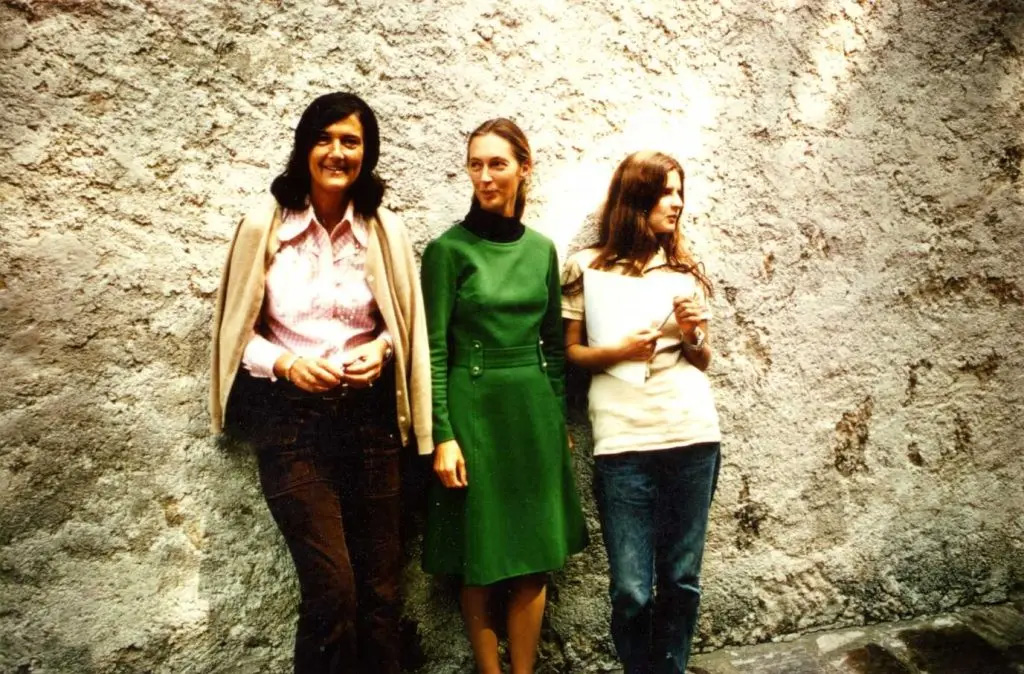
Three remarkable women, united by compassion, courage, and the enduring power of kindness.
Within Echoes of Kindness, this is perhaps where the three stories meet. Goodall’s work with chimpanzees challenged assumptions about the distance separating human beings from other animals, and showed what could happen when another species was observed without the assumption that difference meant inferiority. Fossey’s life with mountain gorillas brought the question of protection into sharper and more difficult territory. Galdikas carried that responsibility across more than half a century, through changing forests, generations of orangutans and an escalating struggle over the landscapes on which their survival depends.
Galdikas died on 24 March 2026 in Los Angeles, at the age of seventy-nine, the last of the three Trimates. Her work continues through Orangutan Foundation International and a newly established Indonesian foundation led by her son, Frederick Bohap Galdikas.
She had gone into the forest in 1971 wanting to understand how orangutans lived. The answer could never be contained within behaviour alone. To understand them was eventually to understand the trees through which they moved, the mothers from whom they learned, the slowness of their lives and the vulnerability created when that continuity was broken.
What began as observation became attachment; attachment became responsibility; and responsibility became the work of a lifetime.
The forest required her to be patient enough to see.