Designers (24)
Close
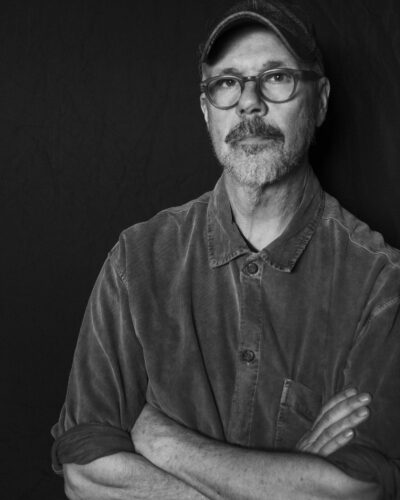
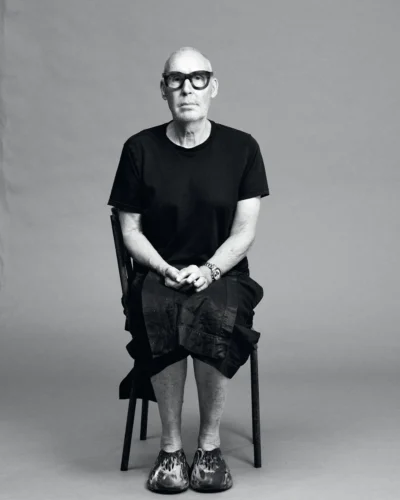
“There’s a quietness to the form that allows the material to take center stage,” says Marc Personick, describing the guiding philosophy behind Monolith—the design studio he founded in 2023. Trained as an architect, Personick brings an elemental clarity to his work: an affinity for scale, for sculptural gestures, and for materials in their rawest form. Often, each piece is made from a single block—carved, cut, or reassembled with reverence and restraint.
A native New Yorker, Personick moves fluidly between New York and Mexico City, where his pieces are fabricated. But the latter is more than a production site—it’s a presence that inhabits the work. “There’s a lot of influence from the past here,” he says. “Especially in terms of Brutalism and materiality.”
Monolith Archives
“Brutalism strips out all the extras and focuses on the basics—the form.”
Monolith Archives
Monolith Archives
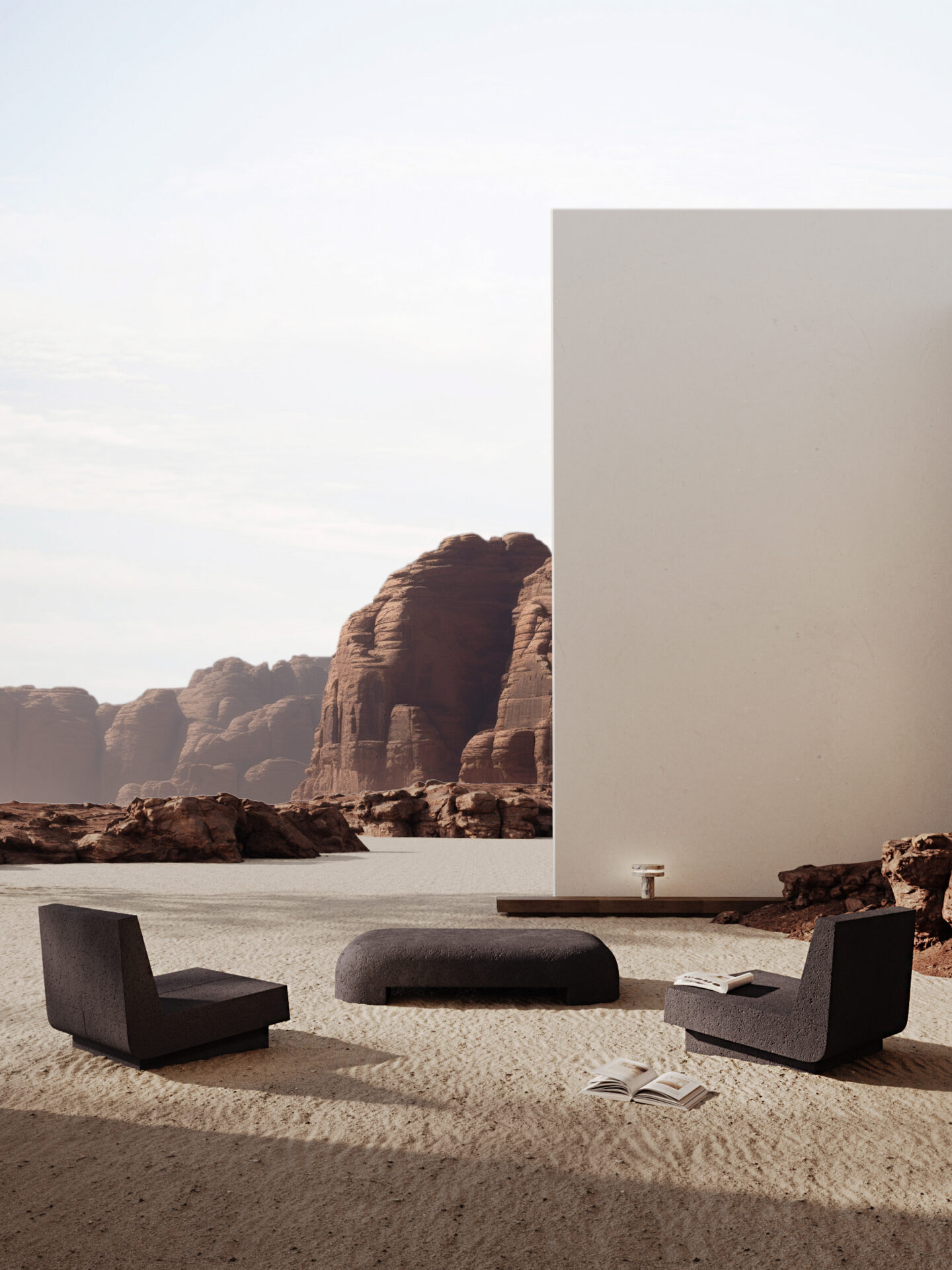
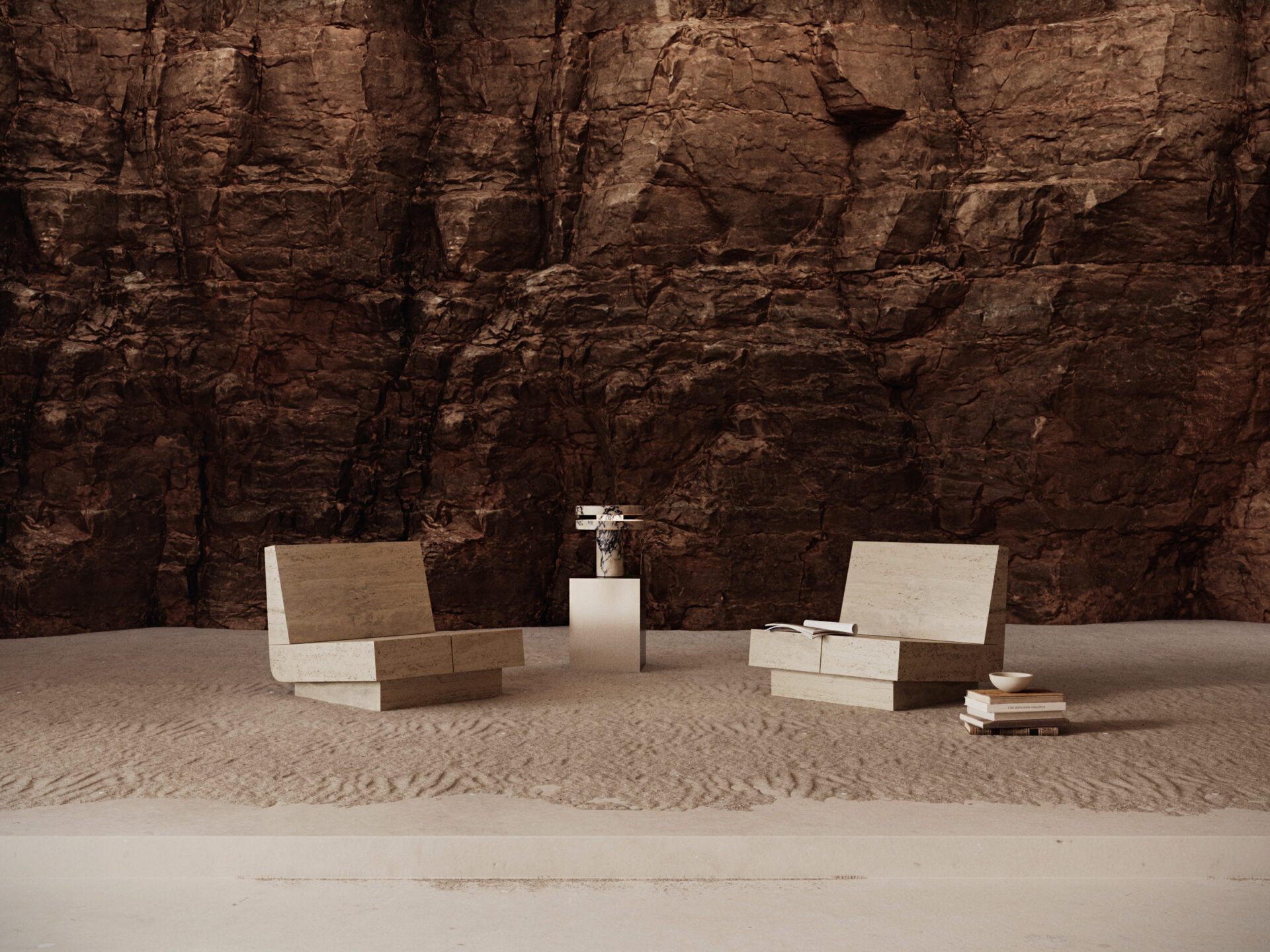
Monolith’s debut collection is grounded in lava stone—a matte, porous material commonly used in Mexico for utilitarian purposes. Personick elevates its humble texture into something unexpected: architectural, dramatic, serene. “Lava stone is completely unique,” he says. “It has this porosity, this texture. It feels like it just bubbled out of the earth and hardened.”
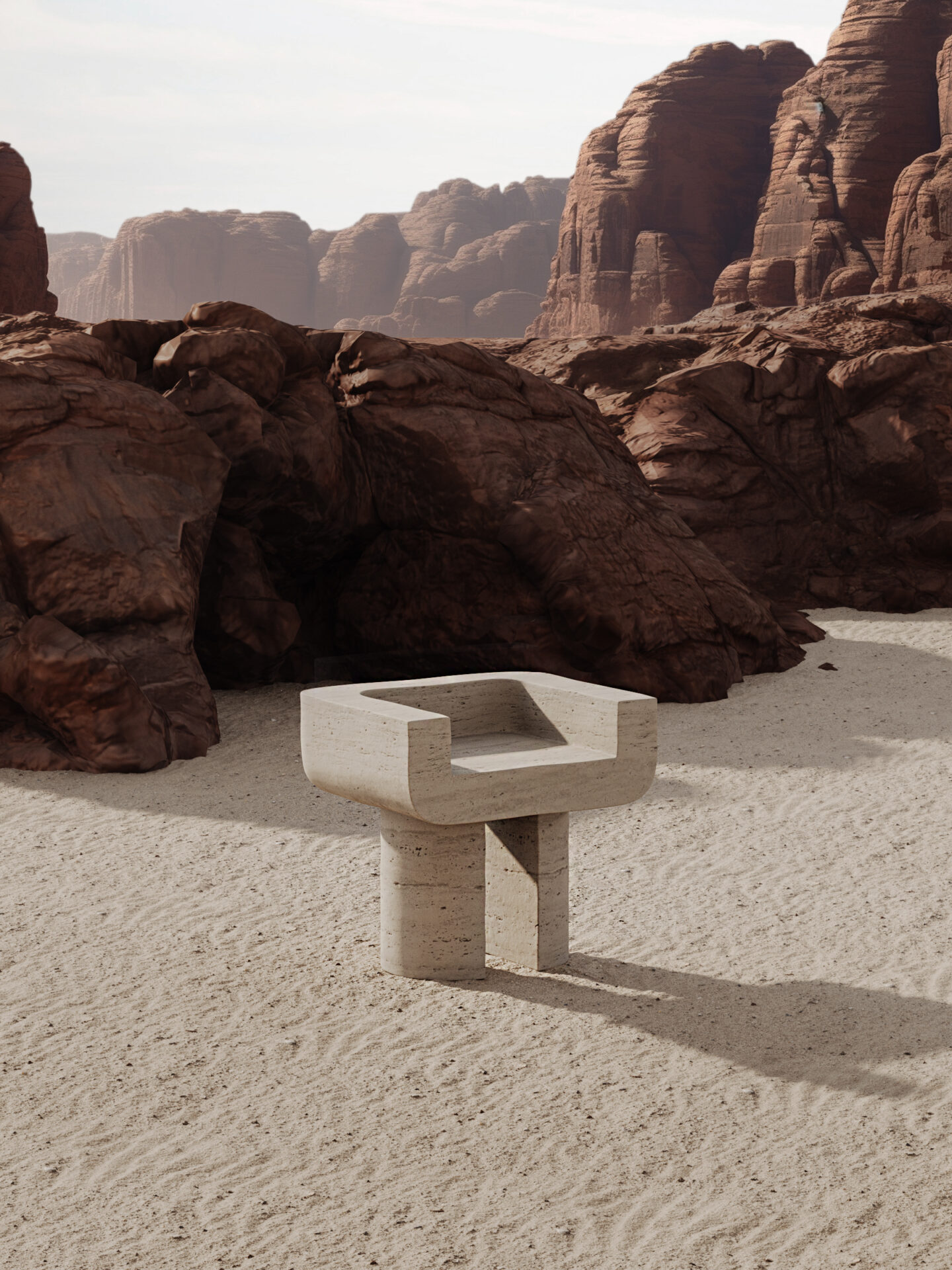
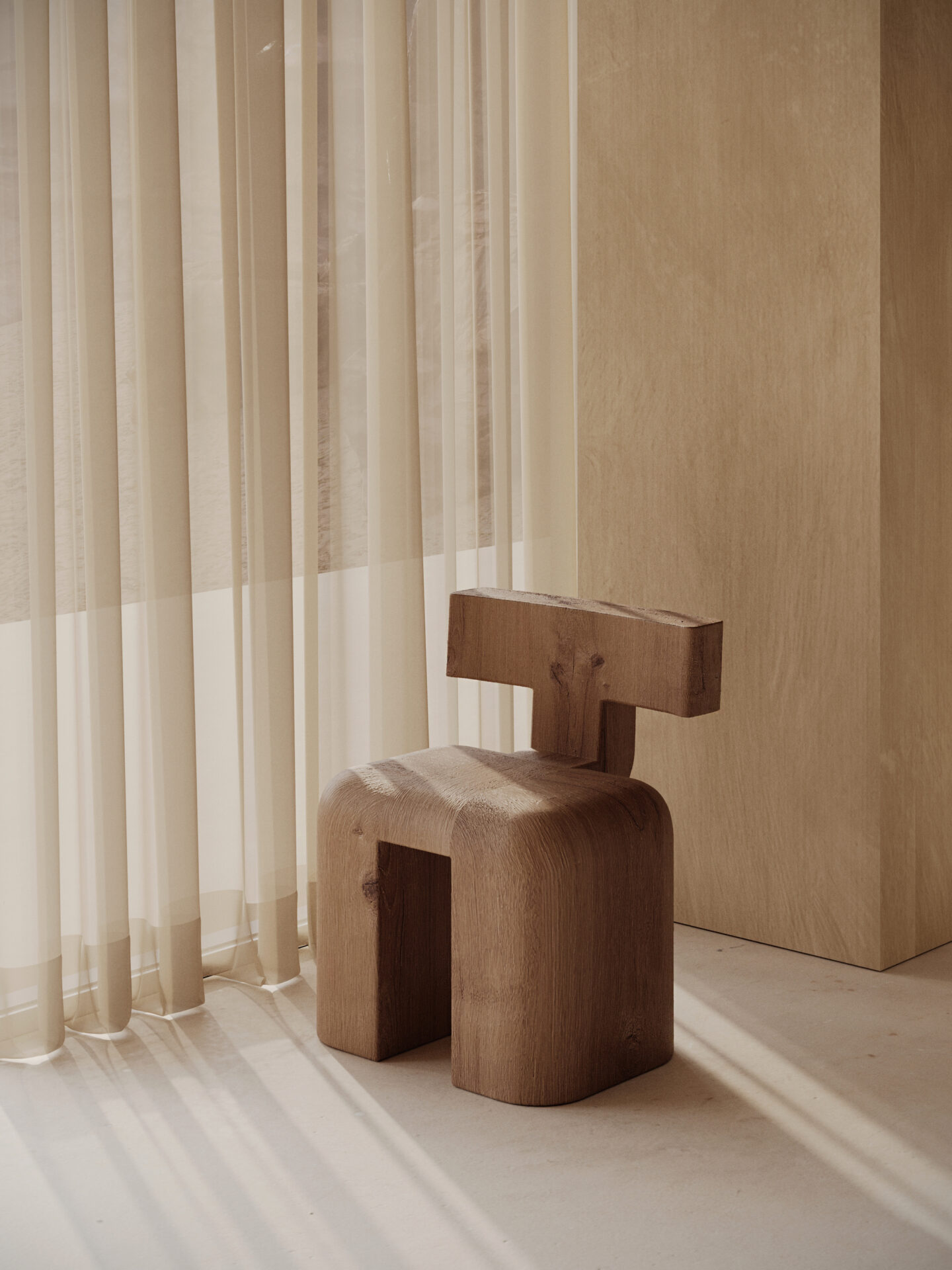
That sense of emergence defines the M_001 Chair, a Brutalist composition rendered with startling clarity. A boxy seat rests atop a bisected cylinder. The lines are clean and unornamented. But amid the angular geometry, a single curve—a quiet contradiction—adds softness. “In many of the designs,” Personick explains, “you’ll see contrast. For every few hard edges, there’s one soft, curved line.”
Monolith Archives
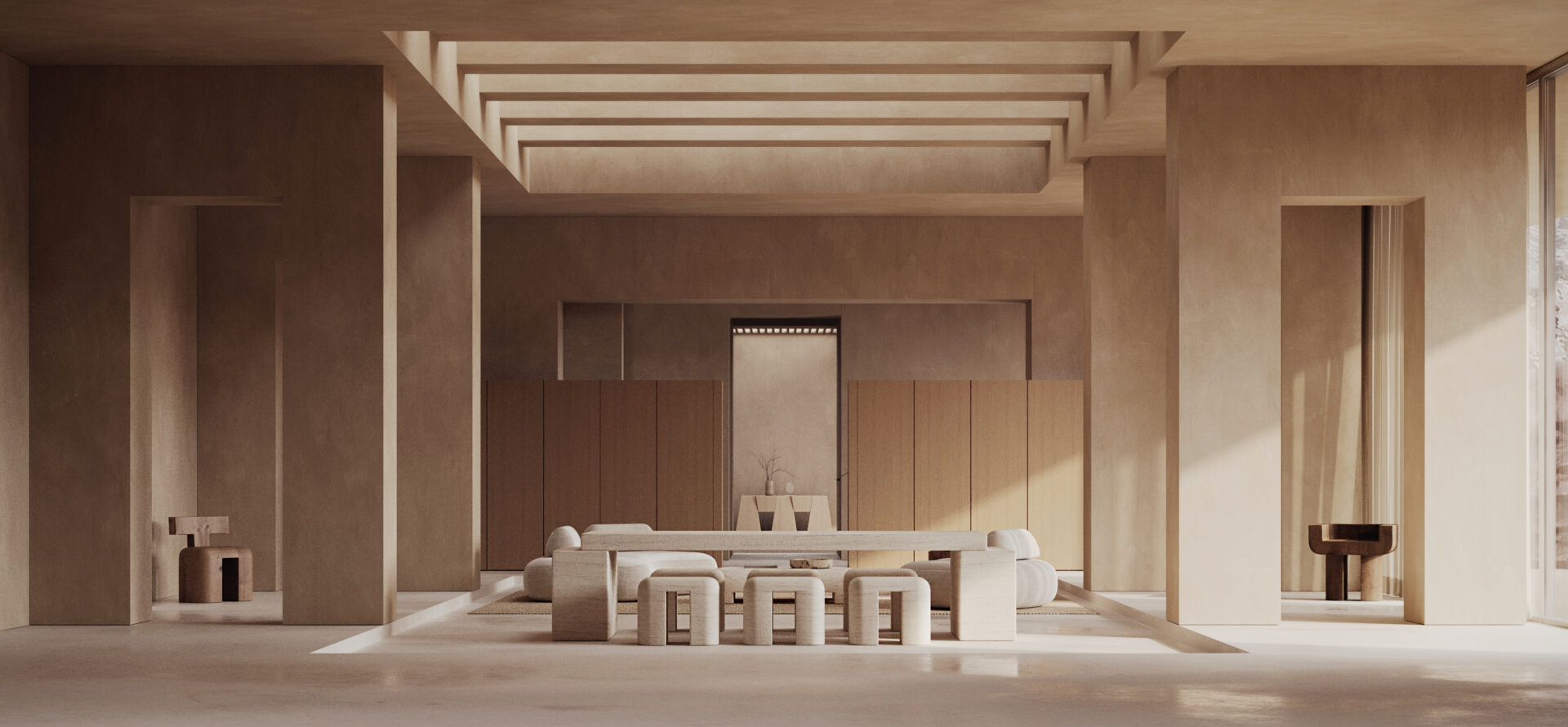
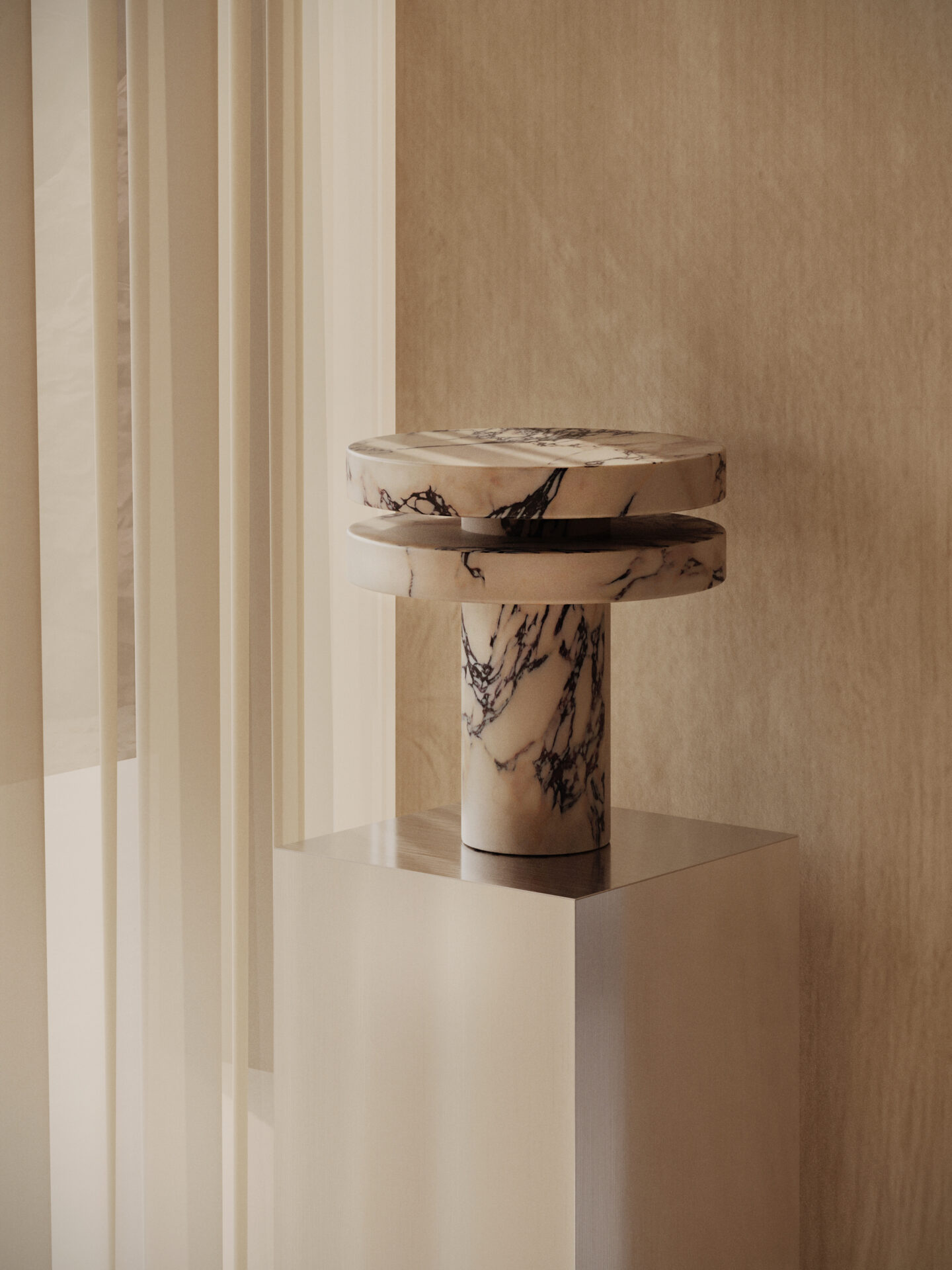
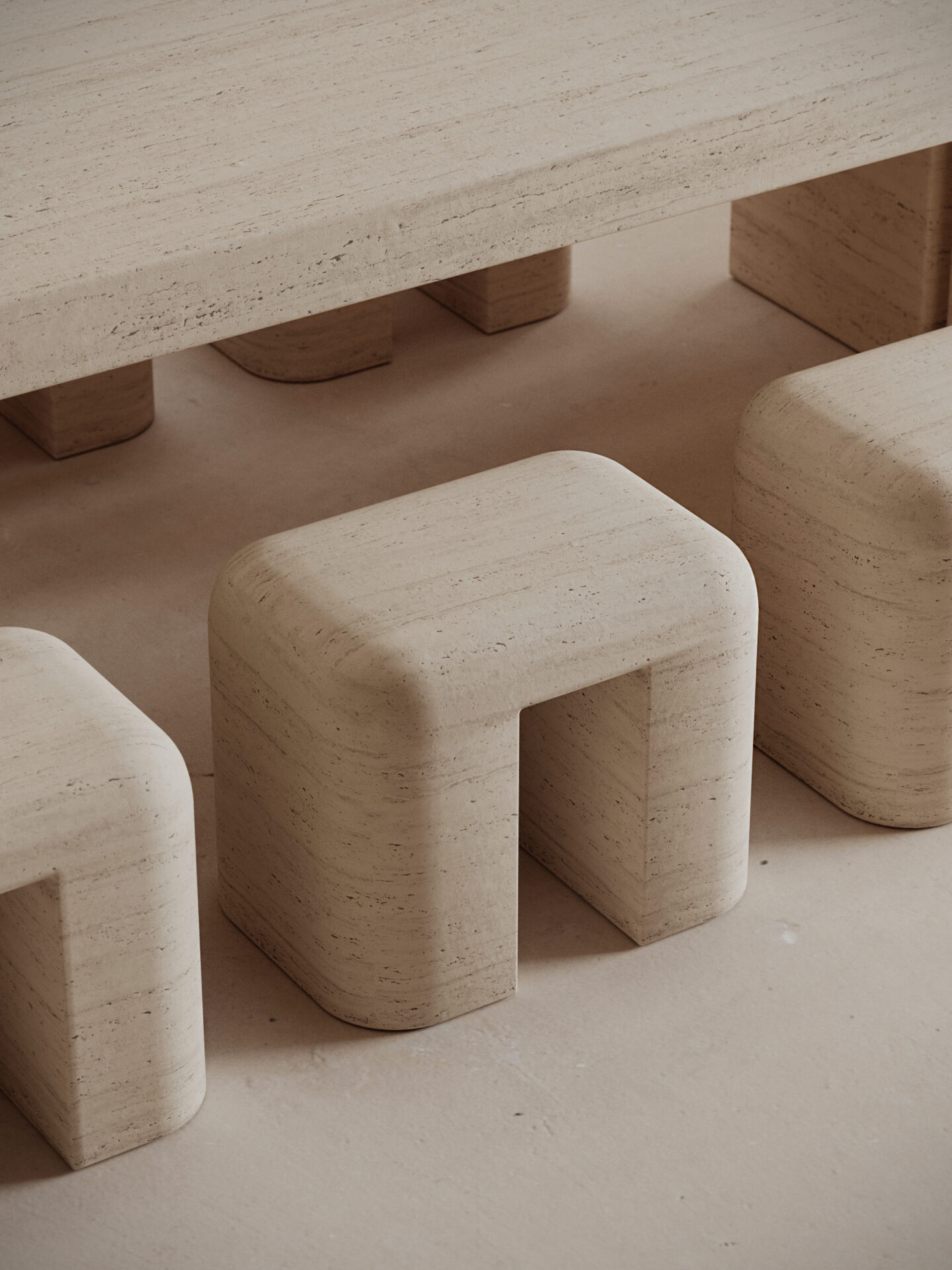
The Sanctuary collection, originally in lava stone, has since been realized in pale travertine, oak, and walnut. Yet each material iteration retains the essential quality of the original: mass, unity, restraint. Even the travertine—typically polished and sealed—is left unrefined. “We do the opposite,” he says. “We sandblast it to bring out the imperfections.” In wood, too, grain is brought forward through wire-brushing. “The goal is always to make it feel untouched.”
Monolith Archives
Monolith Archives
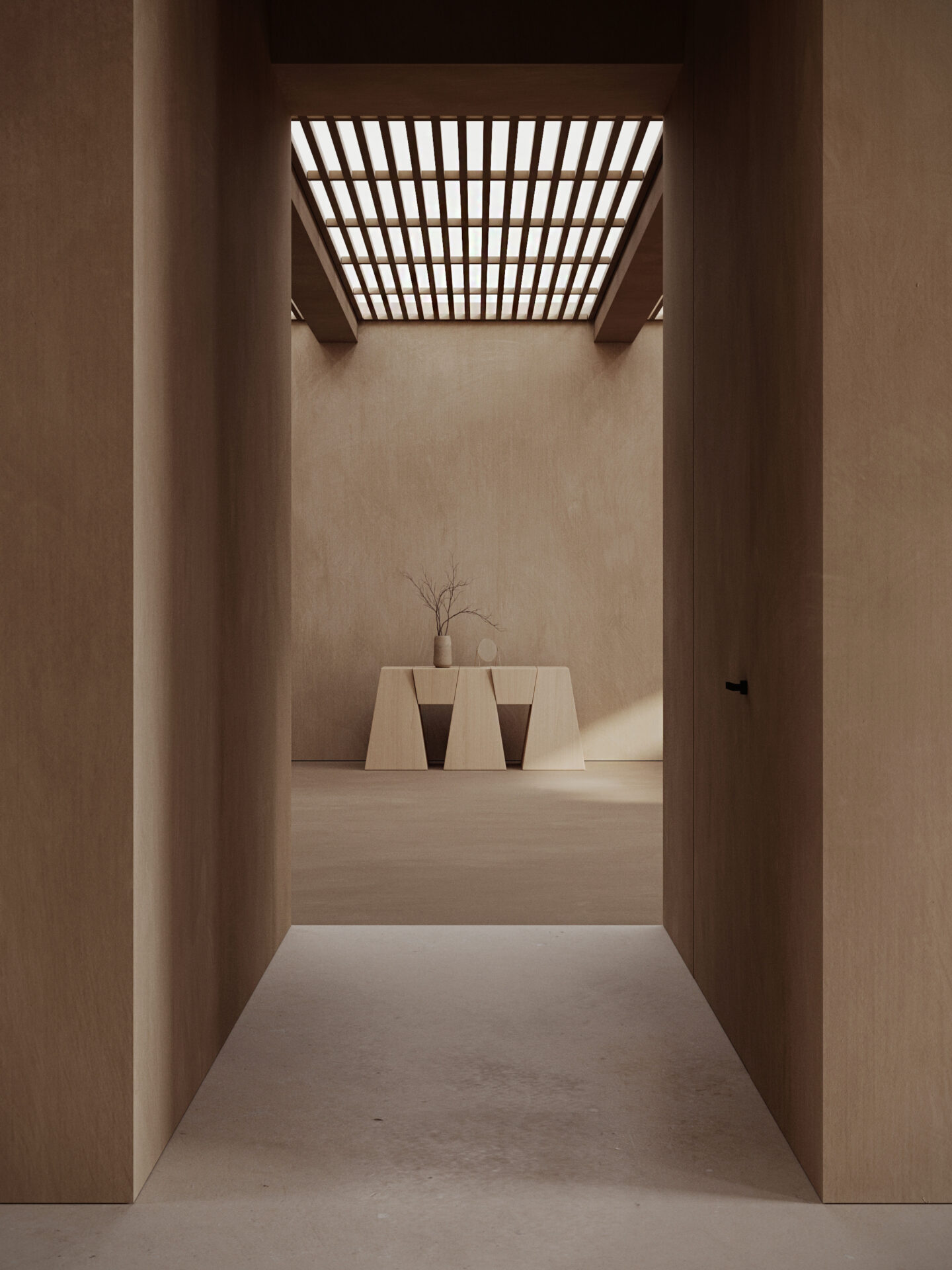
That philosophy is perhaps most evident in the M_006 Console. A single block is cut into five parts: three pyramids, two inverted keystones. The components are reassembled, the grain continuing seamlessly across the surface. Held together by weight and balance—no joinery, no glue—the piece evokes a kind of ancient engineering. A puzzle with nothing hidden.
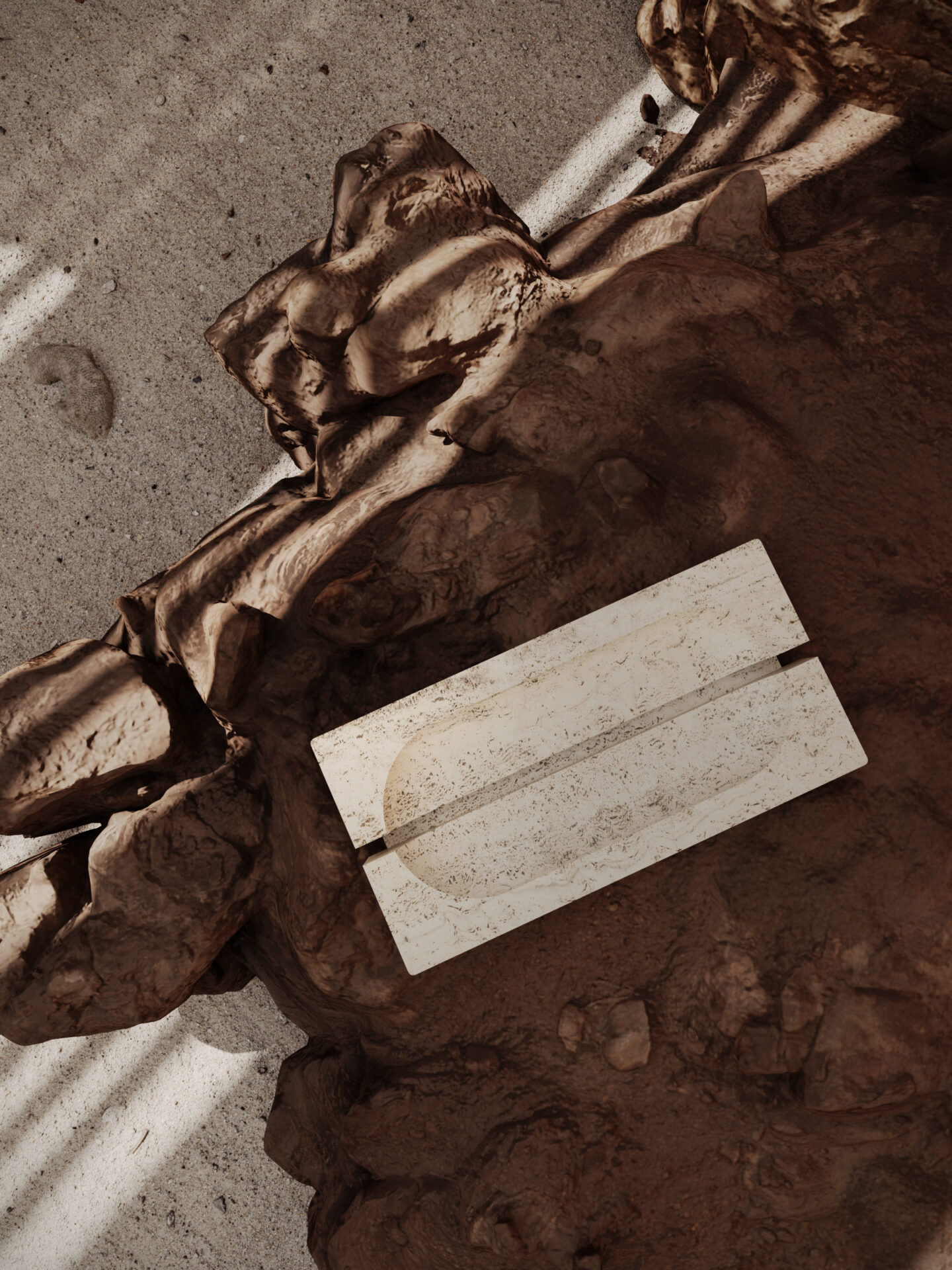
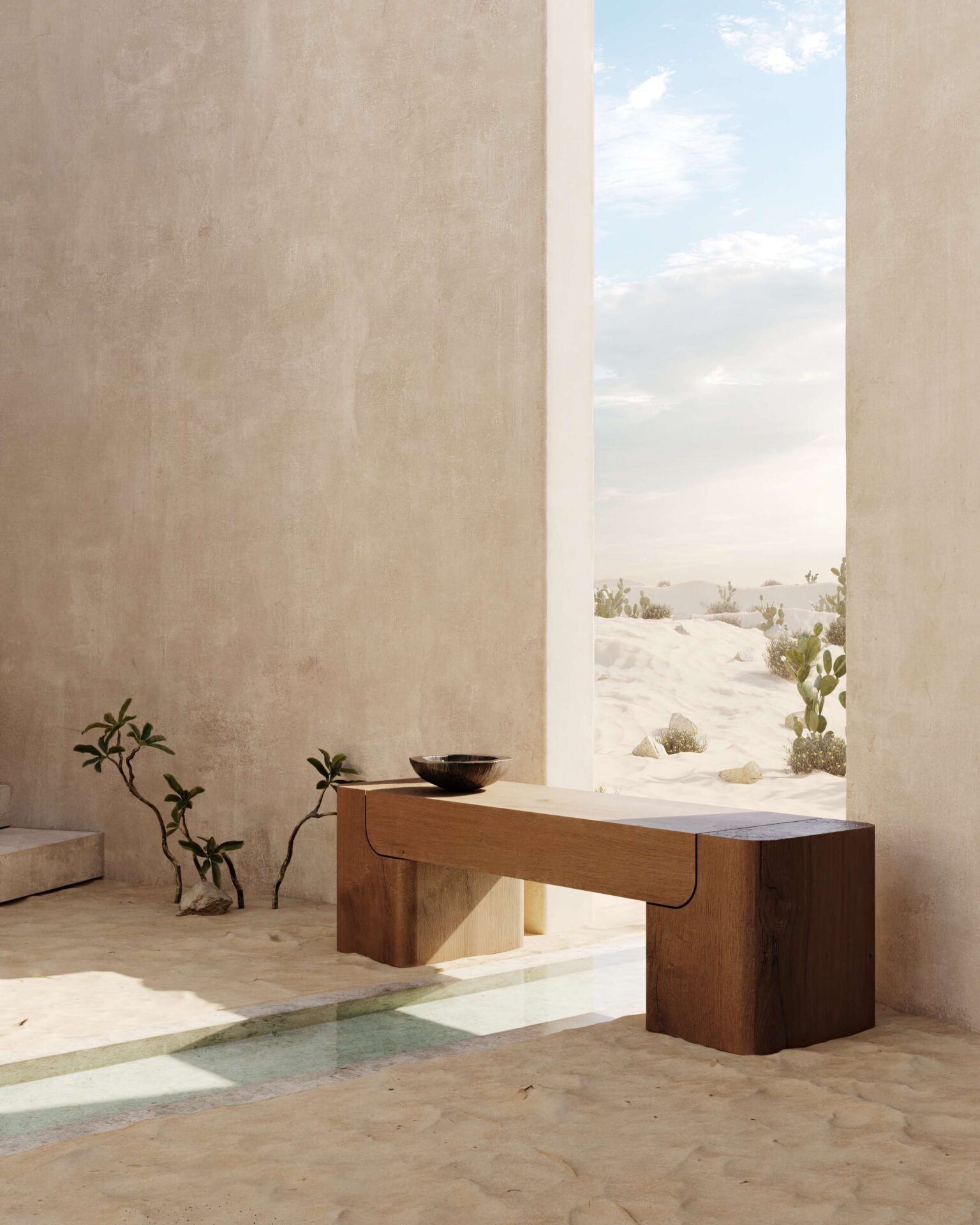
Throughout the collection, a subtle language of cradling emerges. Forms embrace each other: a bench floats above two sculpted bases, a table holds a half-sphere nestled into a curved recess. In the M_002 Side Table, what began as one solid piece was split—“to introduce shadow,” Personick says. “That’s the level of detail you’re concerned with when you’re not making complicated forms.”
Monolith Archives
Monolith Archives
Monolith Archives
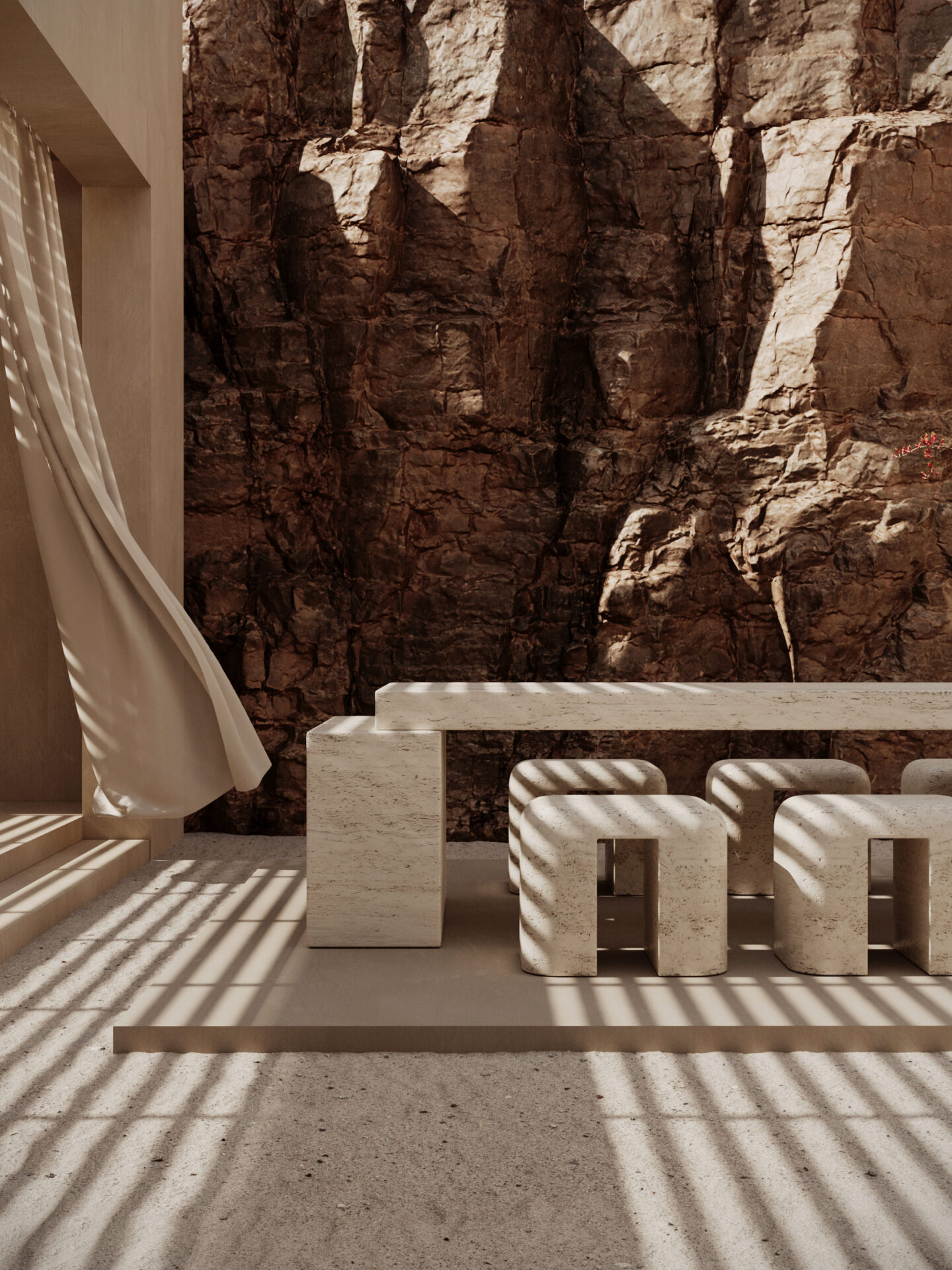
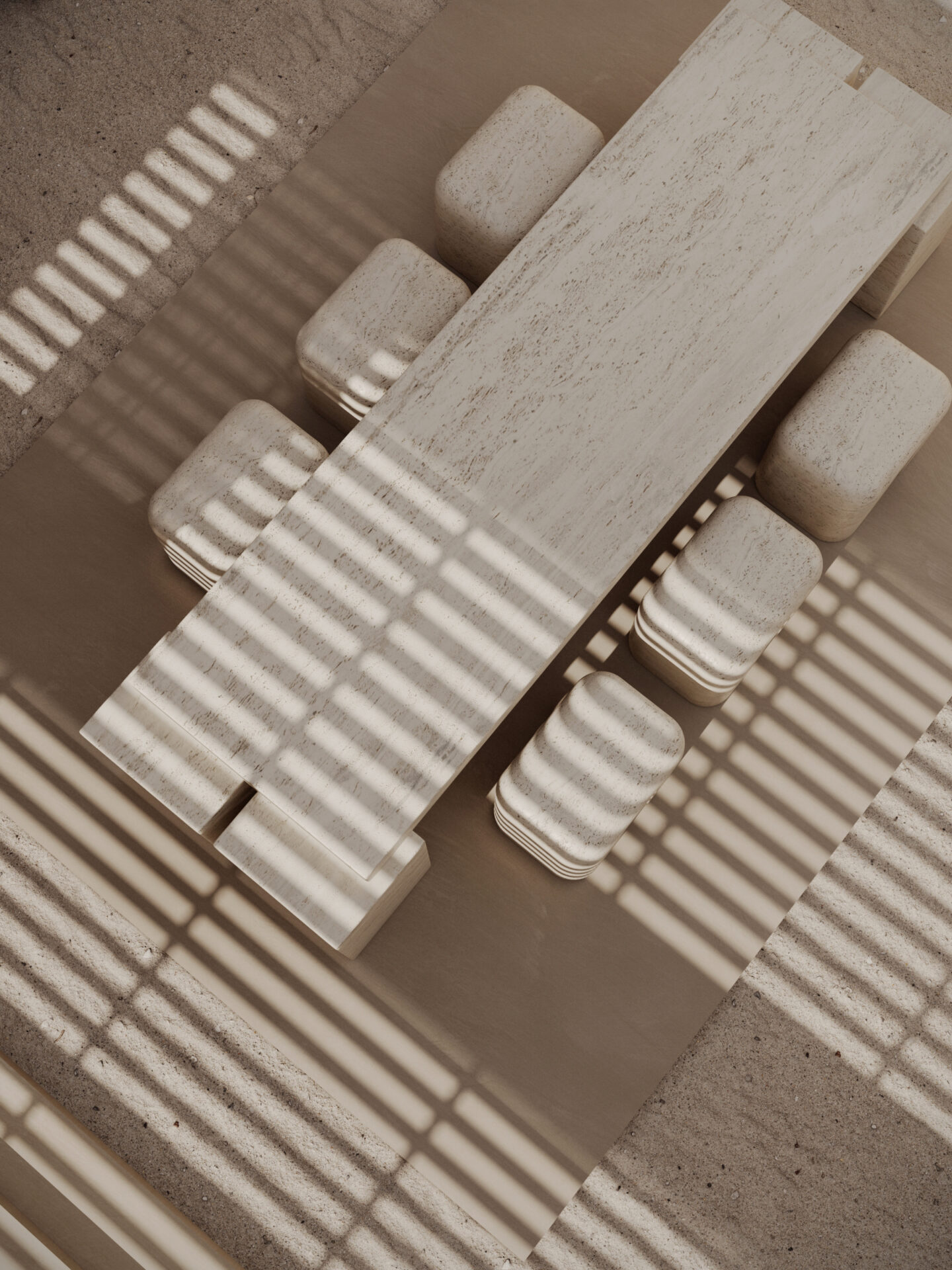
Shadows become a kind of ornament. “If you can’t make the form complicated, you take advantage of shadows, of depth, of materiality. You focus on those things because you have nowhere to hide.”
The M_005 Bench—comprised of just three blocks—is a masterclass in proportion. Two base forms, like open palms, support a rounded seat. The slight gap between them—a line of shadow—suggests suspension, even lightness. “It makes the bench feel like it’s floating,” he says. “That space completely shifts how you see the piece.”
Monolith Archives
Monolith Archives
“For me, it’s mostly about challenging the perception of the material.”
That illusion of weightlessness—crafted from elemental stone and dense hardwood—echoes his architectural training. His process is intentional, measured. Sketches become digital models. Precision takes precedence over intuition. “If the process were more fluid, I’d start to stray from what Monolith really is.”
Constraint becomes a tool. The Monolith vocabulary is strict: sculptural forms, no visible joinery, thickness in proportion. “Thin pieces don’t have the right weight,” he says. Within these rules, Personick plays—carving space, bending shadow, heightening texture.
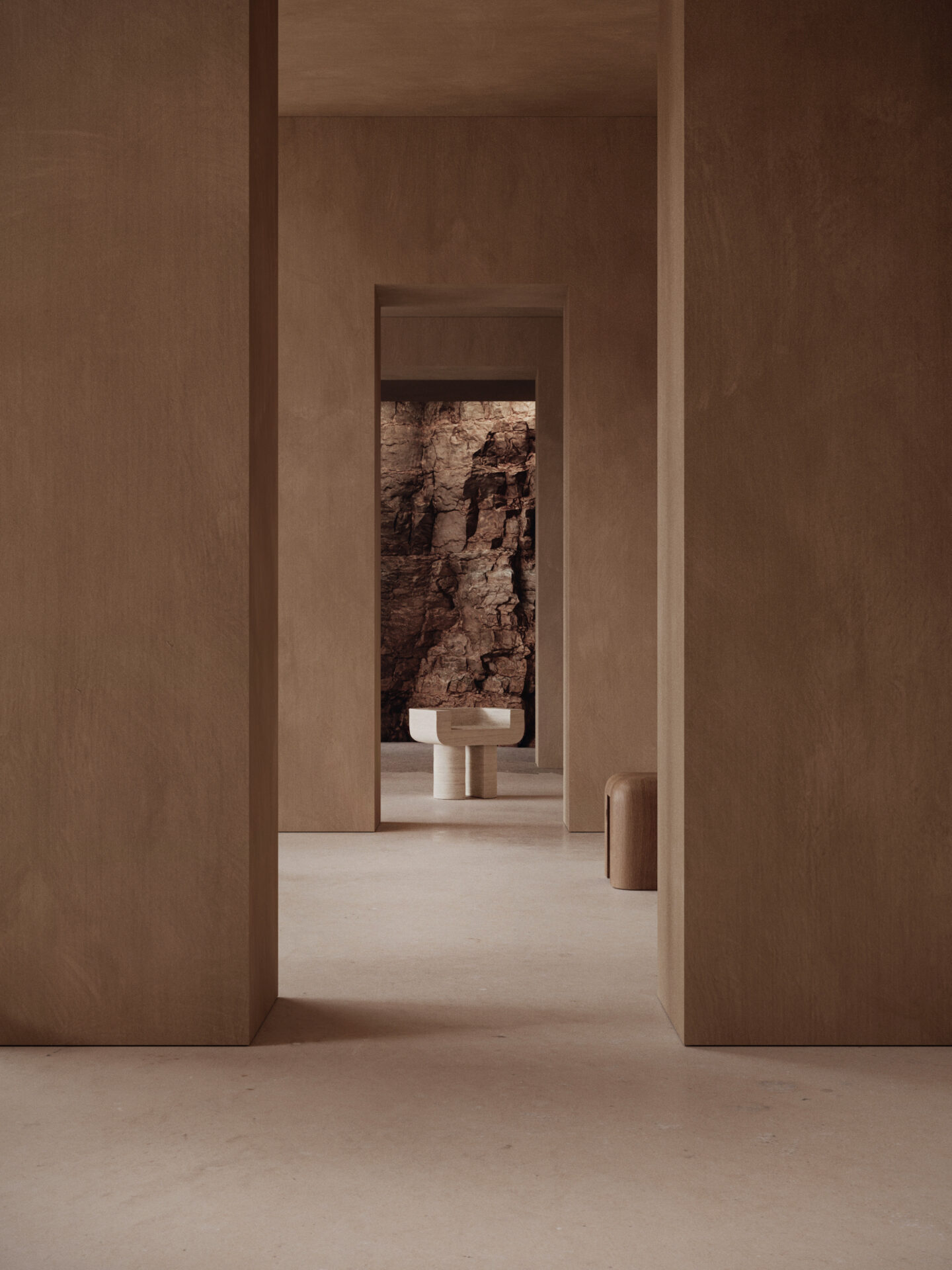
Monolith Archives
The material does not disappear, but becomes the subject. What’s left is clarity. Density. Silence.
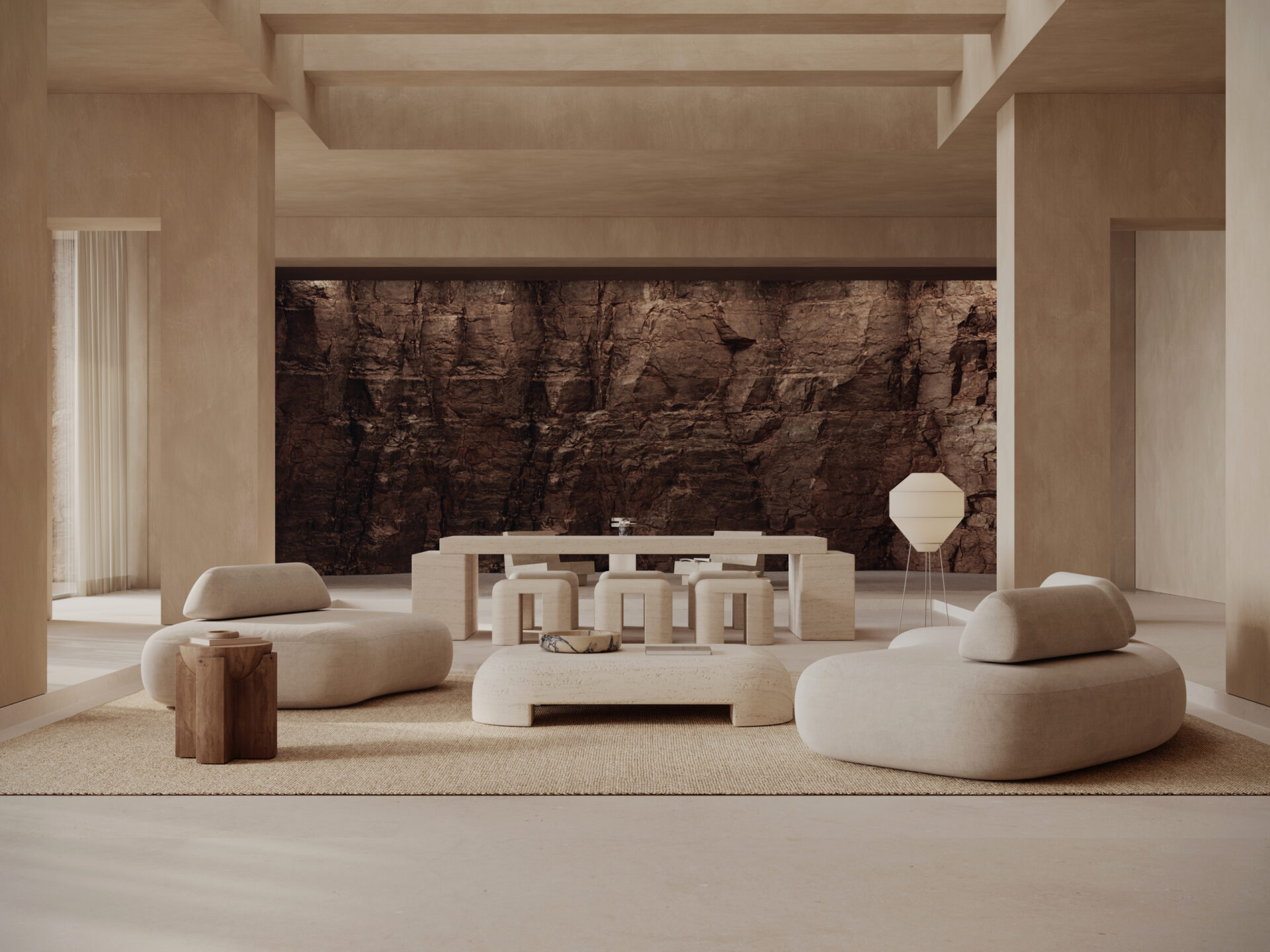
Monolith Archives