When Laura Urbonaite launched her design studio in 2020, she did so behind a mask—one of her own making. Petra Madalena, the brand’s enigmatic founder, was entirely fictional. “I wanted to create a name—a persona—that could represent the brand without being me,” Urbonaite explains. “For the first few years, people believed Petra was real. It gave me the freedom to let the work speak for itself. But last year, I decided to step forward.”
Born in Lithuania and now based in Lisbon, Urbonaite crafts sculptural furniture pieces that balance form and function. Her material palette—wood, metal, stone—is minimal, yet her approach is deeply considered. Production takes place in both Portugal and Lithuania, depending on the technical requirements of each piece. “When I moved to Lisbon, it was important to find local makers,” she says. “I like being close to the process, to oversee the details up close.”
Petra Madalena Archives
The designer’s debut piece set the tone: a low, geometric coffee table with a central “pit” carved into the surface. It’s a striking void that invites use—storage for books, flowers, or simply empty space. “I wanted to add functionality without disturbing the purity of the form,” she says. That dialogue between sculptural precision and domestic warmth defines much of her work.
Petra Madalena Archives
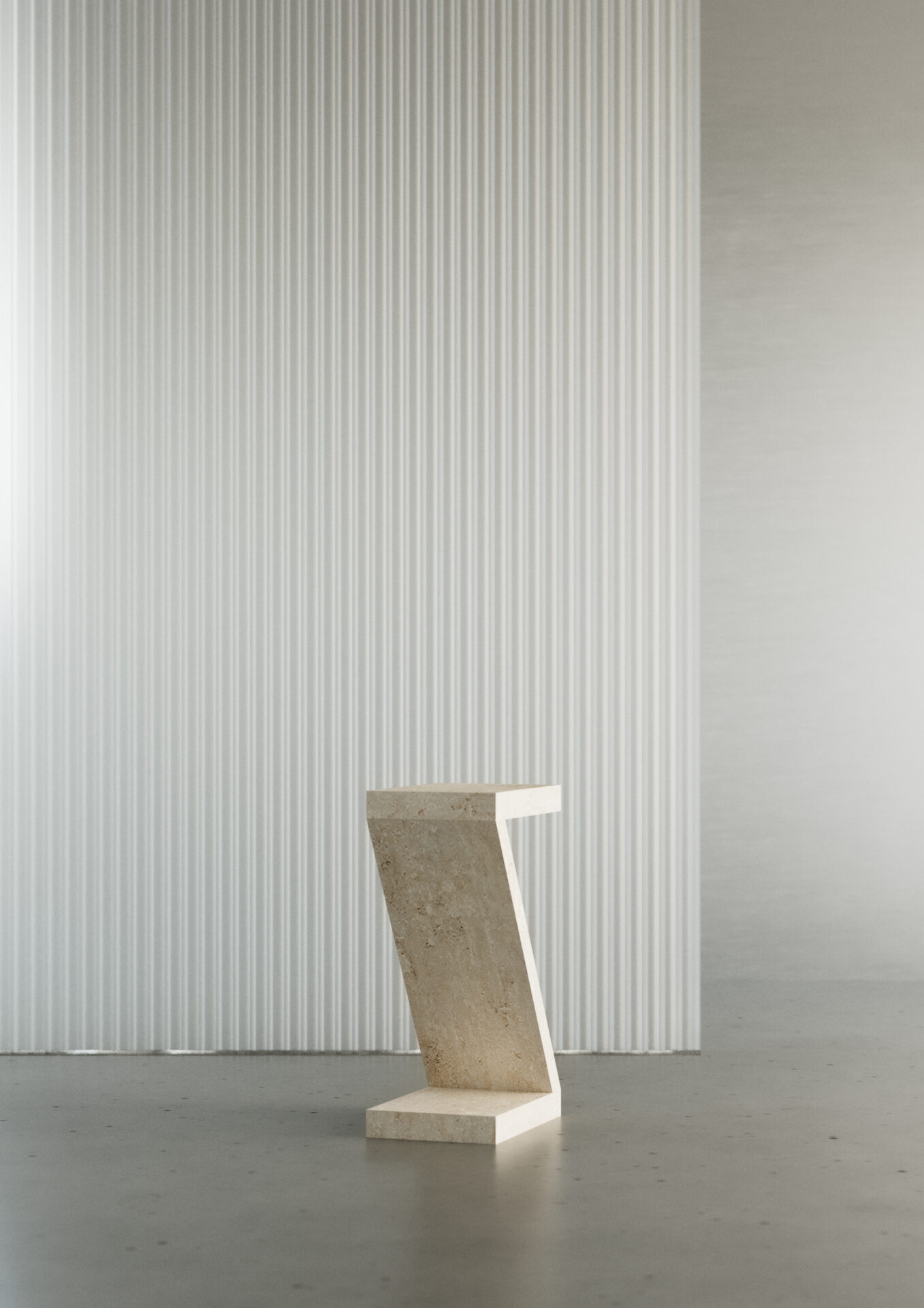
Petra Madalena Archives
A subsequent evolution—the Solid Birch Coffee Table—retains the original’s footprint but softens the aesthetic. The edges are rounded, the finish sleek and lacquered. “Visually, it’s similar. But technically, it’s an entirely new piece,” Urbonaite says. Unlike her earlier designs, often made using veneer over MDF, this one is crafted from solid wood, stained and finished by hand.
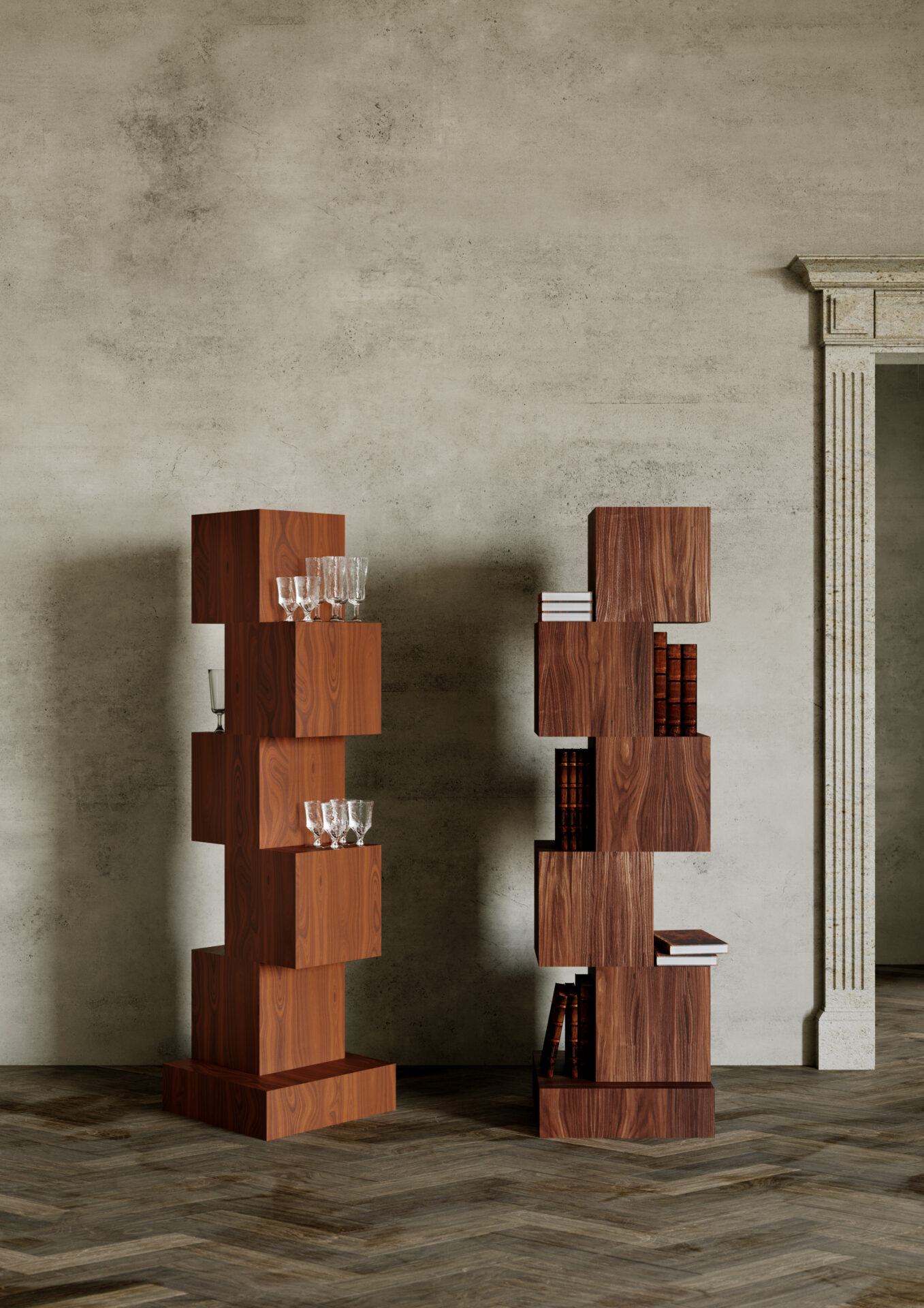
MDF remains central to her practice, offering a reliable structure with razor-sharp edges. Combined with carefully selected veneers, it delivers the illusion of solidity—without the physical weight. “Geometry is core to my work,” she notes. “Maybe because I’m a rational person. But the veneer brings a warmth that offsets the precision.”
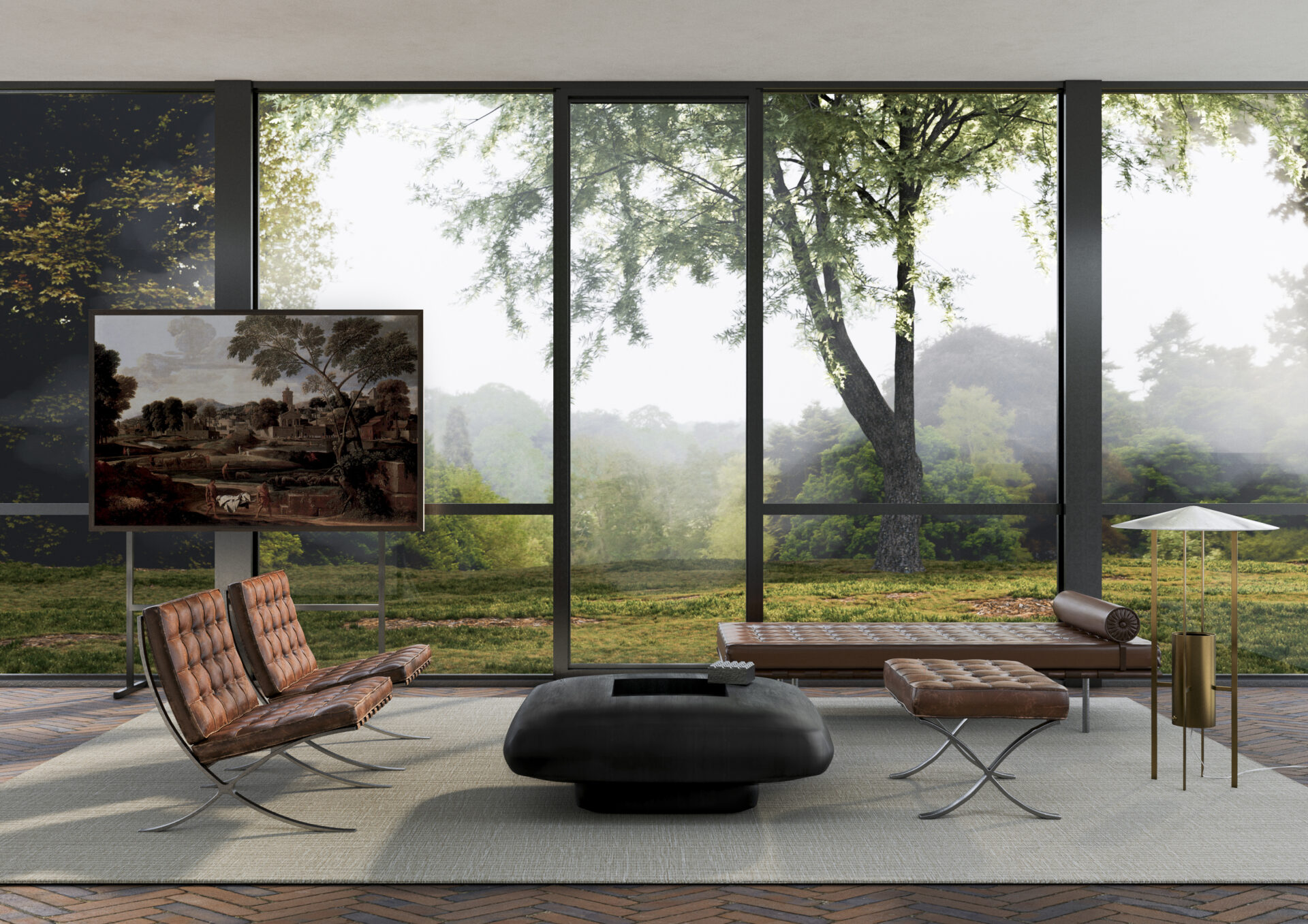
Petra Madalena Archives
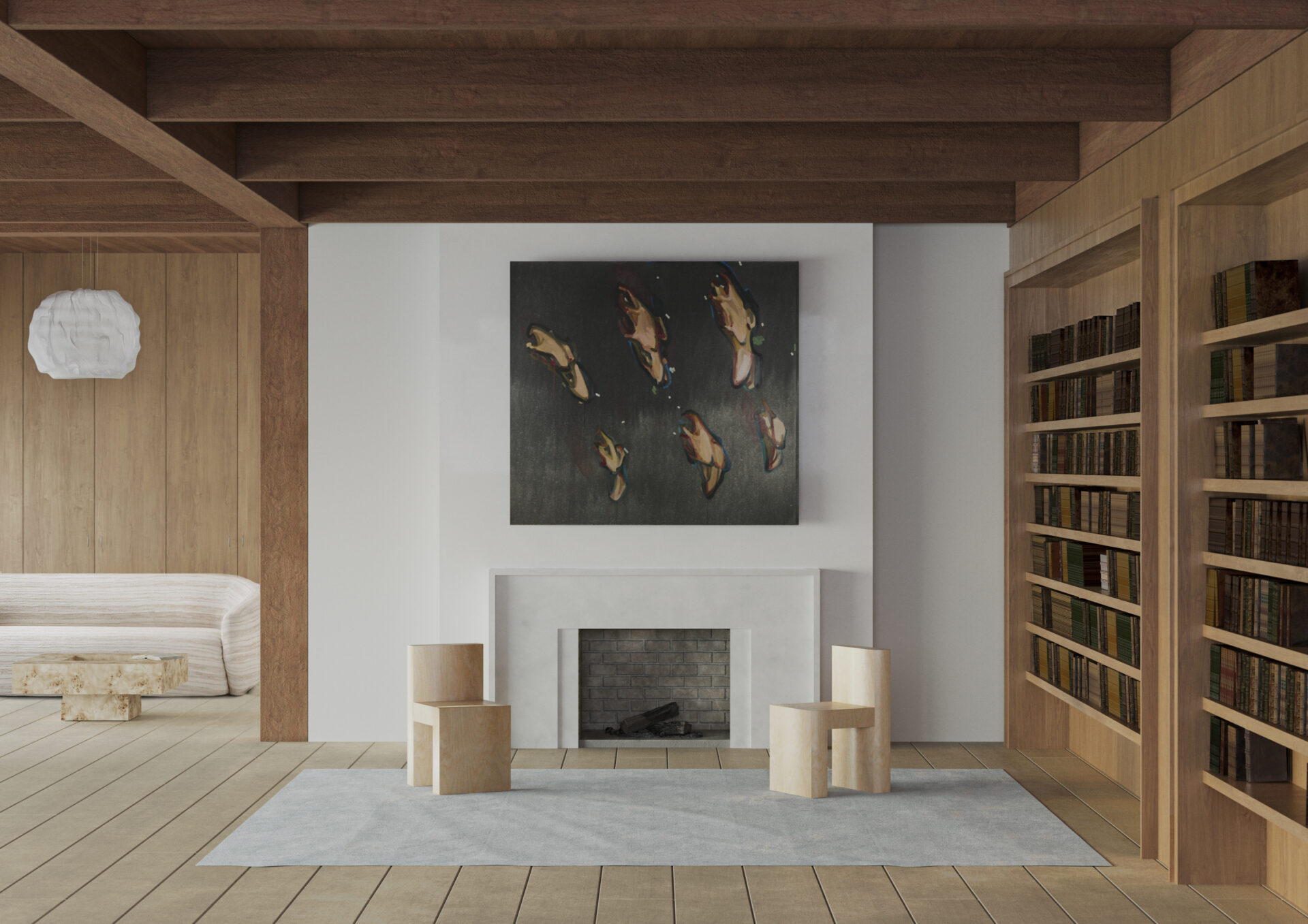
Her material choices are thoughtful and textural: poplar, walnut, birch. Each veneer offers its own character. The Birch Chair, for instance, is a stout, minimal form wrapped in creamy birch with gentle grain lines. In contrast, the Poplar Burl Coffee Table showcases swirling, psychedelic patterns. “Burl grows underground,” Urbonaite explains. “It’s rare, unpredictable—no two pieces are ever the same.”
One of her most arresting surfaces appears on the Ettore Sottsass Side Table, which features a graphic, high-contrast veneer originally designed by Sottsass himself in the 1980s. Produced by ALPI, the Italian company known for engineered wood, the veneer is made by slicing natural wood and painting the bold pattern onto its surface—a technique that blurs the line between natural and artificial. “It’s not a natural veneer, but it’s incredibly crafted,” says Urbonaite.
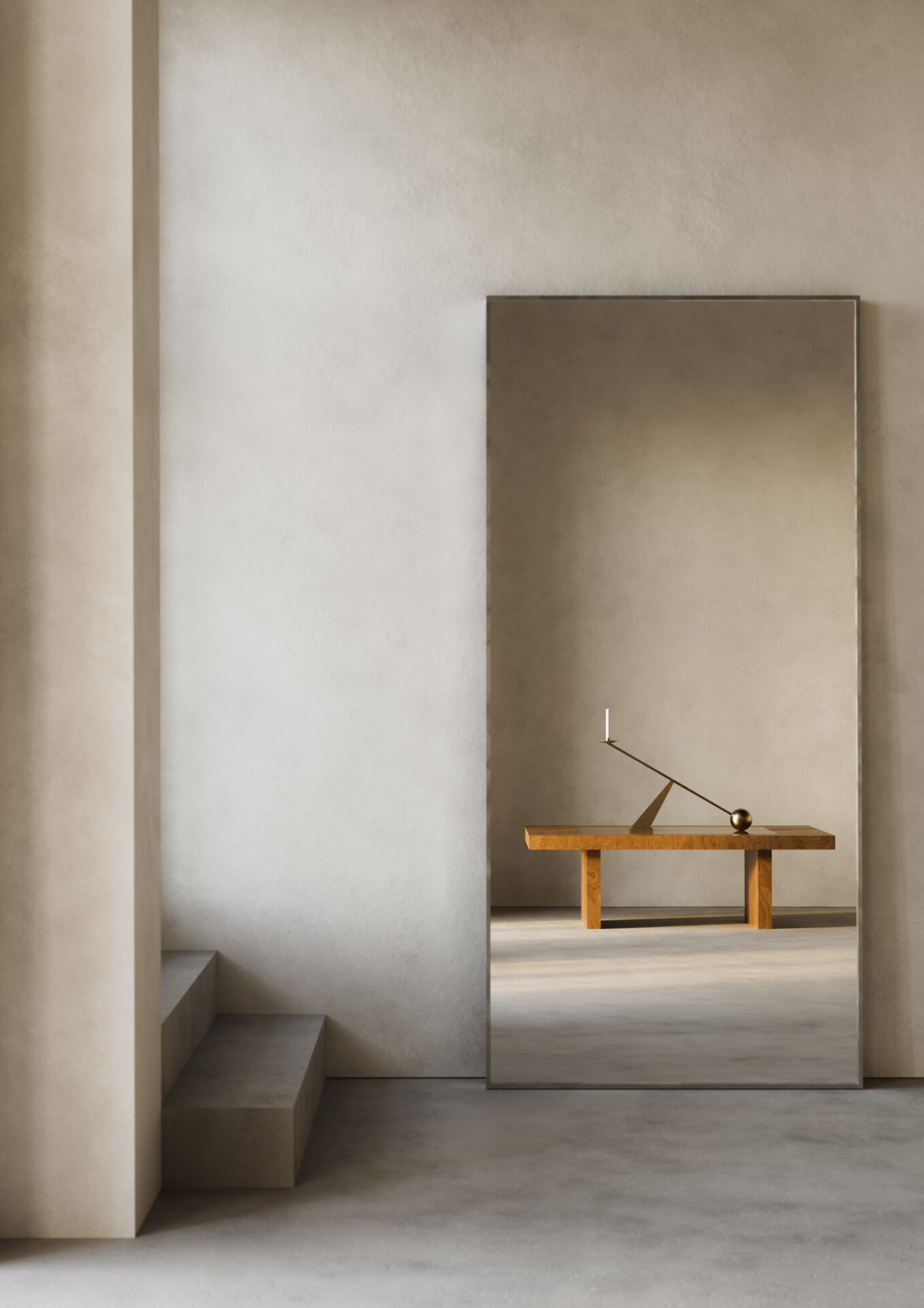
Petra Madalena Archives
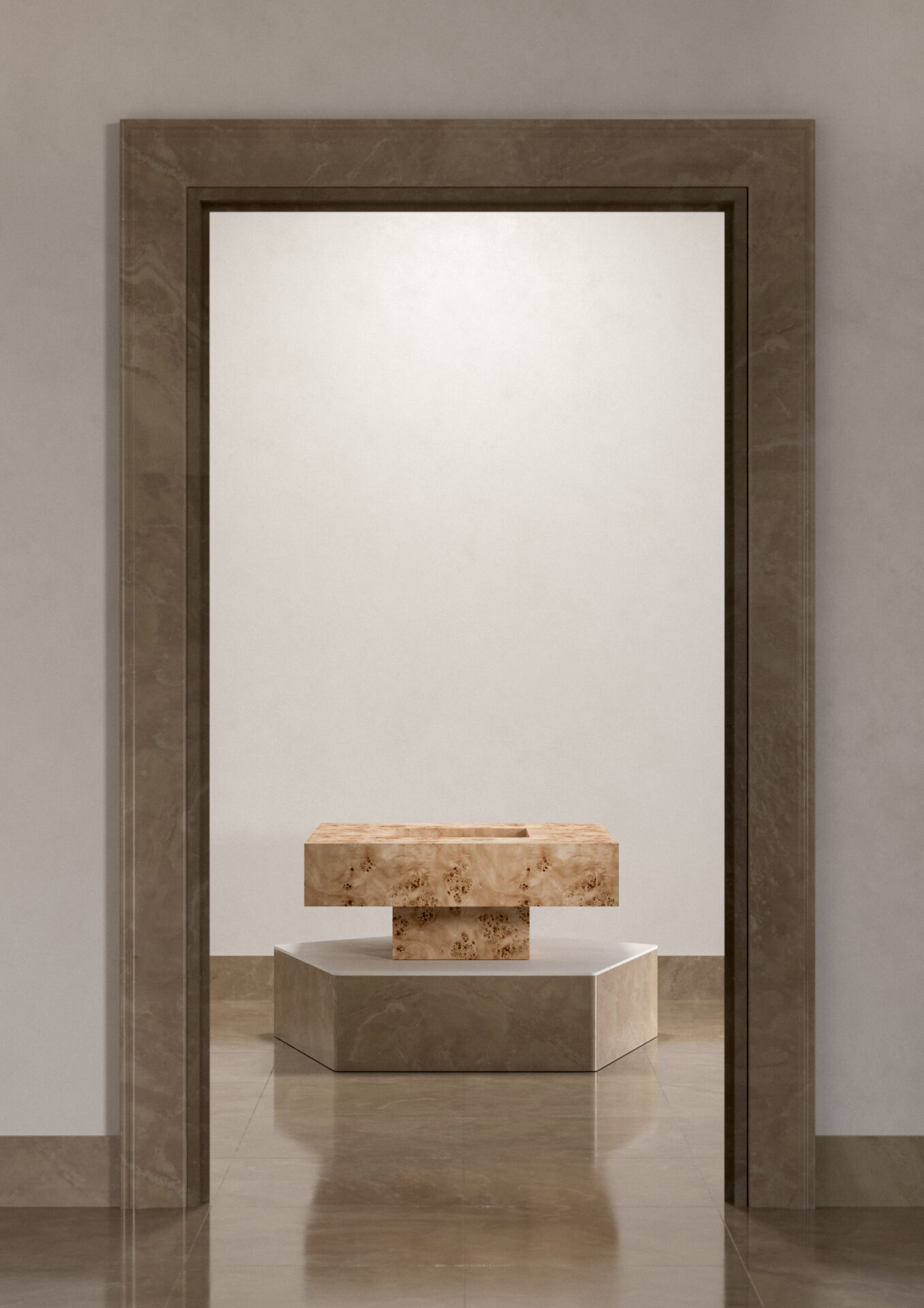
Petra Madalena Archives
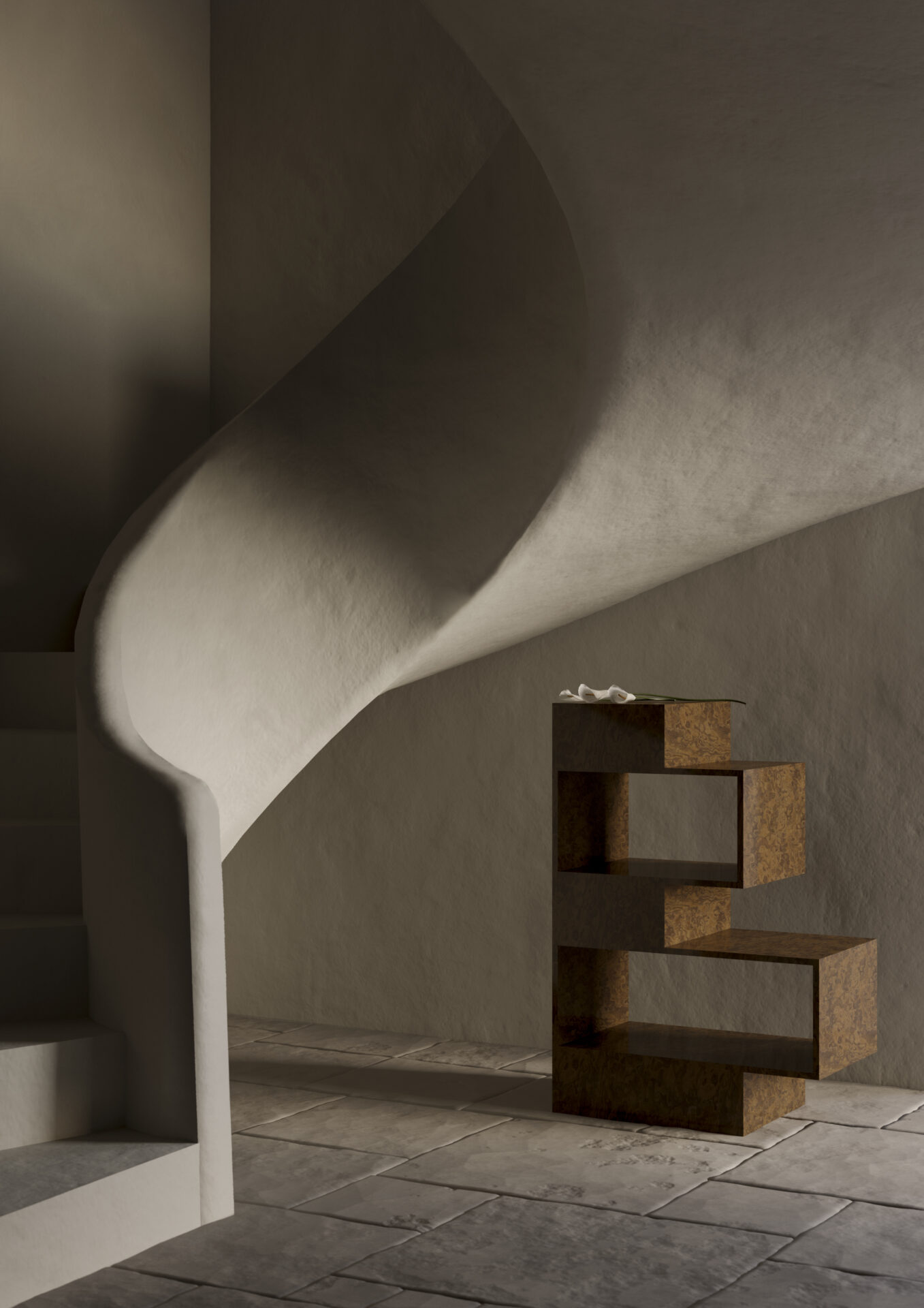
Petra Madalena Archives
While her work shares a visual language with the Memphis Group—chunky silhouettes, playful geometry—Urbonaite resists the comparison. Her inspirations, she says, are broader and more subdued. “Bauhaus influenced my forms. Art Deco, my materials. I’m drawn to wood, especially burls, because of their richness and unpredictability.”
Throughout the Petra Madalena collection, this tension between control and spontaneity, geometry and organic texture, is palpable. Urbonaite emphasizes contrast—voids and volumes, crisp lines and soft finishes. The result is a collection that feels at once cerebral and tactile, modern and timeless.
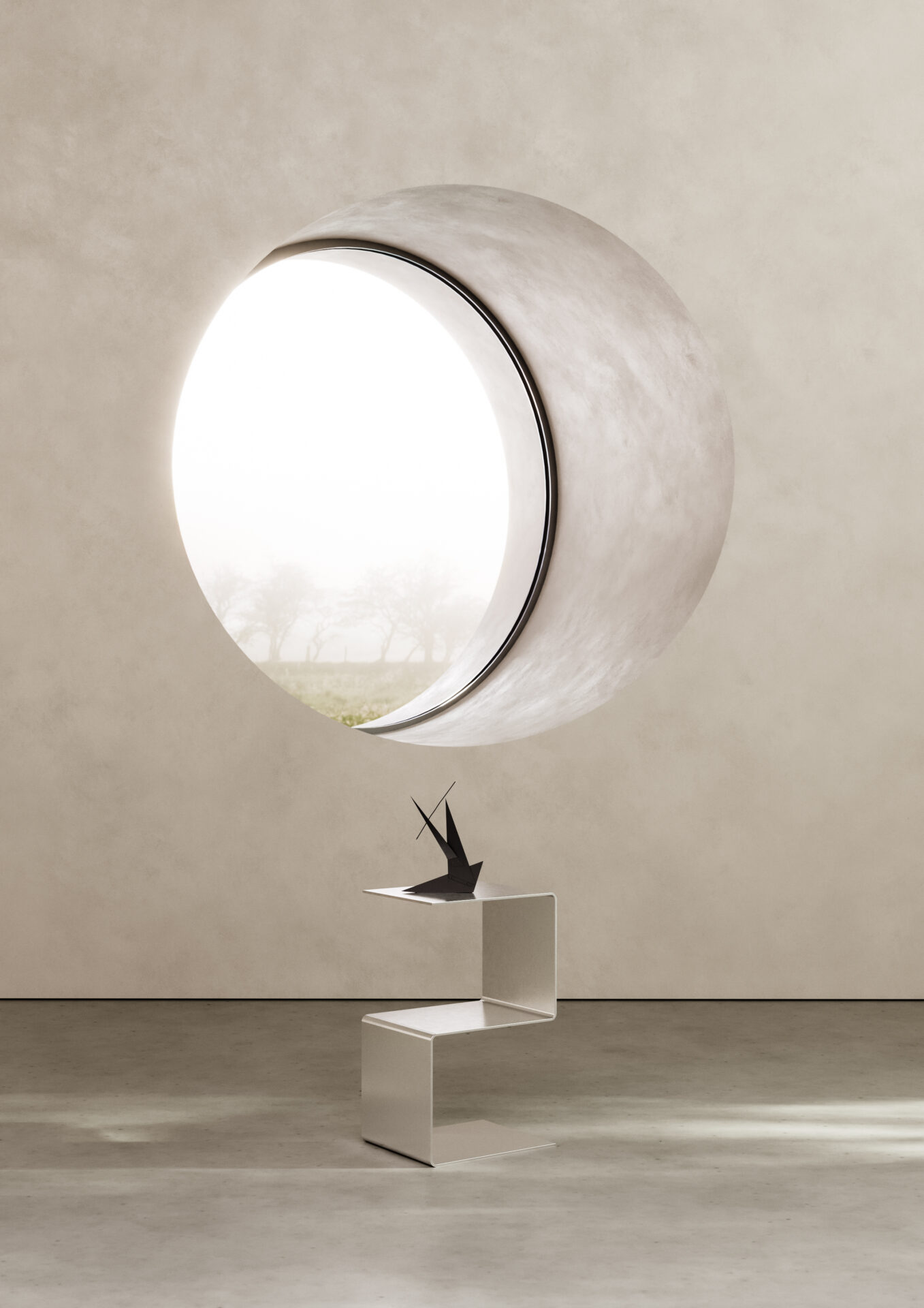
“There’s a universality to these pieces,” she reflects. “They can live in many kinds of spaces. They’re quiet, but they carry presence.”
Her work is available through Studio Fenice. Here, the pieces of Petra Madalena find yet another space to inhabit—discreetly bold, quietly luxurious, and ready to be lived with.