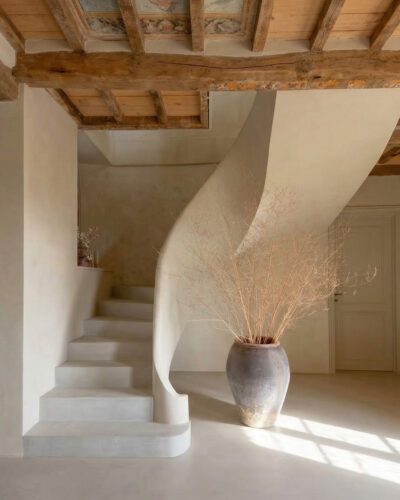
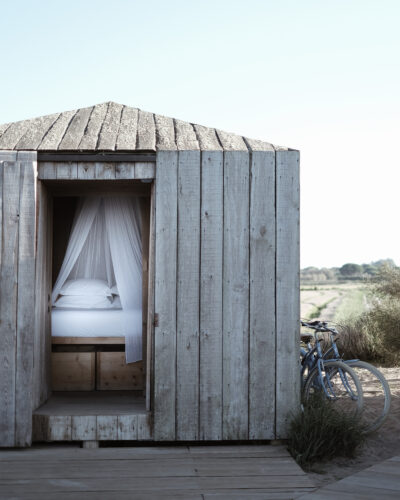
Some artists work with colour. Jerry McLaughlin works with atmosphere. His surfaces—built from wax, ash, pigments, and reclaimed wood—don’t announce themselves; they accumulate. They gather breath, memory, and tension until something quiet but undeniable begins to take form. In his studio in San Miguel de Allende, this slow process unfolds like a kind of listening.
Time behaves differently there. Morning light cuts across raw panels. Dust settles into soft hollows. Nothing feels hurried; everything seems mid-becoming. Jerry’s practice grows out of this measured pace: attentive, restrained, grounded in the physical labour of building a surface until it starts to speak back.
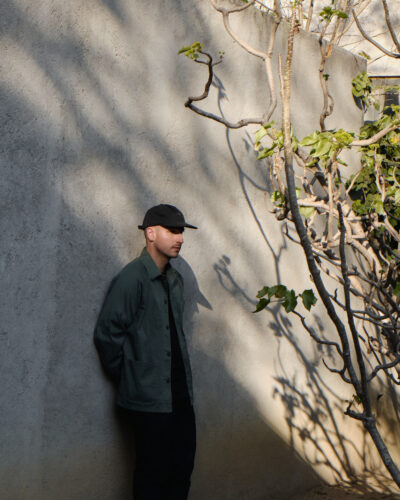
Jerry McLaughlin Archives
Melancholy has shaped his way of seeing since early childhood. Not as drama, but as an instinctive sensitivity—a pull toward the beauty inside stillness and shadow. It informs the restraint of his palette, the weight of his compositions, and the subtle tension that anchors each piece. The emotion doesn’t sit on the surface; it sits in the structure.
Poetry offers him a quiet companion. Lines from Lorca or Cavafy drift into the studio like shifts of gravity, giving contour to moods that might otherwise remain unformed. They guide gently, never dictating, allowing intuition to find its own architecture.
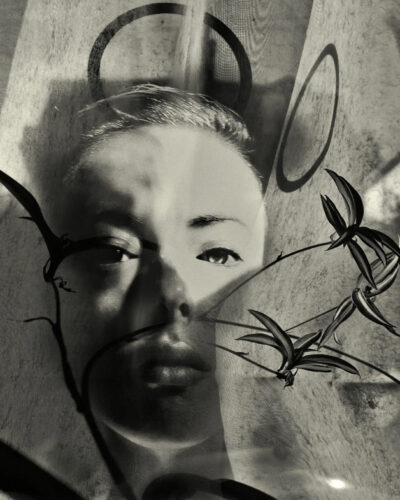
Jerry McLaughlin Archives
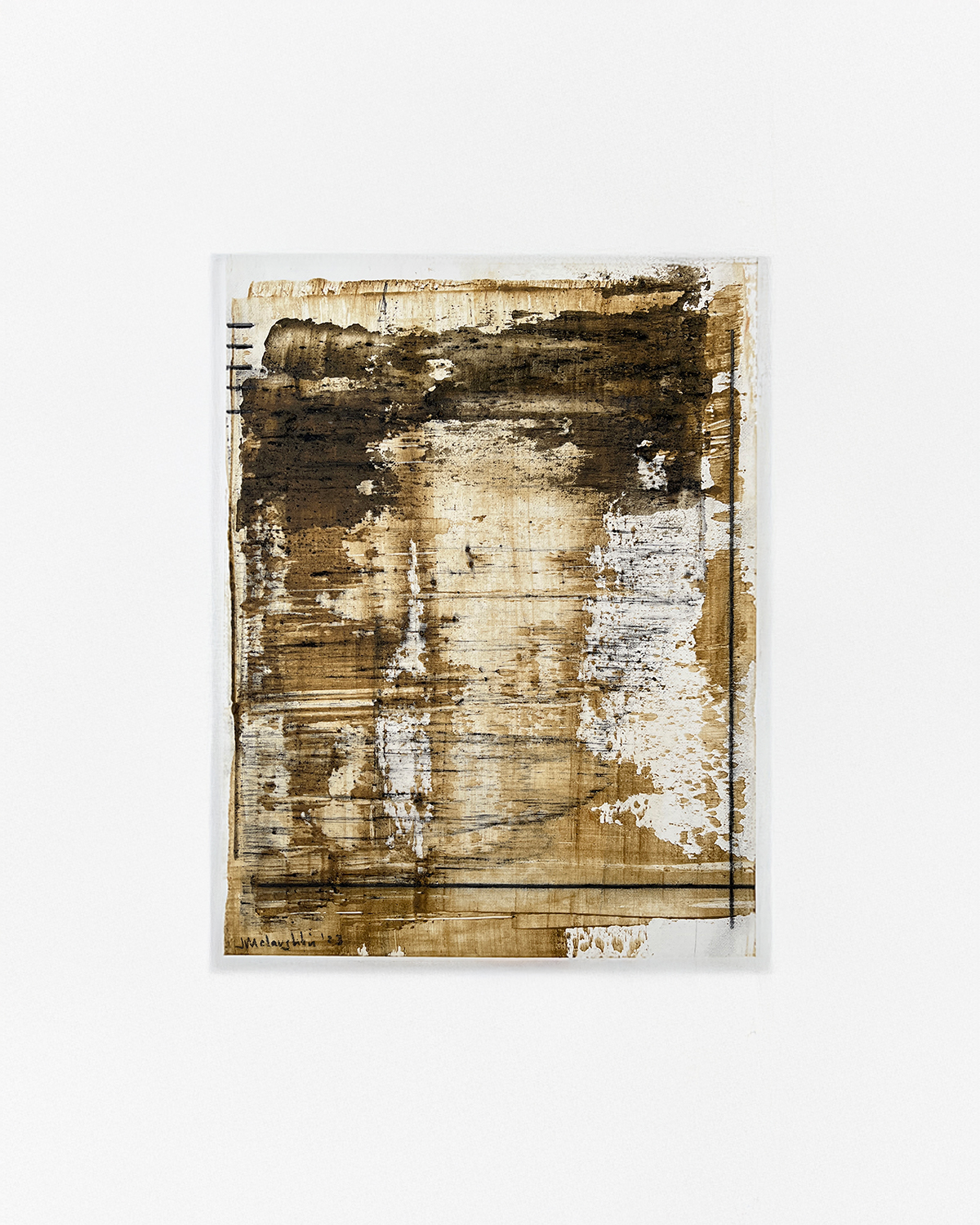
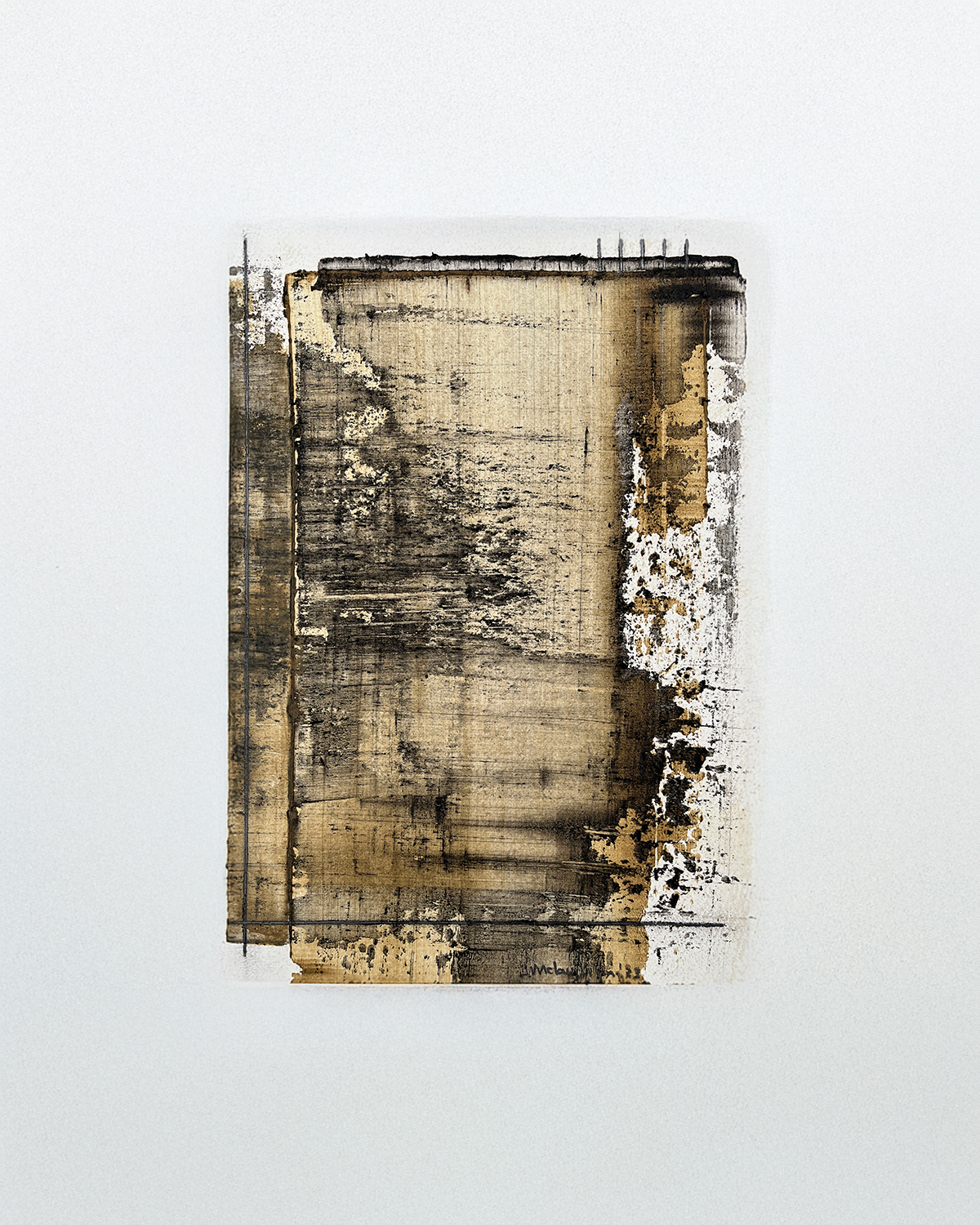
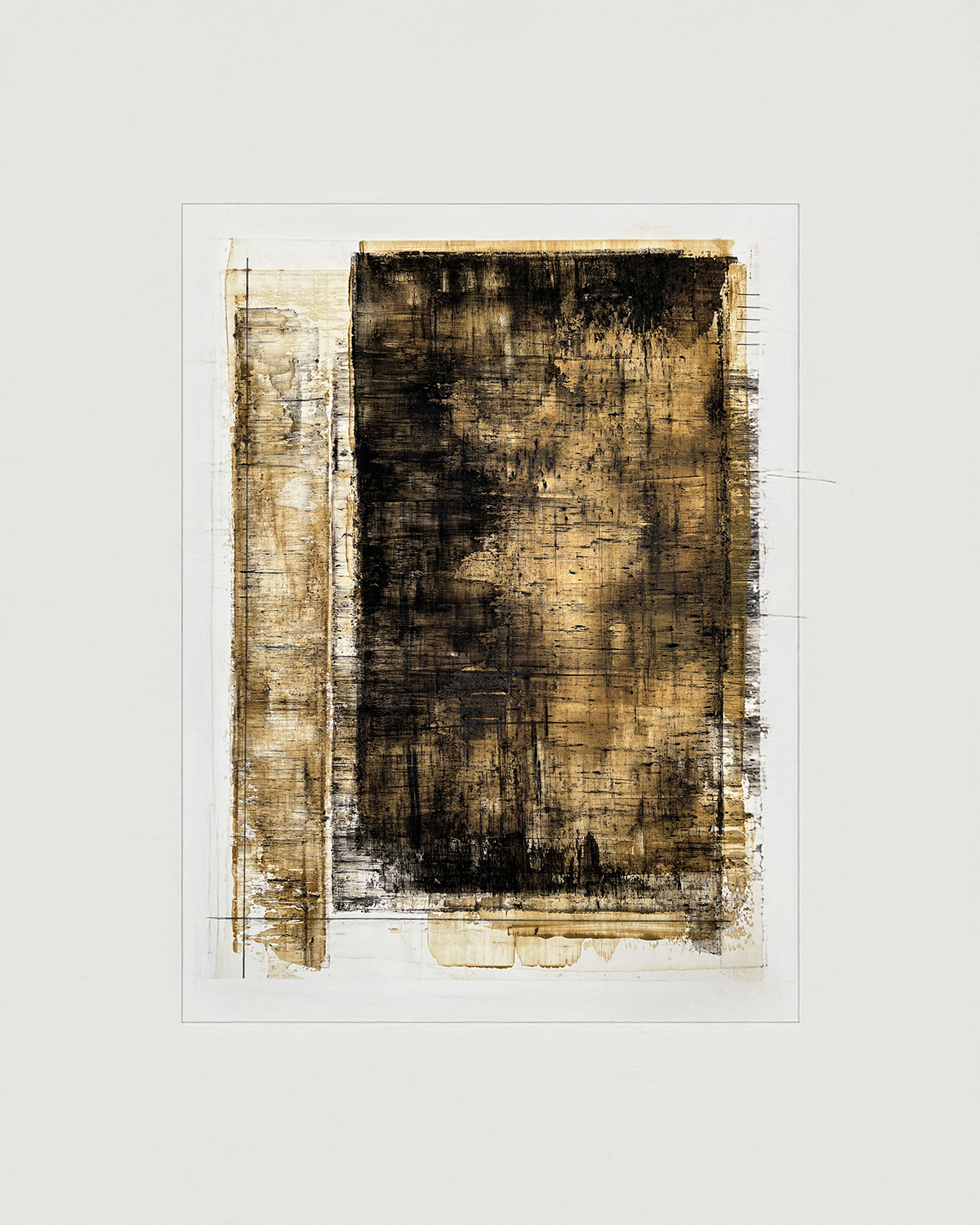
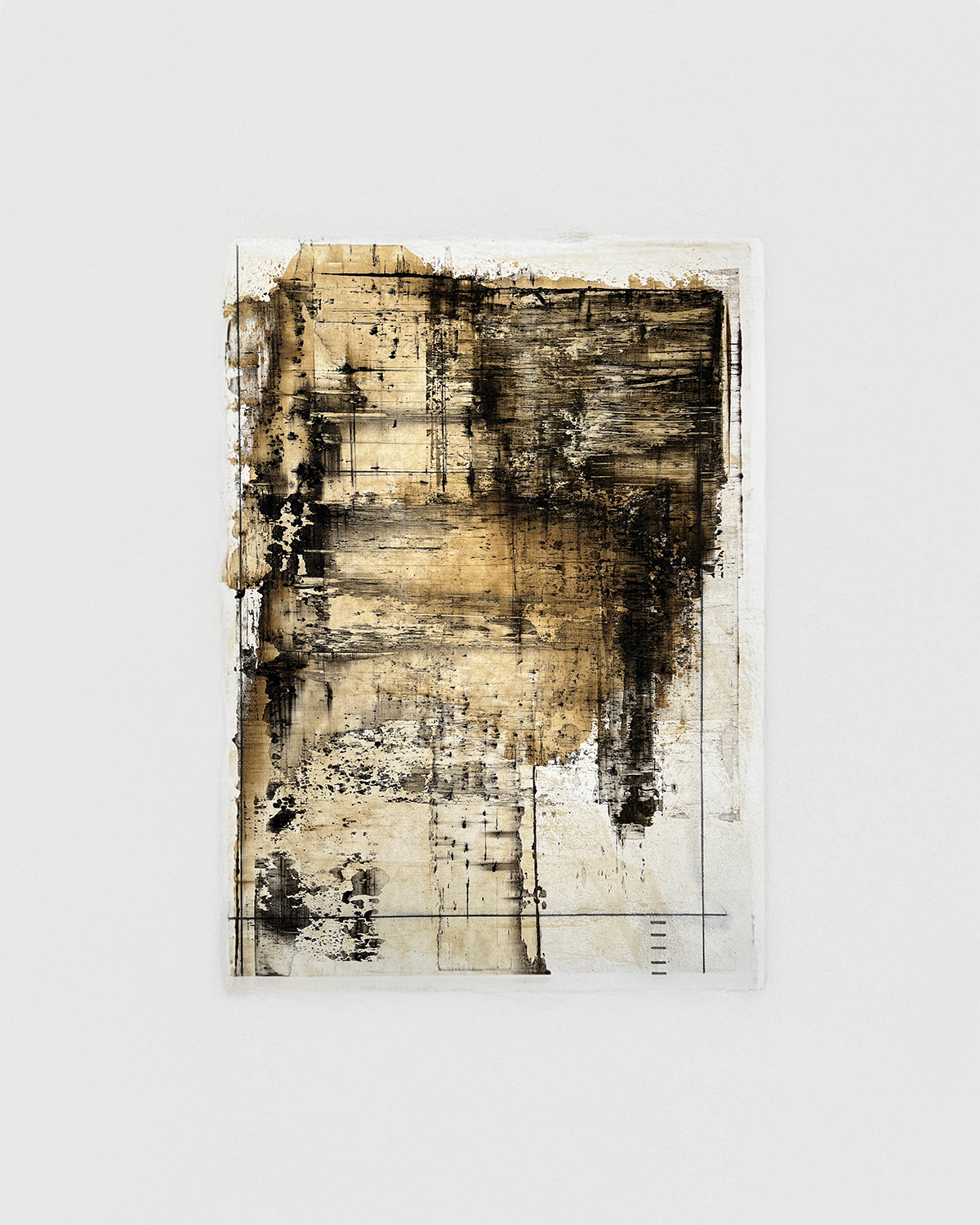
Material is where those intuitions take shape. Wax that softens under heat, ash that holds the memory of fire, reclaimed wood already marked by time. He chooses substances that respond to pressure, scraping, and repeated layering. Sometimes he cuts back the surface with a metal scraper before building it again. These small gestures create a kind of internal landscape, where texture becomes both memory and message. Even untouched, the surfaces feel inhabited.
San Miguel de Allende deepens this sensitivity. Its sharp light, angular shadows, and mix of modern clarity with weathered stone echo through Jerry’s compositions. He studies how edges behave, how materials absorb brightness, how colour dissolves into dust. The environment becomes part of the work’s inner rhythm.
Jerry McLaughlin Archives
His earlier life in paediatric cardiac critical care remains present in quieter ways. Precision, discipline, and the responsibility of small gestures now appear in how he handles materials, how he resolves a surface, how he decides when to stop. Attention becomes a form of care. Structure becomes a form of empathy.
Teaching and writing about cold wax have also expanded his practice. Explaining technique forces him to articulate choices he once made intuitively. The exchange with students—seeing how others build, fail, adjust, and push—brings renewed clarity. It sharpens his own decisions and deepens his understanding of the medium’s possibilities.
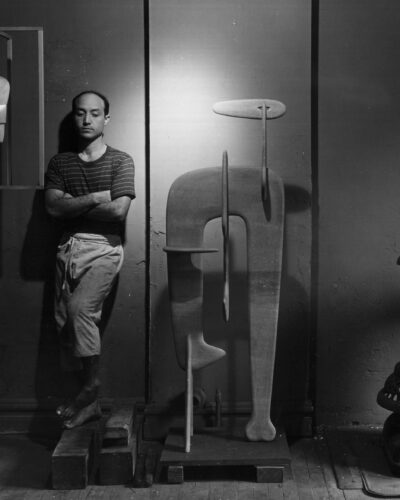
Jerry McLaughlin Archives
A piece is complete only when it reaches a delicate balance: beauty and sadness, stillness and tension, rawness and refinement. Jerry waits for the moment when the surface feels inevitable—as if it could not have become anything else. Nothing ornamental, nothing excessive. Only what serves the composition’s quiet truth.
What stays with him most is how viewers bring their own memories to the work. People find personal echoes in the textures, shadows, or barely visible transitions. Their intimacy often surpasses his own. Once a piece leaves his hands, it grows beyond him—becoming a place where someone else can meet themselves.
In Jerry’s world, surfaces are not merely constructed. They are lived into. Built from fragments of material, time, and emotion, they become spaces where darkness gains depth and beauty arrives with patience.