Designers (24)
Close
Eve.
A photographer whose work explores the relationship between the human body and natural environments. Working primarily with analogue photography, she approaches image-making as a sensory and instinctive process, often shaped by movement, touch, and immersion in landscape. Her photographs blur the boundaries between figure and territory, creating images that evoke presence, vulnerability, and transformation.
Through her practice, she seeks to reveal subtle connections between bodies, ecosystems, and lived experience.
There is, at the beginning of Eve Campestrini’s relationship with photography, an image she did not take.
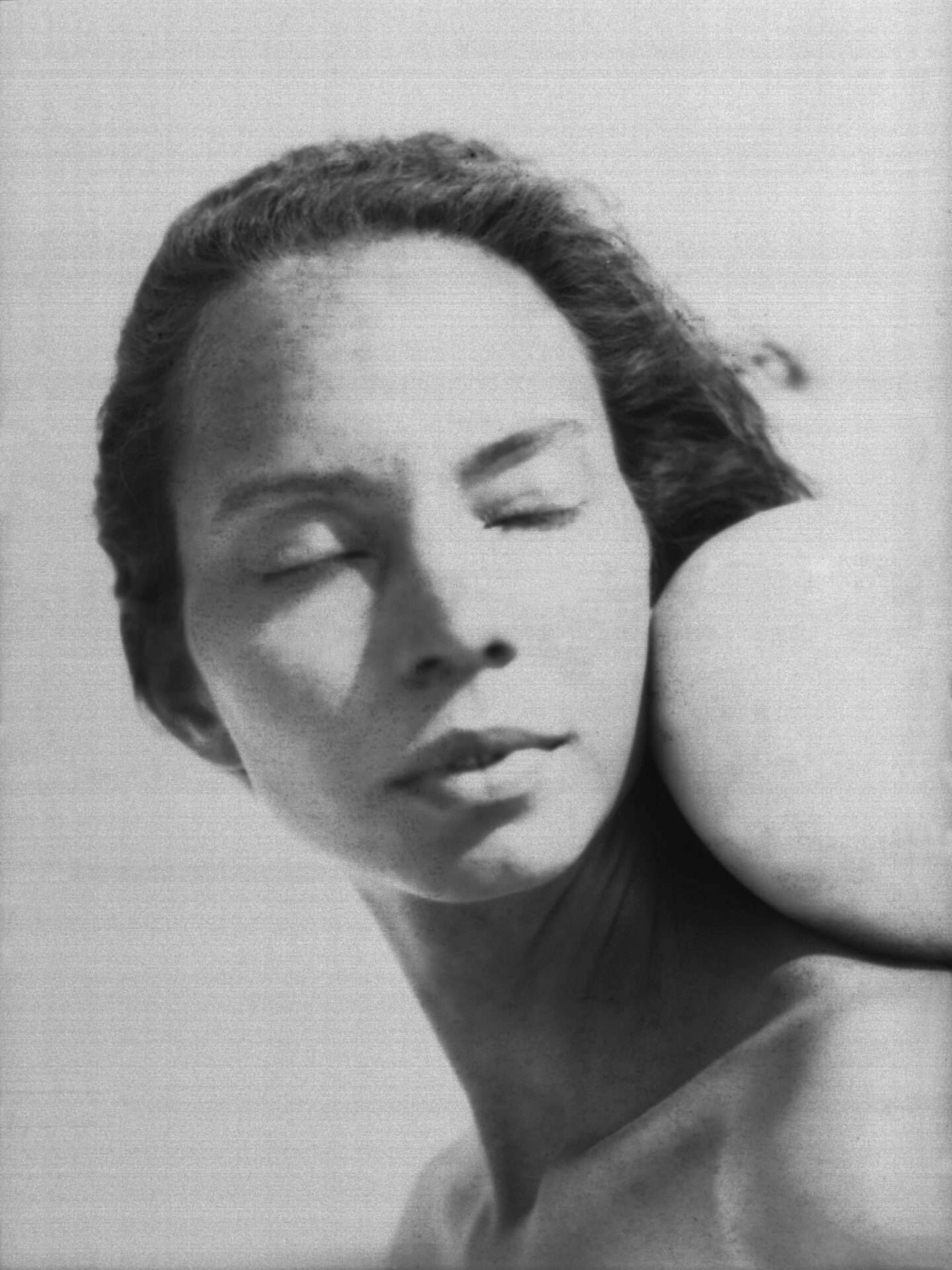
The body as landscape, memory, and living matter.
It was an abstract image of reflections and ripples in water, held inside a moment of personal intensity. The photograph was never made, yet it became decisive. It opened a question that continues to move through her work: how can an image evoke more than sight? How can photography touch the essence of a suspended moment, including everything it holds that remains invisible, off-screen, almost impossible to name?
For Eve, photography begins in this space between memory and sensation. She comes from a family where images were part of daily life. Photo albums, amateur films, and slides carried the trace of several generations. Her grandfather and mother photographed constantly, preserving moments through ordinary acts of attention. But what interested her was never only the act of recording. It was the possibility that an image might contain something deeper than representation: the temperature of a place, the vibration of light, the memory of touch, the feeling a moment leaves in the body.
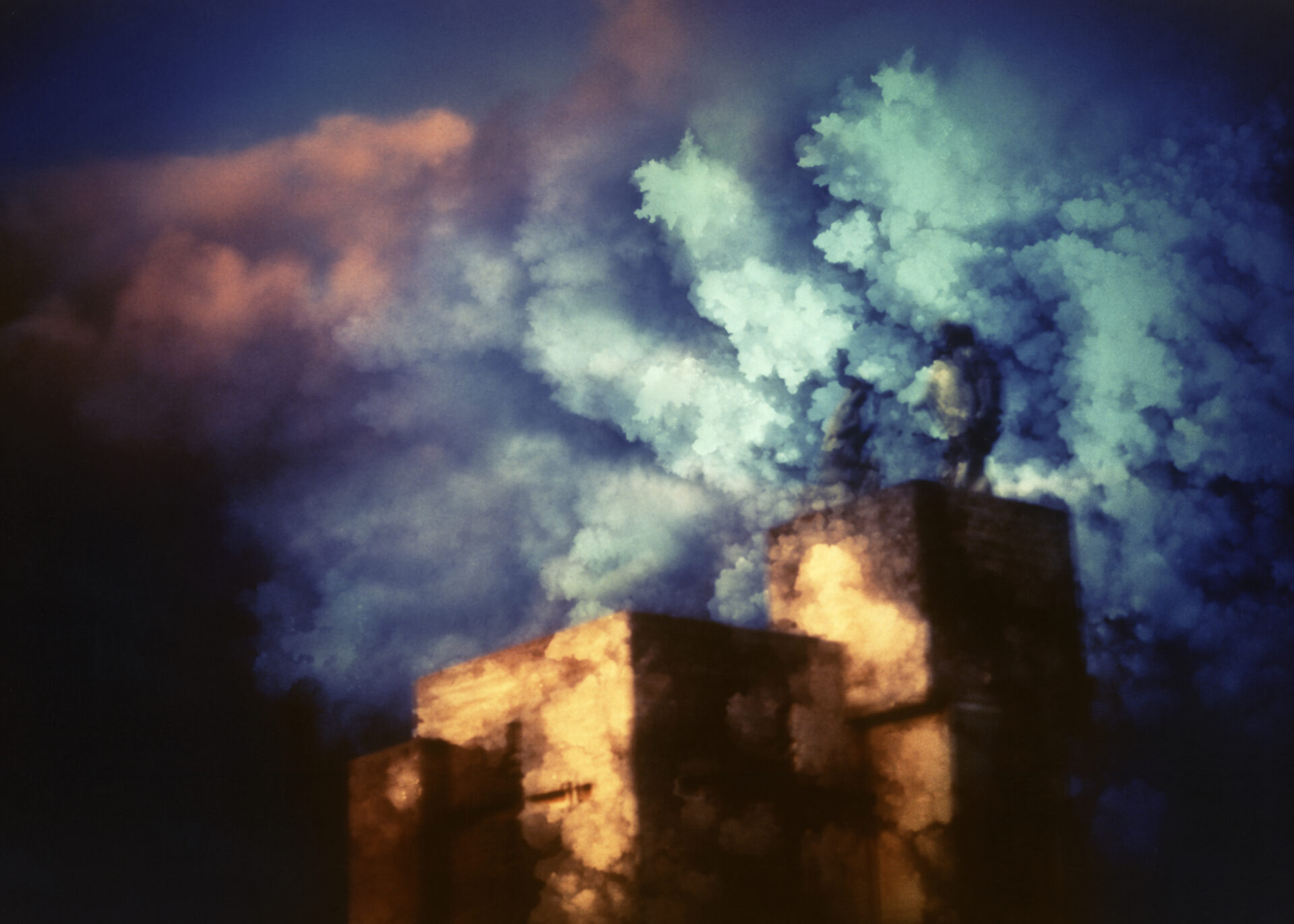
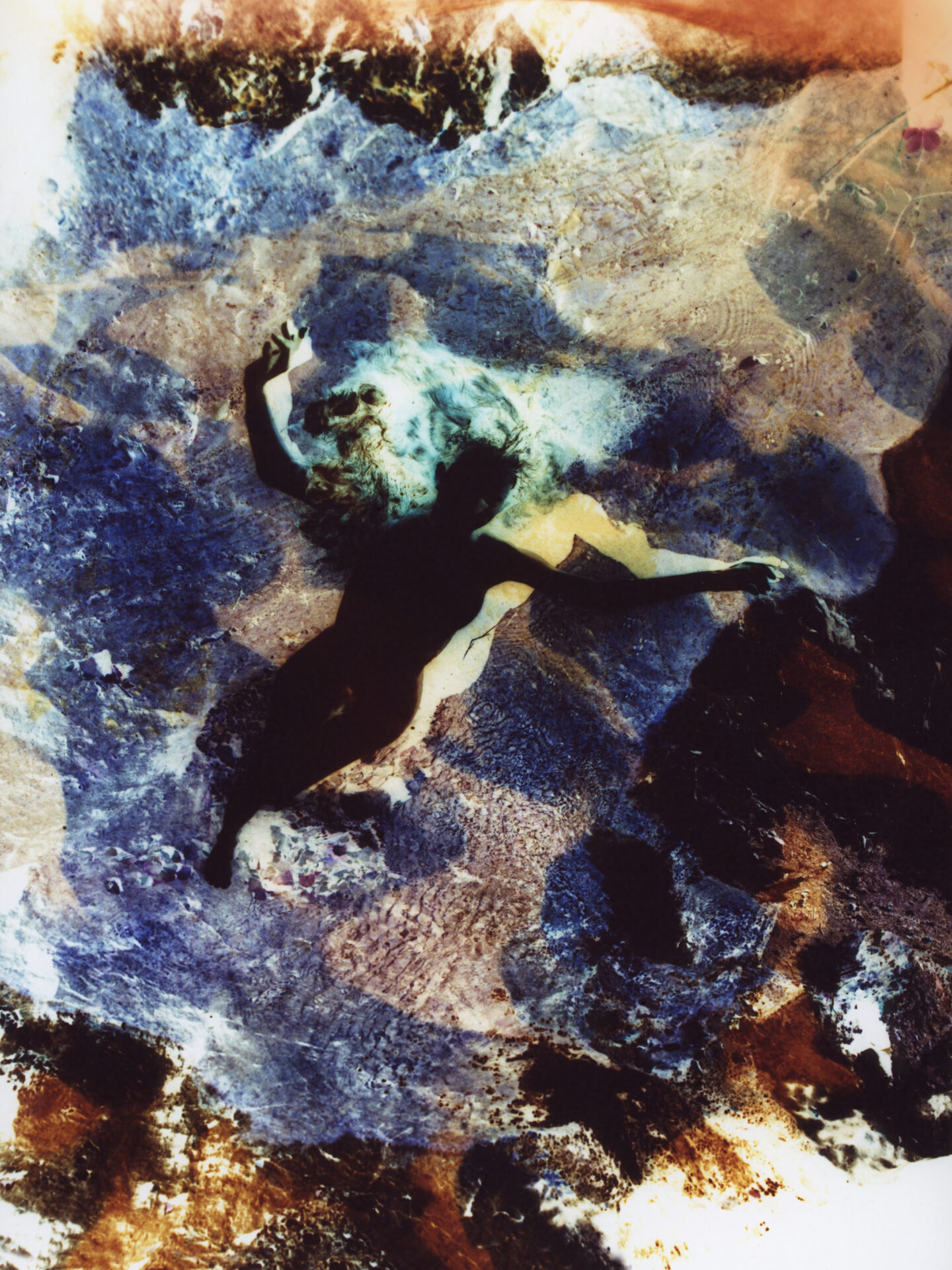
Surrendering to the currents of memory and instinct.
This search remains open. An eternal quest.
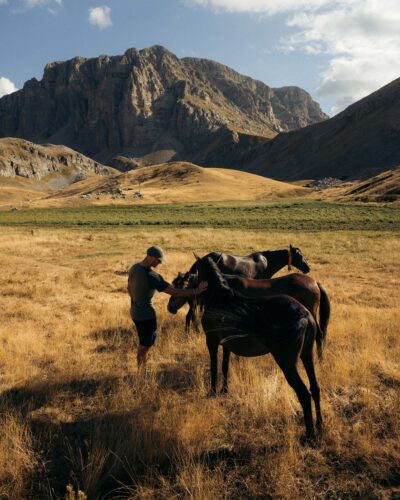
Her photographs often appear to come from that same threshold. They do not simply describe a person, a landscape, or a gesture. They ask what passes between them. A body leaning into earth. Skin touched by light. Vegetation becoming almost flesh. Water holding memory. In Eve’s images, the natural world is never passive. Landscape is not a backdrop. It is active, inhabited, and alive.
She grew up in a rural environment, surrounded by biologists, where landscapes were not abstract views but living systems. Places had names, stories, and actions. They were resources, playgrounds, and meeting grounds. This early understanding shaped the way she looks. Against the inherited idea of landscape as a fixed and external scene, she sees it as embodied. Something that affects us, shelters us, and observes us in return.
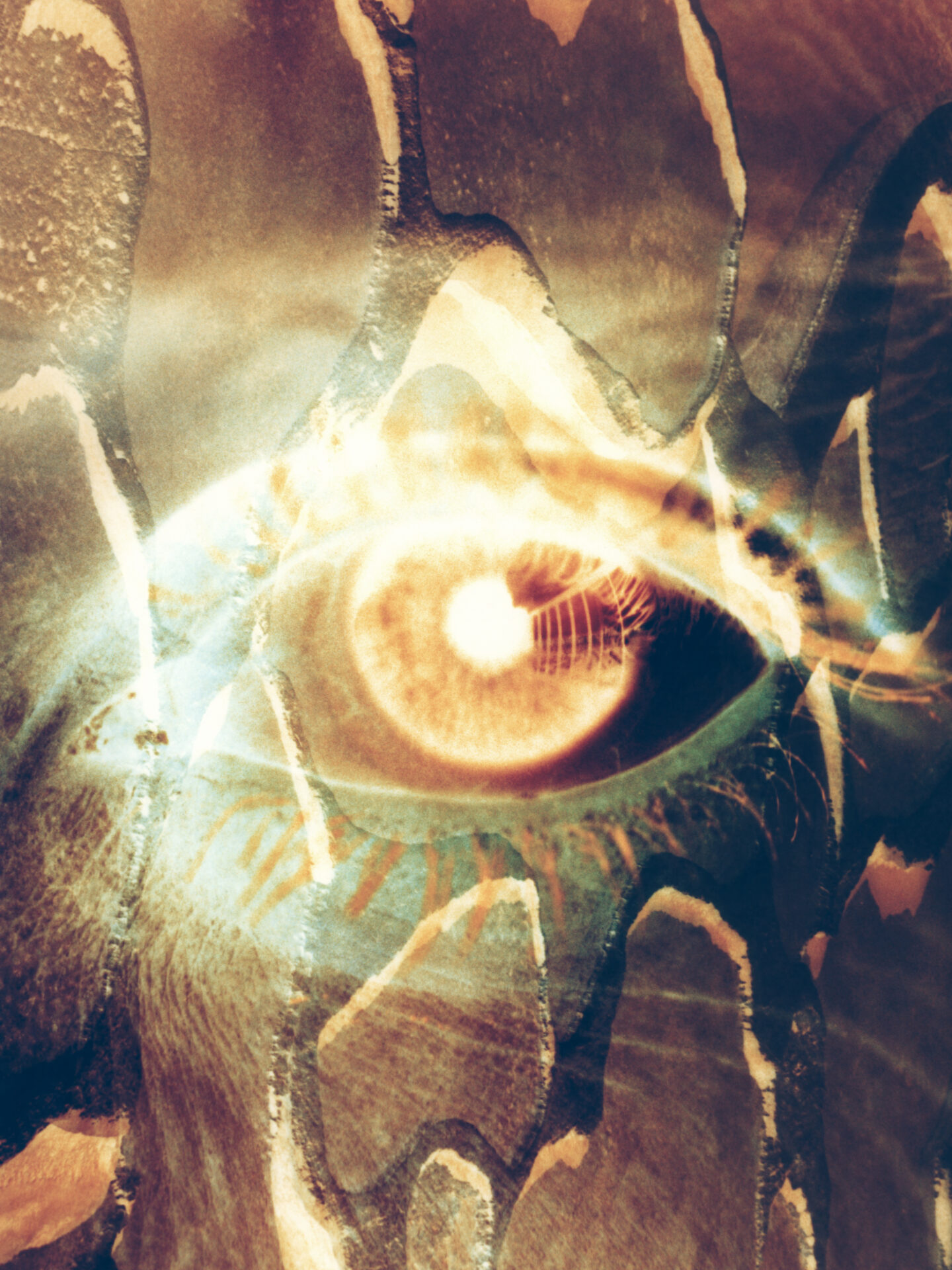
Where vision becomes intuition.
The places where she makes images are chosen through resonance. Sometimes it is the movement of light. Sometimes it is the abstract or dreamlike potential of a site. She is drawn to geographical areas where the light is dense, warm, and contrasting. It is an atmosphere she needs in order to work. Living semi-nomadically, adapting to the seasons and spending long periods outdoors, these landscapes become more than locations. They become an extension of the inner self. A form of home.
“They permeate me and observe me as much as I stare at them,” she says.
The body enters this landscape not as an object, but as another living terrain. Eve describes an intimate relationship with the moving body, formed through her own practice and through a circle of acrobats, dancers, and athletes. For her, the body is a place of exploration, experimentation, and play. It carries a language before language. Through posture, gesture, tension, exposure, and withdrawal, it expresses what words cannot always reach.
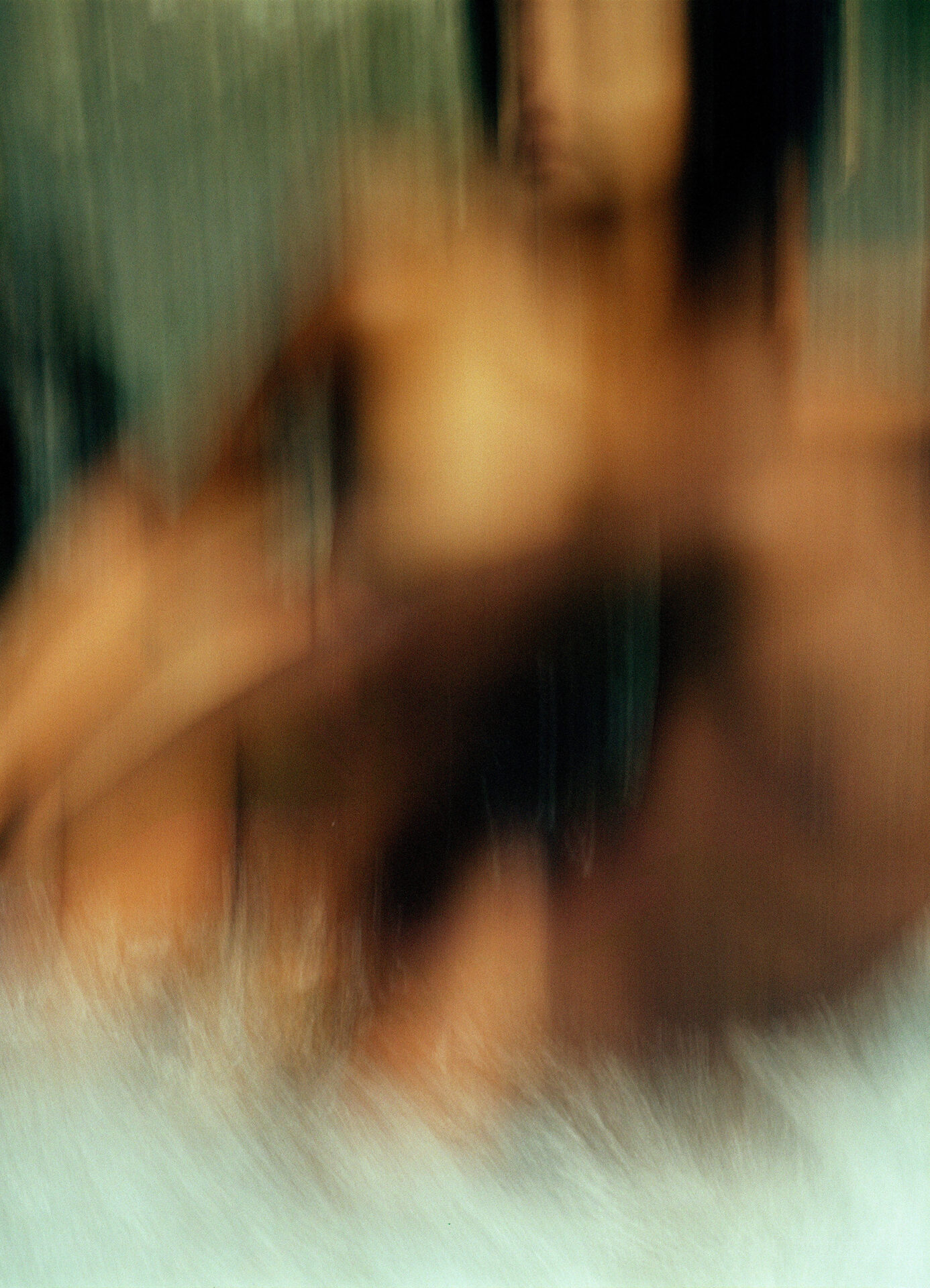
A body in motion, suspended between presence and disappearance.
There is also a quiet resistance in this attention to the body. Eve questions contemporary tendencies to artificialize it, to cover it with technological objects and distance it from a sensual perception of the non-human world. Her desire for naked bodies is not decorative or theatrical. It is a desire to remove the meanings imposed by clothing and extreme sophistication, to return to something more elemental.
A desire, as she puts it, “to encounter that wild part within each of us,” the part that is essential and insists on not disappearing.
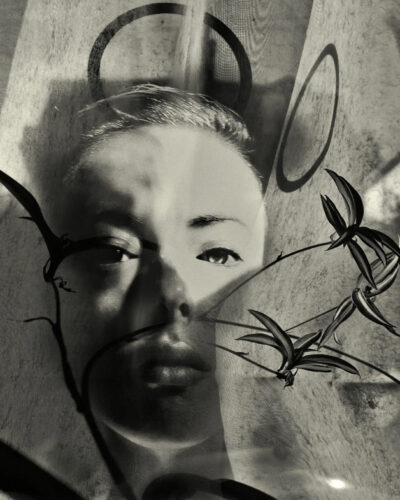
This wildness is not spectacle. It is not performance. It is closer to instinct, to presence, to a state of listening. Her images often hold bodies at the edge of transformation: emerging, disappearing, merging with the surrounding world. A shoulder becomes stone. Skin echoes bark. A figure seems less placed in nature than absorbed by it.
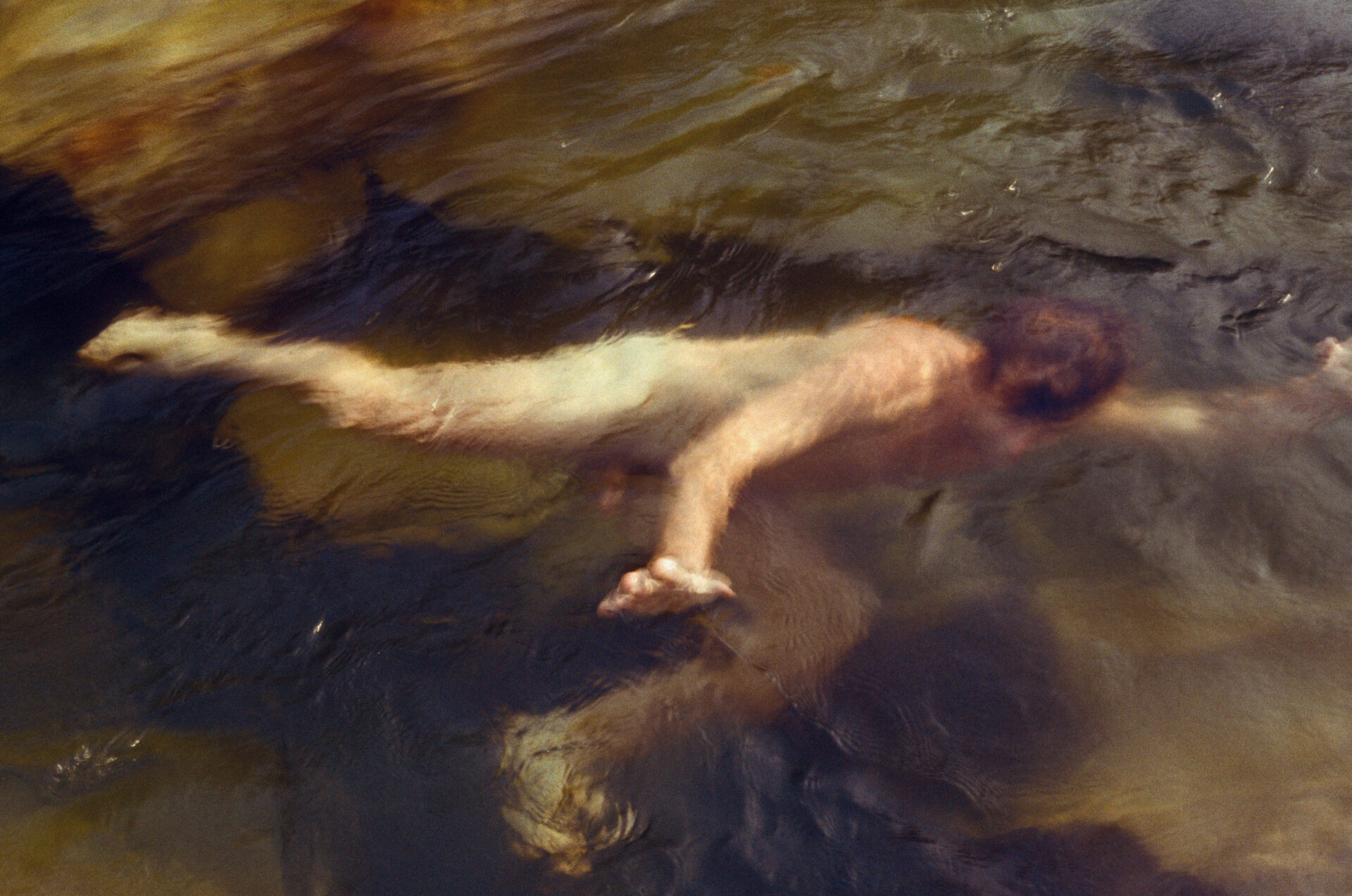
A return to the elemental language of nature.
For Eve, these moments come from a dialogue between observation and imagination. She seeks the unexpected, the spontaneous, and accepts metamorphosis as part of the process. Permanence, she suggests, is a human concept. It does not belong to living things. Everything is fluid, shifting, transforming. Even reality itself depends on the one who perceives it.
This fascination with perception lies at the centre of her practice. What we call reality is never neutral. It is shaped by organic and sensory capacities, by the body that receives it. Every being constructs the world differently. Photography, then, becomes a way not only to represent reality, but to question it. To reveal how unstable, suggestive, and porous it can be.
Her method follows this same openness. Rather than imposing an image from the beginning, she works to create the right conditions for something to appear. A framework is set, but not closed. When a project begins, an atmosphere starts to emerge through interactions and movements. Later, within a series already underway, she may search for missing images, but always through the same principle: to create a context where the spark can happen.
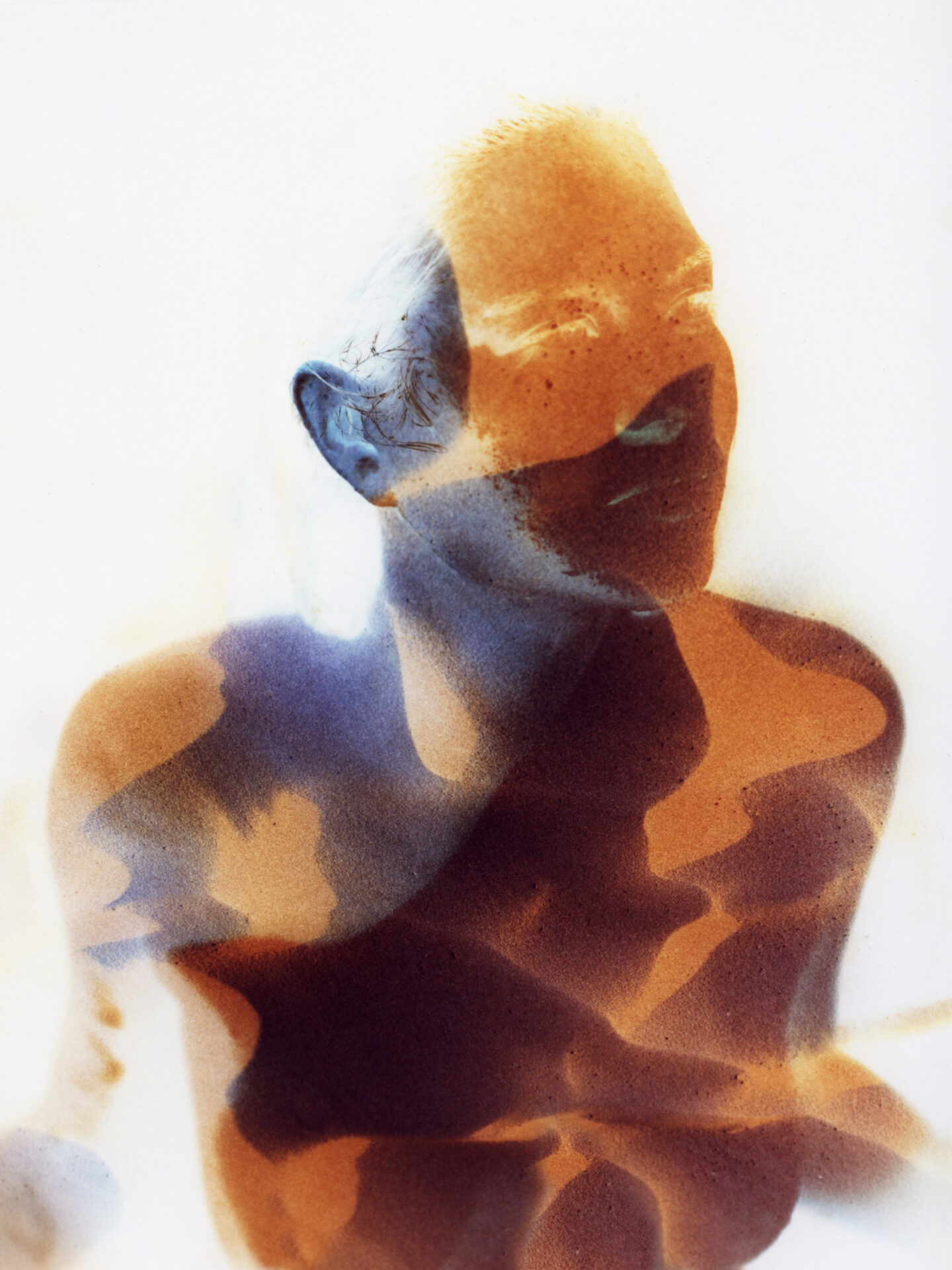
The body becoming a map of light and shadow.
Whether in the darkroom or on location, the work is a constant movement between structure and surrender. Defining a frame, then letting reality speak.
Light is central to this process. Eve chooses shooting times according to natural conditions, but she also accepts the necessity of adaptation. Sometimes the expected image does not come. Something else appears instead. In the darkroom, she describes the process as a dance between time and light. The image unfolds through practical and technical conditions, but also through patience, attention, and accident.
Texture deepens this sensory field. Skin, soil, water, vegetation, and surface all carry force in her photographs. Under a certain light, materials come alive, revealing what lies just beneath the first layer of the visible. Texture becomes a passage into other worlds. A surface can reverse scale, turning the familiar into abstraction. The viewer’s mind is invited to wander, to build its own narrative from fragments of matter.
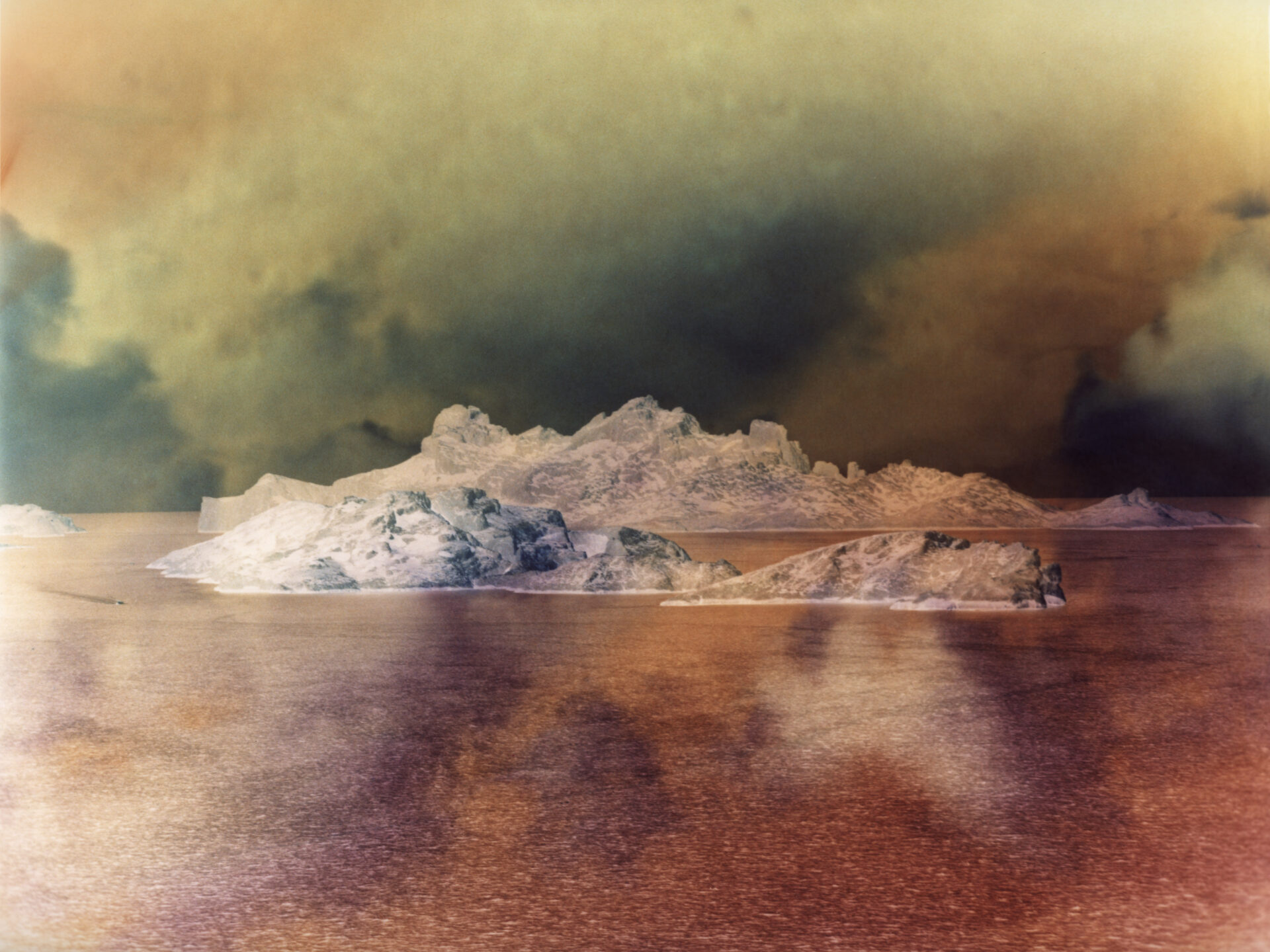
Where the body and the earth become one.
This is where her work moves beyond image-making as representation. It becomes a form of embodied perception. Photography does not only look. It touches, listens, remembers.
When asked what she listens for when making an image, Eve answers with disarming simplicity: everything starts in the belly. Something pulsating summons other memories and senses besides sight. Touch, sound, and many others.
The answer is brief, but it opens the deepest part of her practice. Her photographs seem to come from this place: not from a distant eye, but from the body as sensor, receiver, and archive. The image begins before composition. Before the shutter. Before thought has organized sensation into language.
Everything starts in the belly.
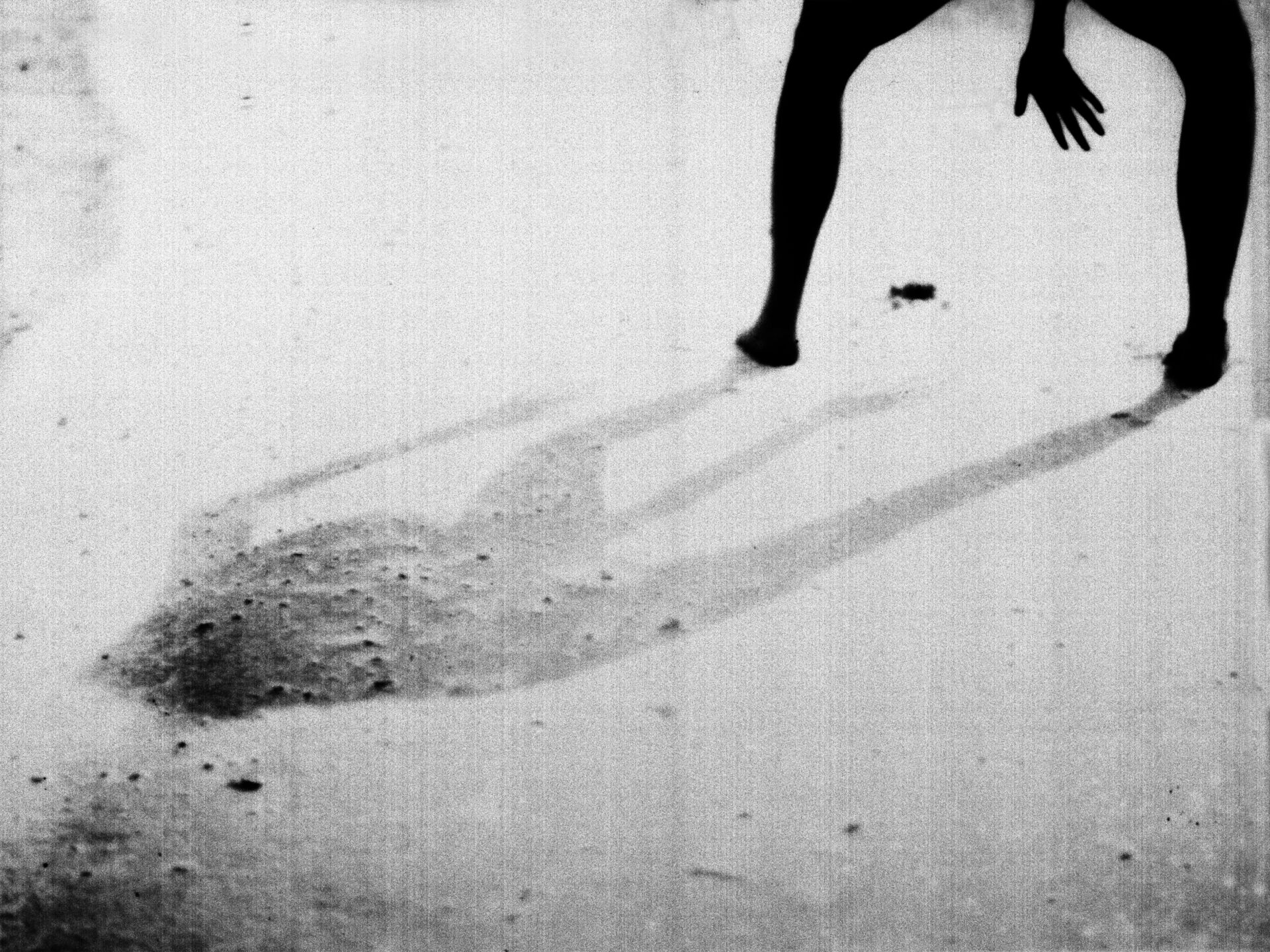
Traces left by movement, memory, and time.
Stillness and silence also matter. Not as emptiness, but as altered states of perception. Stillness, for Eve, suggests a deep and slow movement, something subtle yet powerful, like currents moving beneath the sea. Silence leads her toward other sounds, non-human sounds, those that exist outside cities. These spaces and intervals allow things to emerge.
In this sense, Eve’s images are attentive to what modern life often pushes aside: slowness, animality, darkness, heat, fragility, the intelligence of place. They ask what happens when the human body stops standing apart from the world and begins to feel itself within it.
Six years ago, her move to the Caribbean marked a turning point. It gave her the space to connect more deeply with her photographic practice. Since then, two projects have embodied this shift. Lueurs Fauves, begun in 2023, documents the sensory and imaginative experience of a territory and a collective of farmers working toward ecological transition. Carne Viva celebrates the senses and the experience of the body.
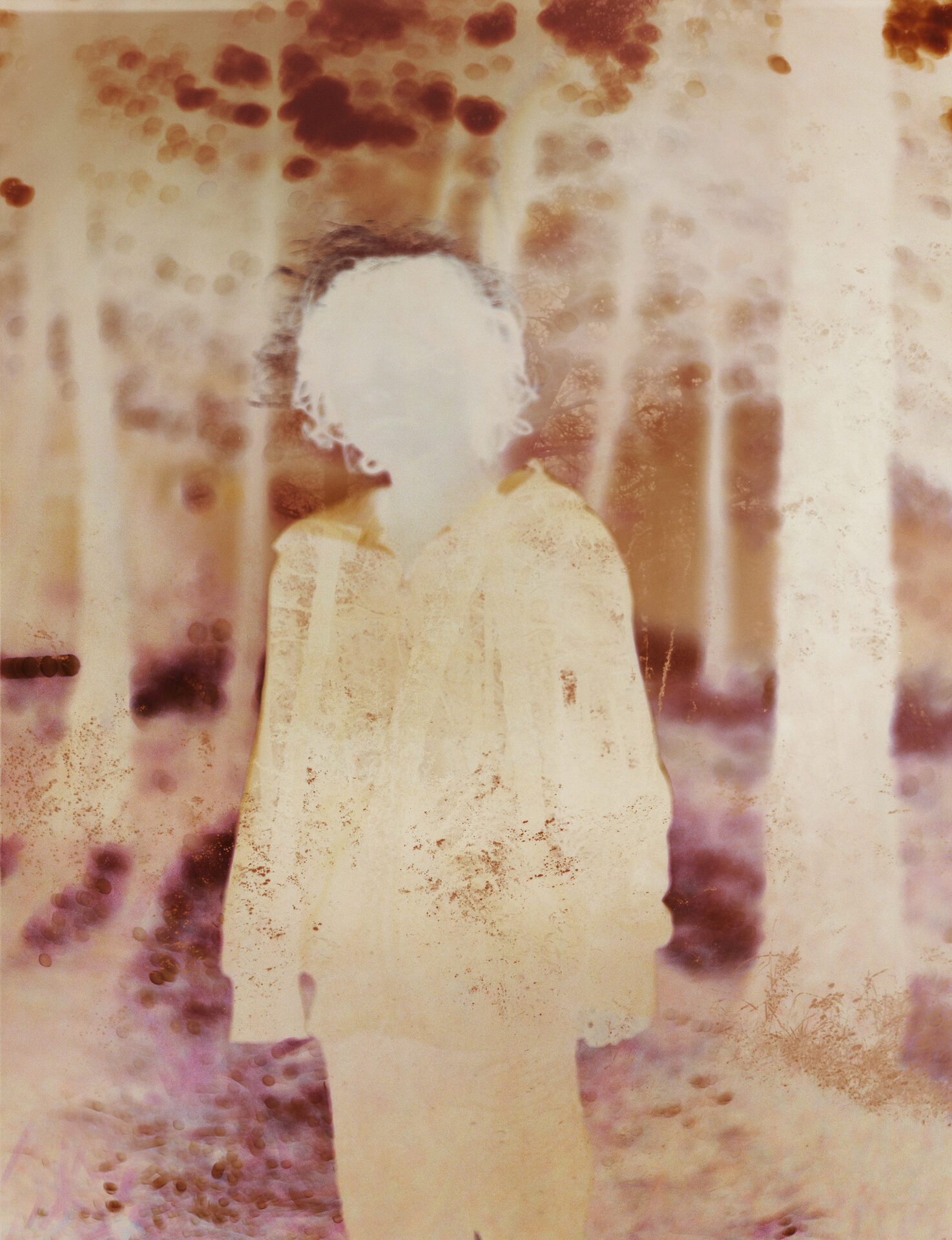
Between memory, dream, and disappearance.
Together, these projects extend the same question: how can photography hold the living relationship between beings, places, and perception?
Looking ahead, Eve’s research continues to move toward the intersections between plant and animal worlds. She speaks of cultivating a permaculture-based approach to life and to our place within it as human beings. The photographic tool remains part of that inquiry, not as an instrument of certainty, but as a way to question what reality is made of.
The image, for her, is not only what appears. It is what trembles beneath appearance. What the body knows before thought. What the landscape returns when it is no longer treated as scenery.
In Eve Campestrini’s work, photography becomes a threshold between the visible and the felt. A place where bodies, ecosystems, and memories move through one another. A search for the wild part that remains, still alive, still insisting.