Designers (24)
Close
In the stillness of her studio, forms begin to emerge.
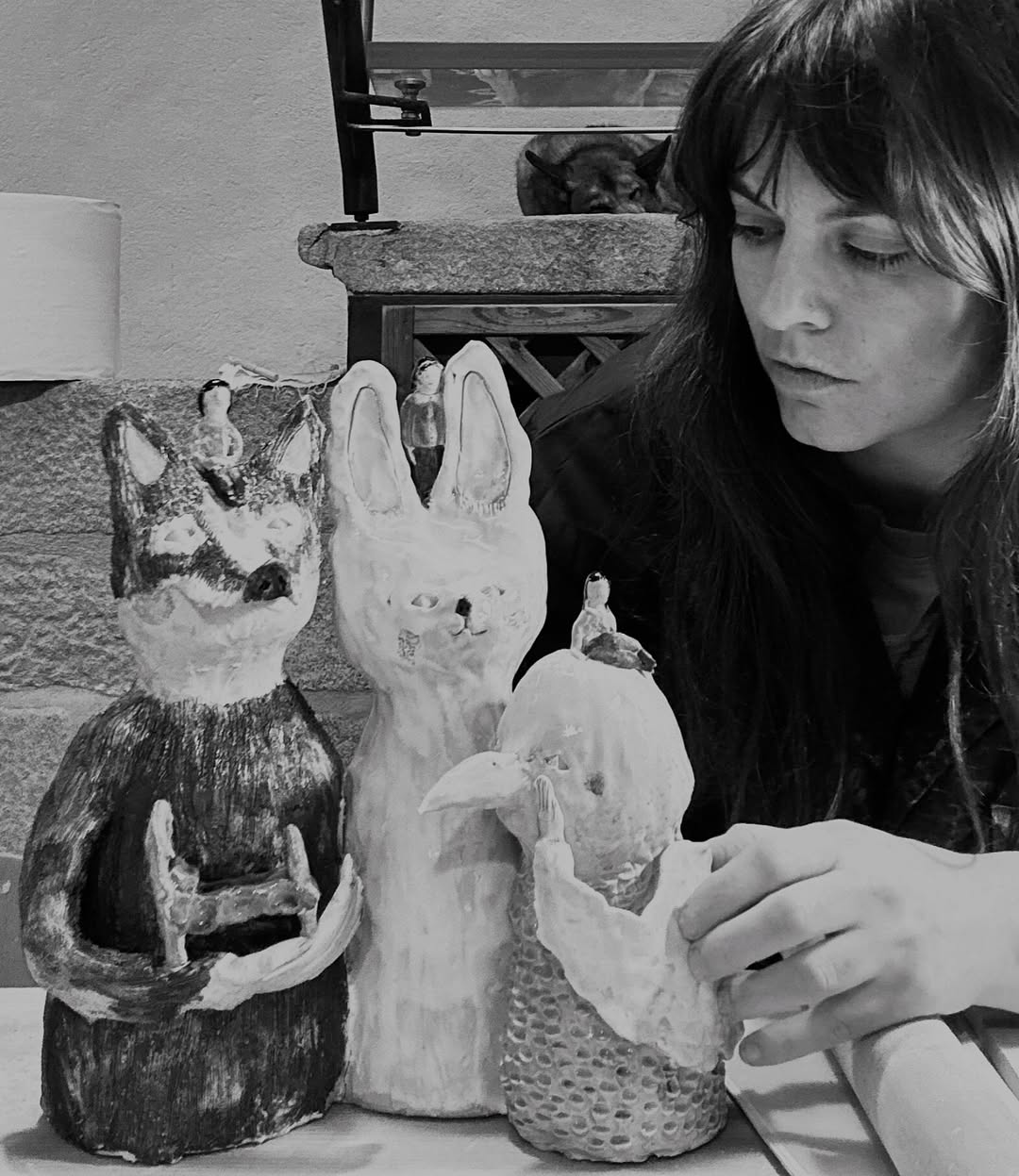
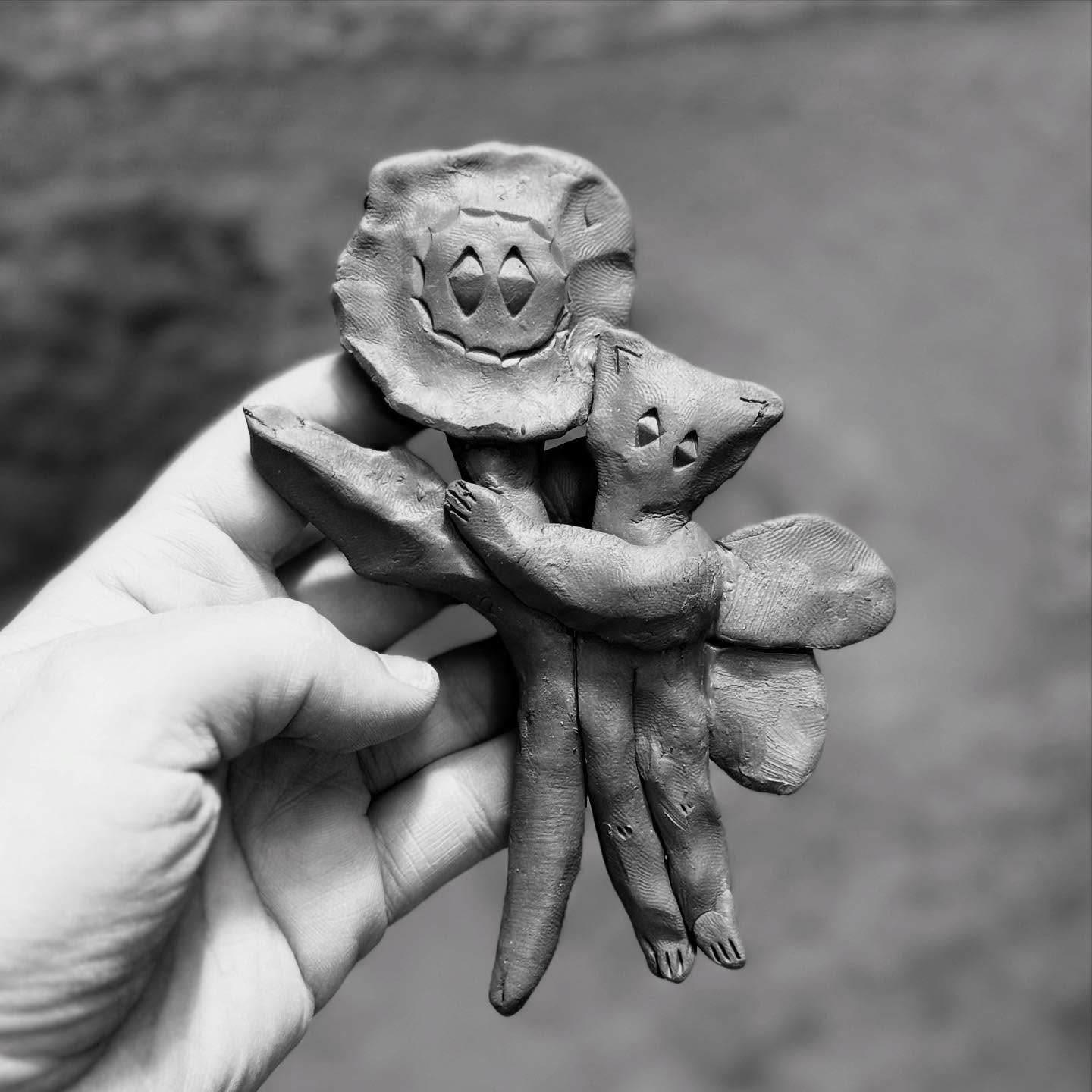
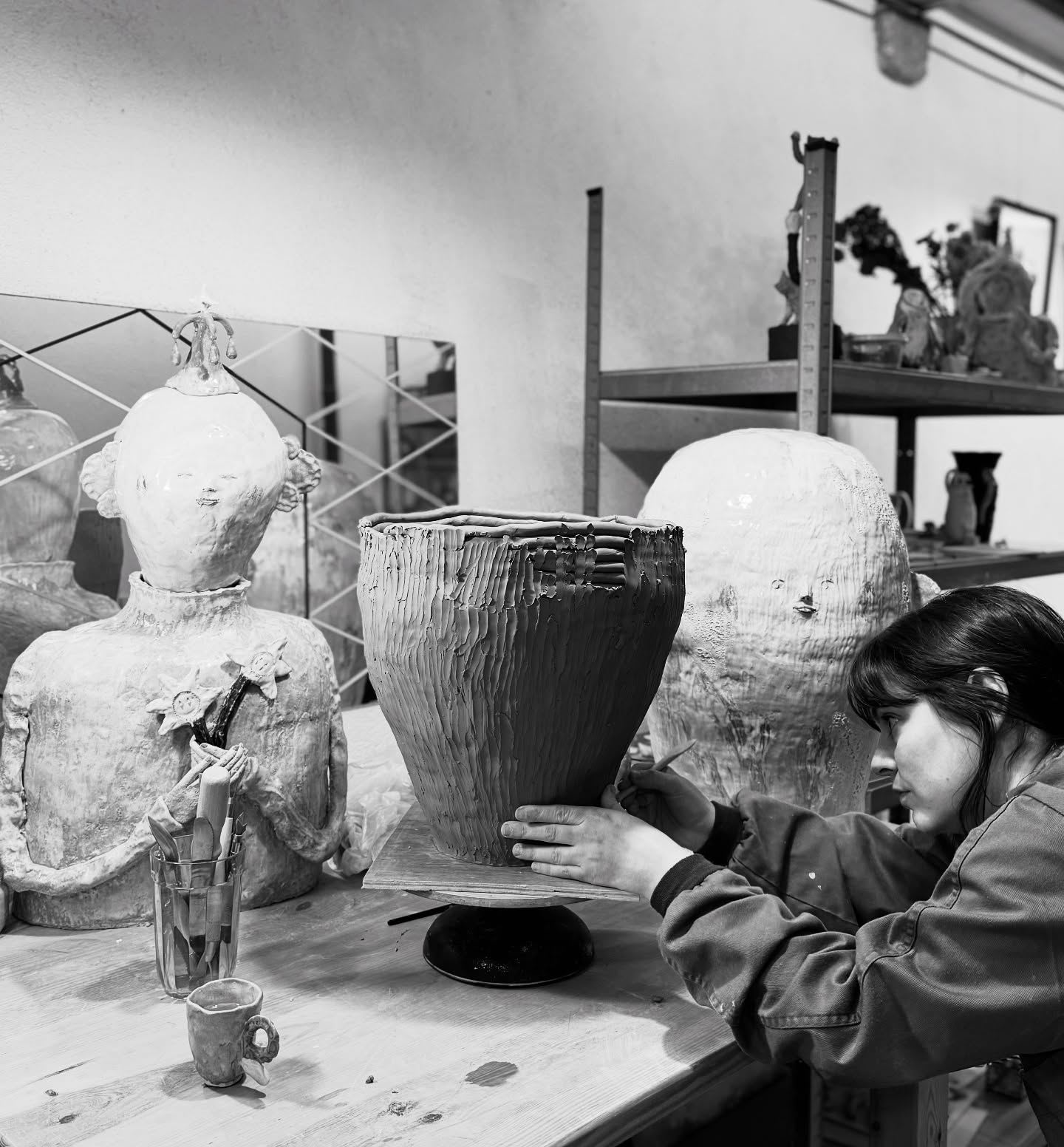
A hand pauses over clay. A gesture repeats itself. Something instinctive slowly takes shape between memory and imagination. In Casa Chamota, her workshop in Pontevedra, the world of Nuria Figueiredo unfolds through fragments: dreams half remembered, childhood sensations, inherited stories, and the invisible rituals that quietly shape everyday life.
Her sculptures resist easy definition. At once intimate and unfamiliar, playful yet solemn, they seem suspended between devotion and dream. Some resemble guardians. Others evoke domestic altars or protective figures. Many carry an emotional presence that feels difficult to explain yet strangely immediate.
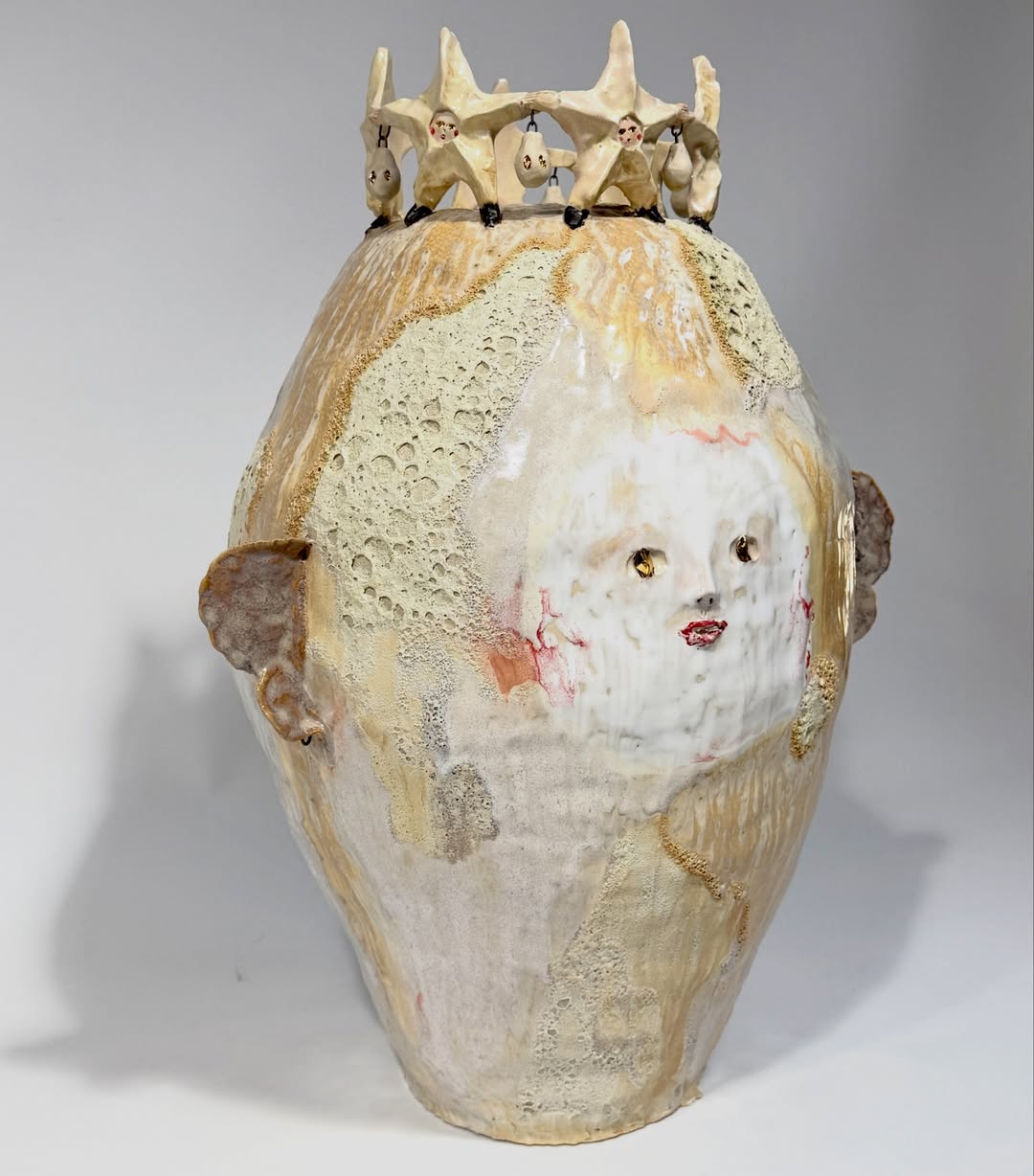
A dreamlike gathering of small guardians and silent presences, where ritual, play, and the poetry of childhood imagination quietly unfold.
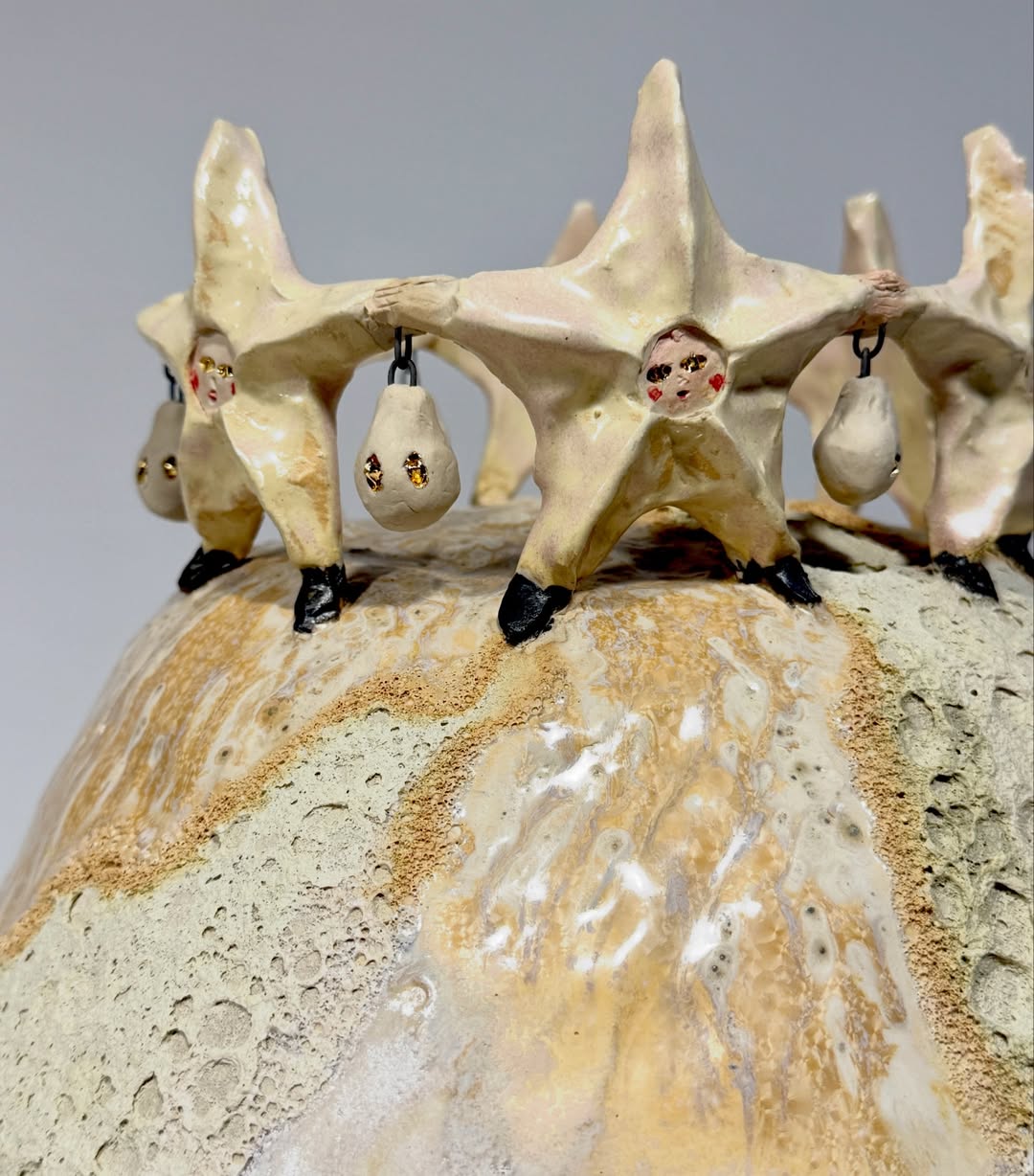
To encounter Nuria’s work is to enter a world where the visible and invisible quietly coexist.
Galicia, with its oral traditions and layered relationship to the unseen, lingers beneath the surface. Yet her work never feels nostalgic, nor illustrative. Rather than reproducing folklore, she transforms its emotional residue into something deeply personal — objects that speak less through explanation than intuition.
At the centre of her practice lies an openness to wonder.
For Nuria, enchantment begins with something profoundly human: the instinct to marvel.
“I think the sense of wonder is something all people have, especially in childhood,” she reflects. “It exists naturally, in the way we look, touch, and imagine. As we grow older, we often lose it. In my case, art has been a way not to lose that connection — to continue looking at the world with curiosity, allowing myself to be surprised, to play in the studio.”
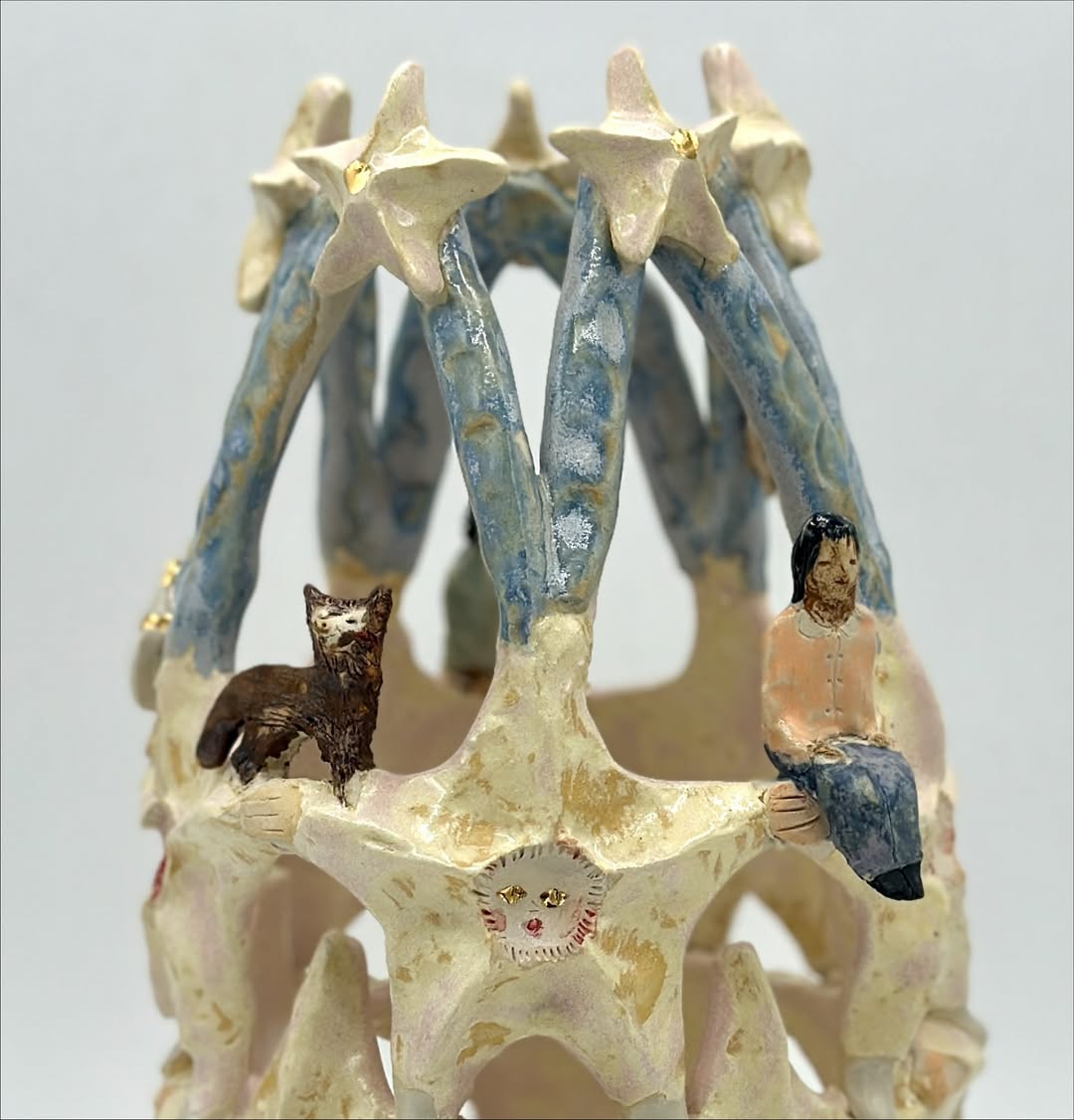
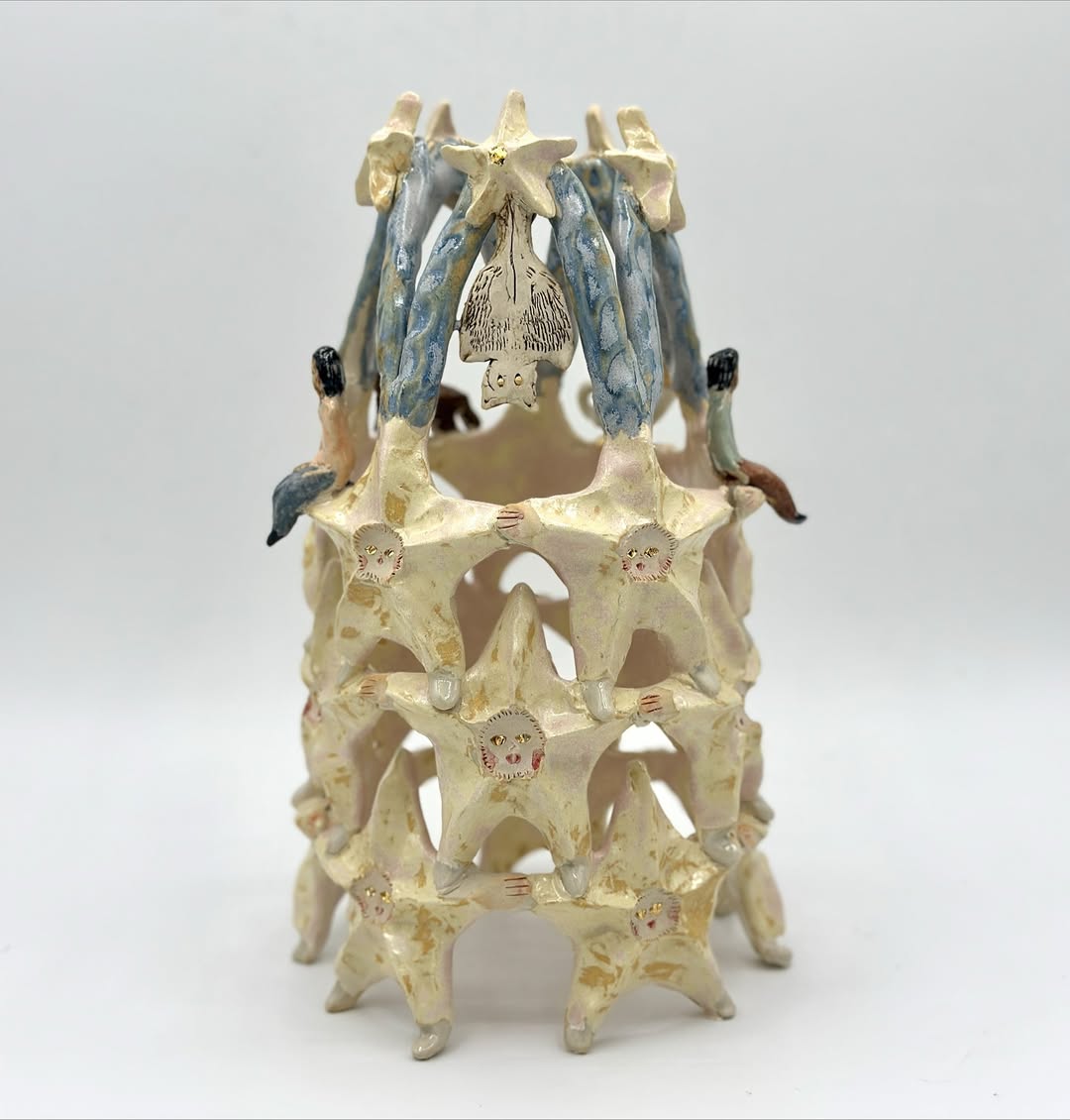
A quiet shelter inhabited by small guardians, wandering creatures, and fragments of imagined world. Where ritual, play, and wonder softly intertwine.
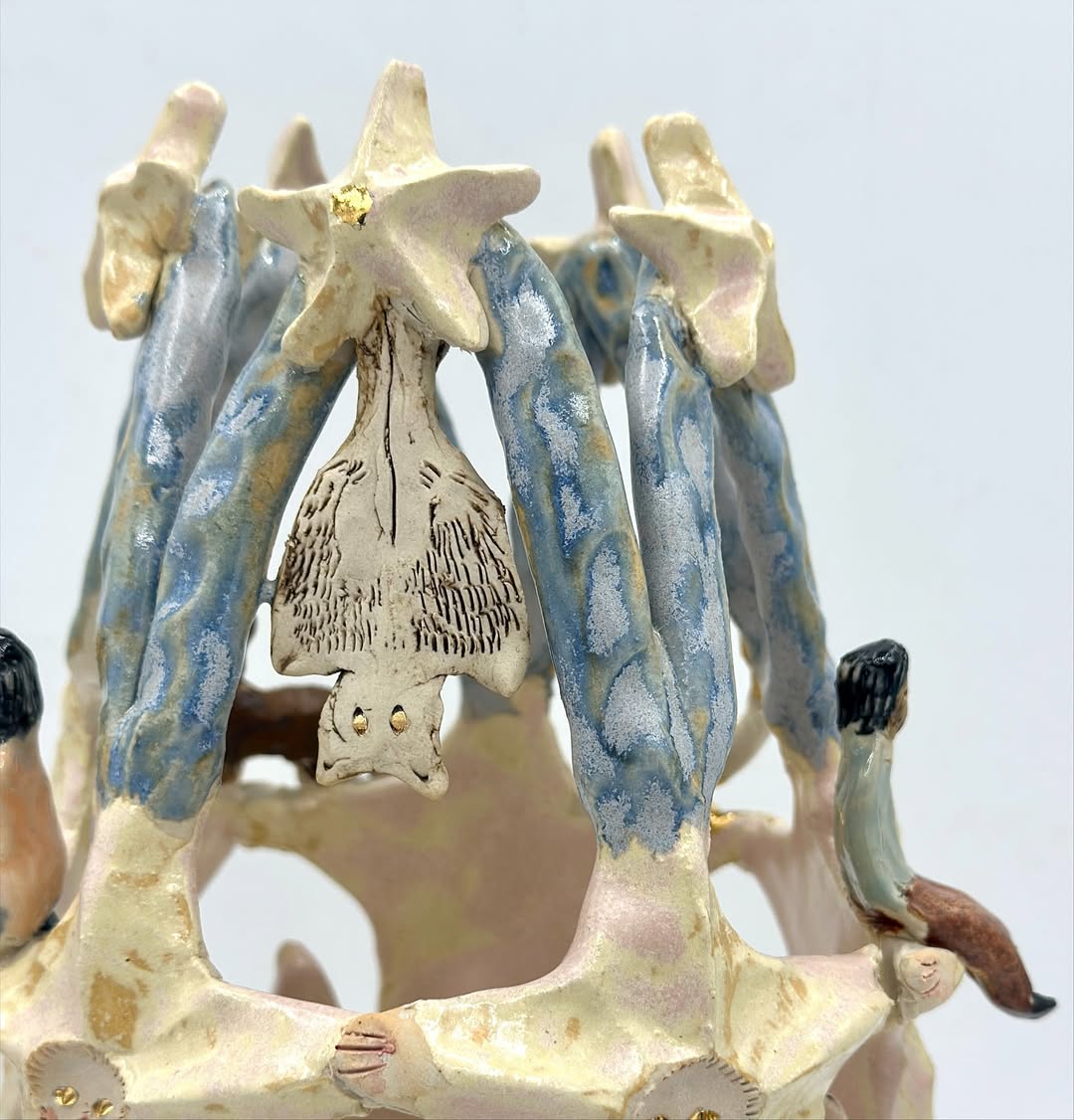
In a culture shaped by speed and constant visibility, her work proposes another rhythm — slower, more intuitive, guided less by certainty than feeling.
This becomes especially clear in the way she speaks about memory.
Rather than understanding memory as fixed or chronological, Nuria approaches it as something fragmentary — made of sensations, fleeting images, and emotional traces that resist language.
“Memory is central,” she says, “but I do not understand it as something linear or narrative. It often does not come from a concrete memory or a closed story, but from fragments, from sensations that are often difficult to describe in words. Like dreams. Memory functions like an echo that returns transformed, mixing with imagination and present experience.”
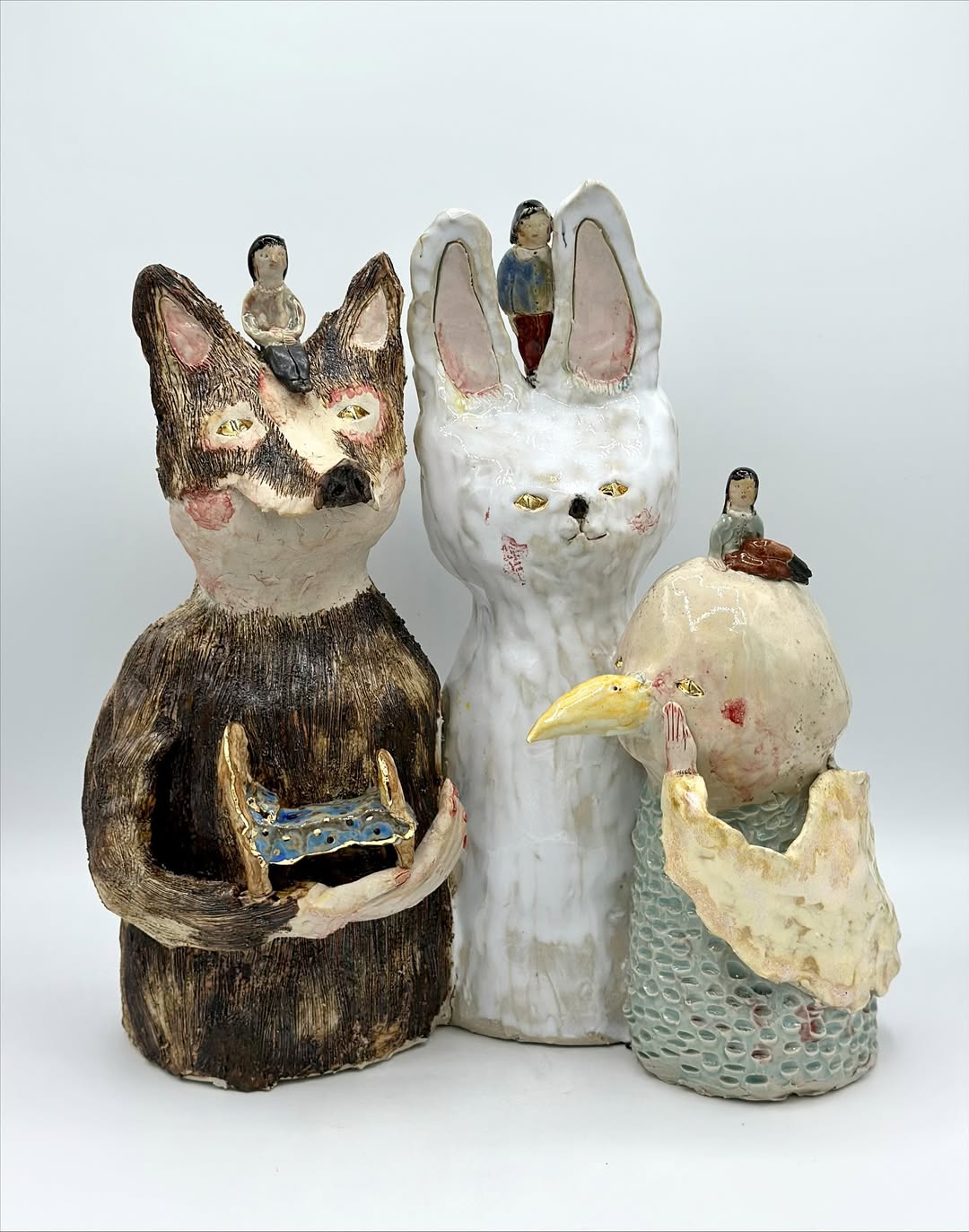
Born from children’s dreams, this sculptural guardian inhabits the space between imagination and memory. A quiet companion shaped by wonder, tenderness, and the poetry of the unseen.
Perhaps this explains why her sculptures feel familiar despite their strangeness. They seem to belong to a place we recognise without entirely remembering — a forgotten symbol, a childhood intuition, a feeling carried quietly through time.
In Nuria’s hands, clay becomes a language for things that cannot easily be spoken.
Not certainty, but feeling.
Not explanation, but closeness.
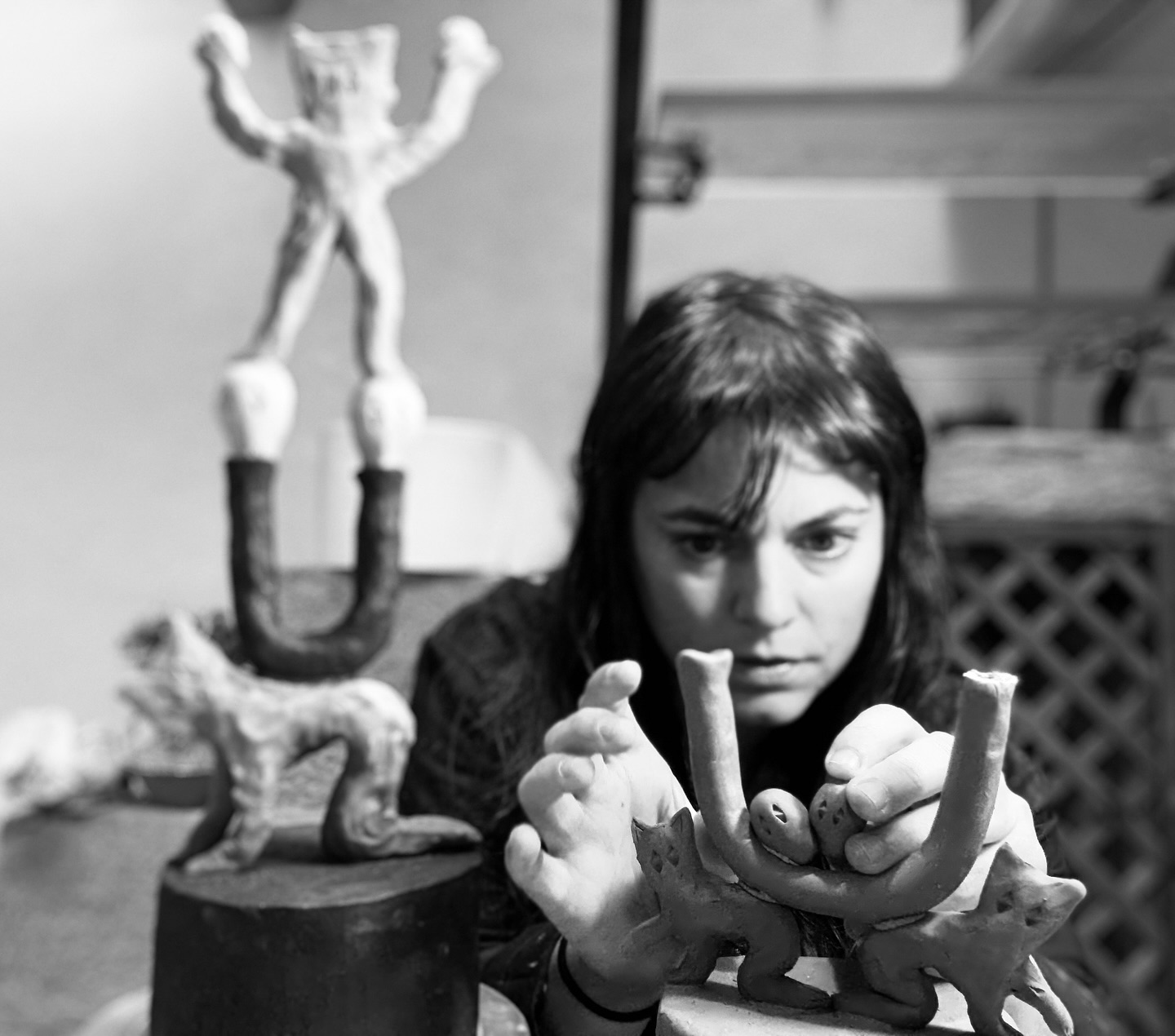
In Casa Chamota, forms emerge slowly. Shaped through patience, intuition, and the quiet rituals of making.
The Shape of Inherited Things
To understand Nuria’s work is also to understand something of Galicia.
Not simply as geography, but as atmosphere.
Stories remain close to everyday life. Oral traditions pass between generations. Rituals survive in gestures repeated almost unconsciously. What is unseen is rarely entirely absent.
For Nuria, these traditions form part of an emotional inheritance. Yet her relationship to them is neither literal nor documentary. She does not reproduce folklore exactly as it has been handed down. Instead, she listens for what these stories leave behind: a feeling, an image, an emotional trace.
“I love researching local traditions, myths, and rituals because they build identity,” she explains. “But in my work, I do not try to illustrate or reproduce them exactly as they are. I listen to what they provoke in me — a feeling, an image, an emotion. From there, those references mix with the personal and gradually transform into new forms.”
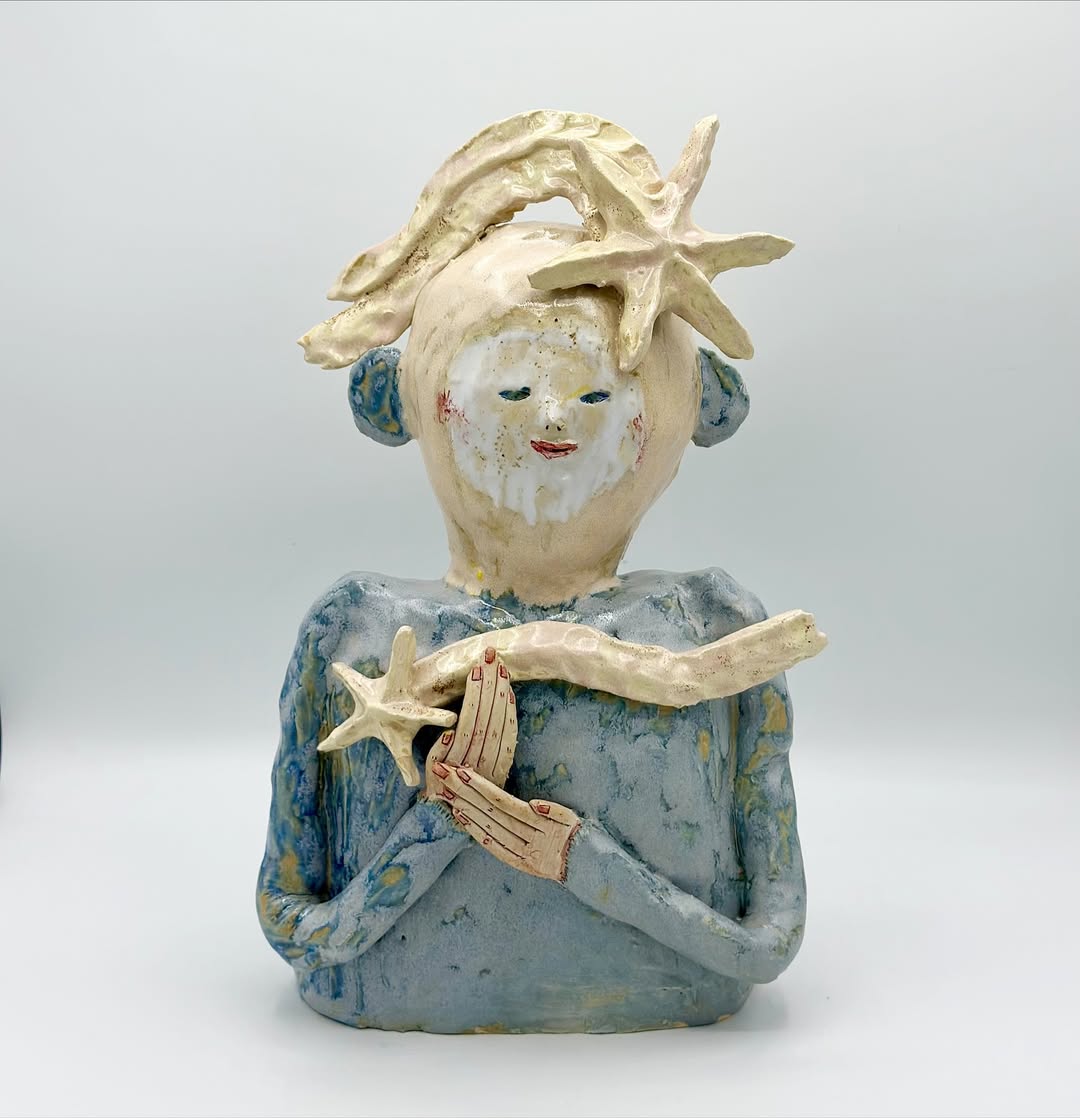
A quiet figure suspended between dream and devotion, where ritual, tenderness, and the poetry of childhood imagination softly converge.
Transformation feels central to her practice.
The figures that emerge from her hands do not belong entirely to the past, nor entirely to fantasy. A creature may recall an ancient guardian, a devotional object, or a forgotten talisman, yet never settles into certainty. Their ambiguity feels intentional.
Rather than insisting upon interpretation, Nuria leaves space for imagination.
Many of her sculptures evoke guardians, altars, or symbolic presences that feel quietly protective. When asked whether she sees them this way, her answer is simple:
“Yes, in some way. I like to think that my pieces accompany, care for, and somehow transform the space they inhabit.”
The word accompany feels especially important.
Her work suggests something increasingly rare: objects capable of emotional presence, forms that settle into everyday life and gather meaning over time.
This becomes especially visible in her Serie de Pared, where devotional imagery is gently reimagined through domestic space.
“I am very interested in the relationship between ritual and everyday life,” she says. “The home is a space full of small symbolic gestures. Objects placed in specific places, images that accompany us, things that are not there only for aesthetics.”
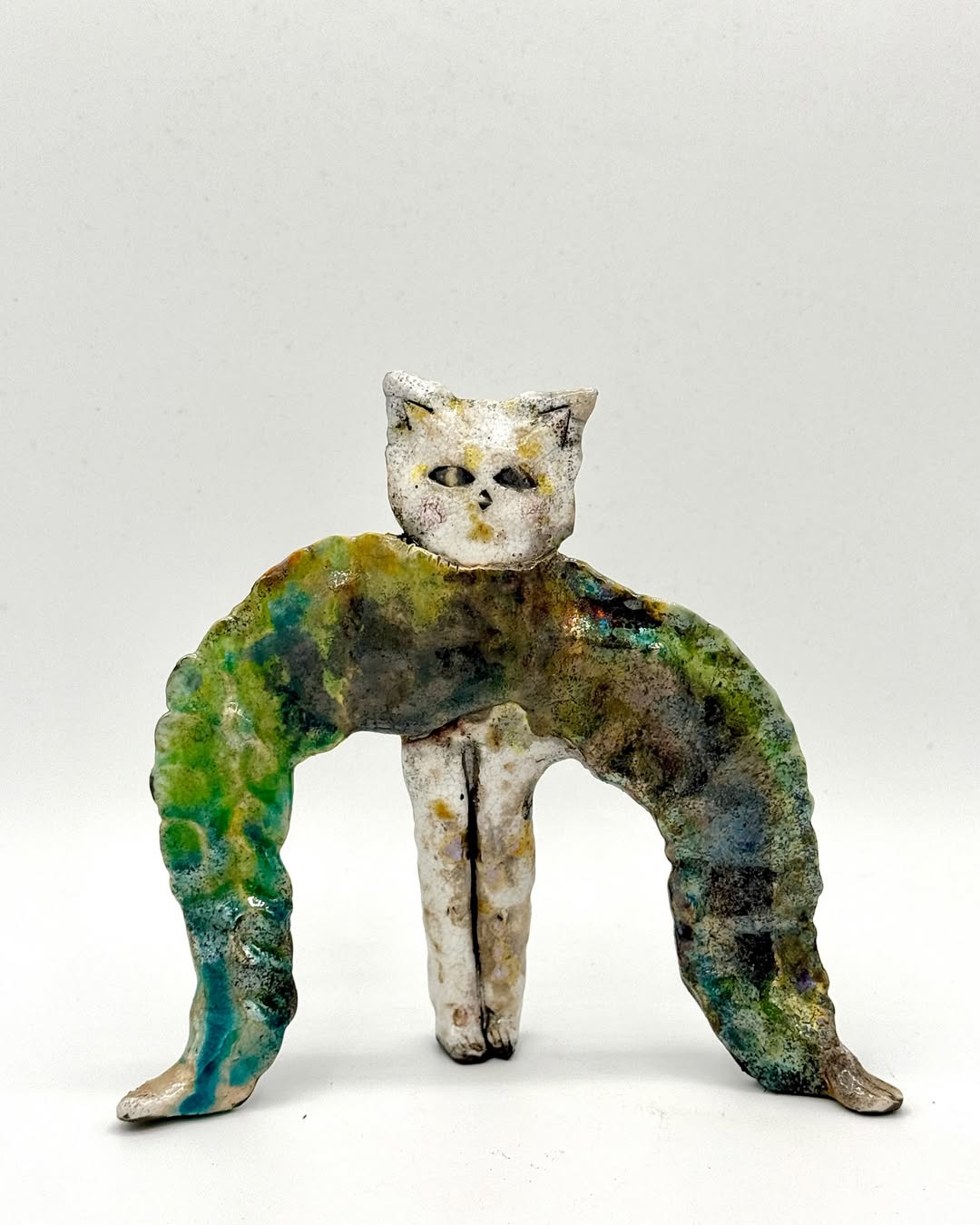
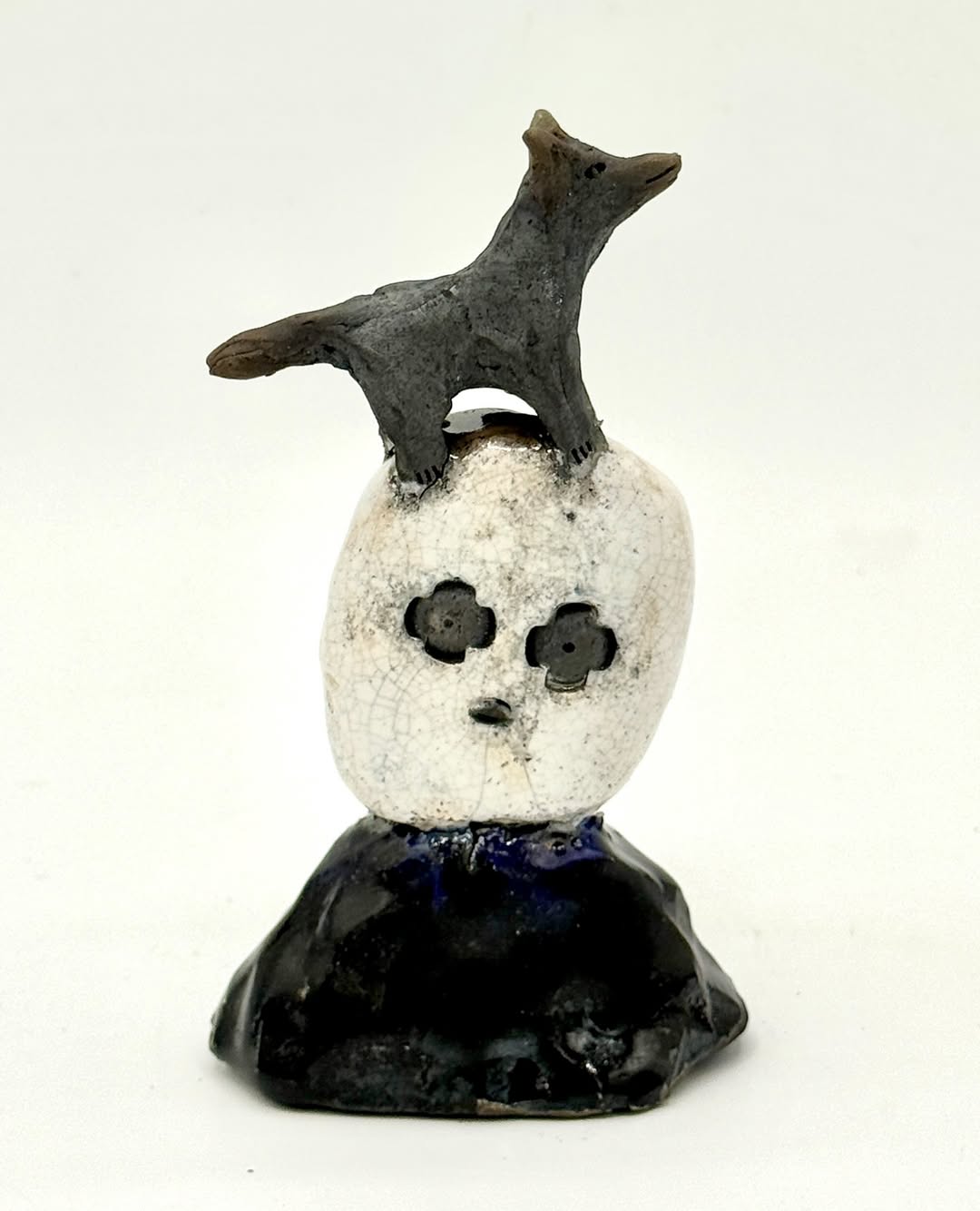
A quiet guardian suspended between dream and ritual, where tenderness, memory, and imagination quietly converge.
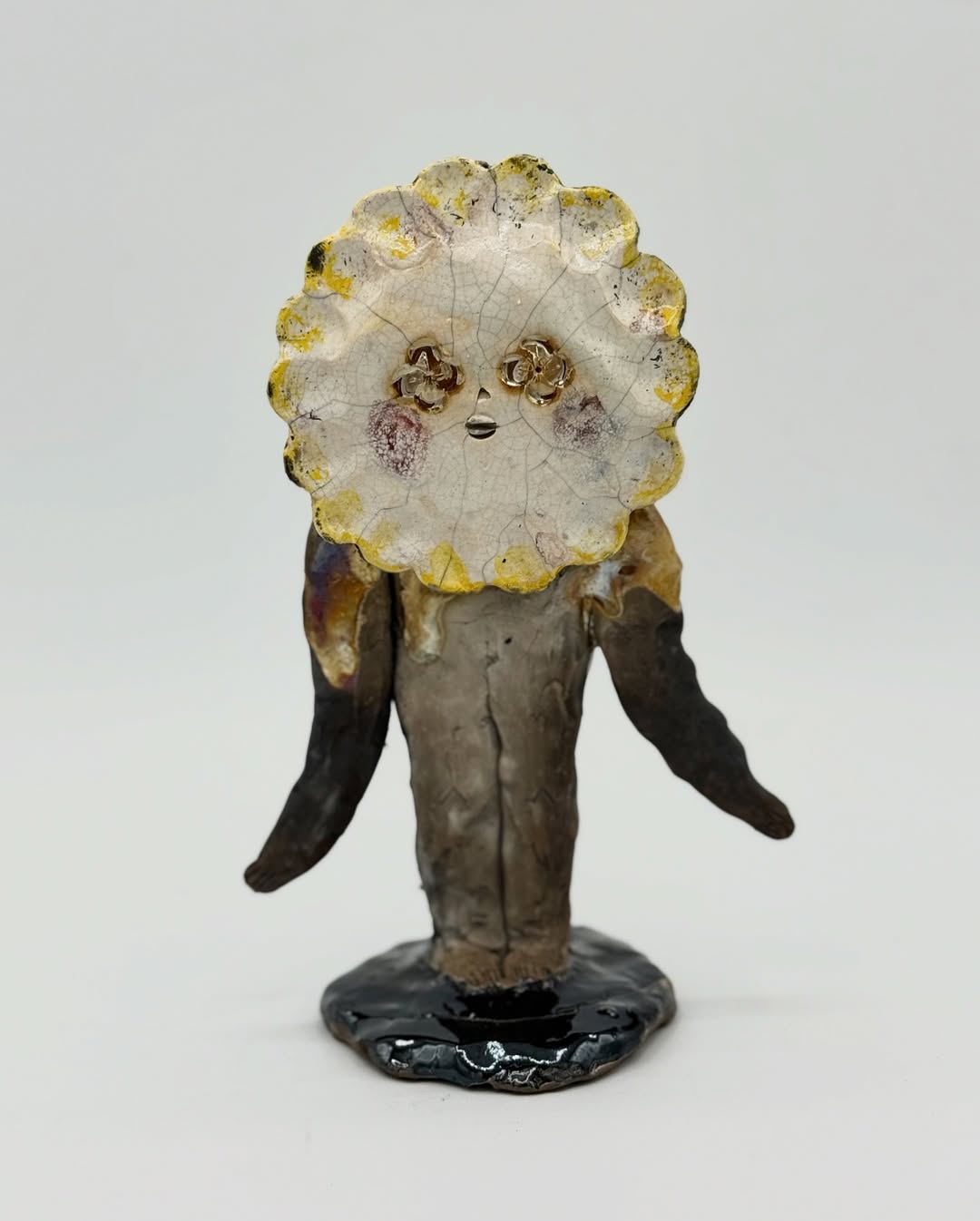
Perhaps we never stopped creating small altars for ourselves.
A bowl placed always in the same corner. A photograph near a doorway. A ceramic figure encountered each morning without fully knowing why.
Small gestures that quietly shape the emotional architecture of home.
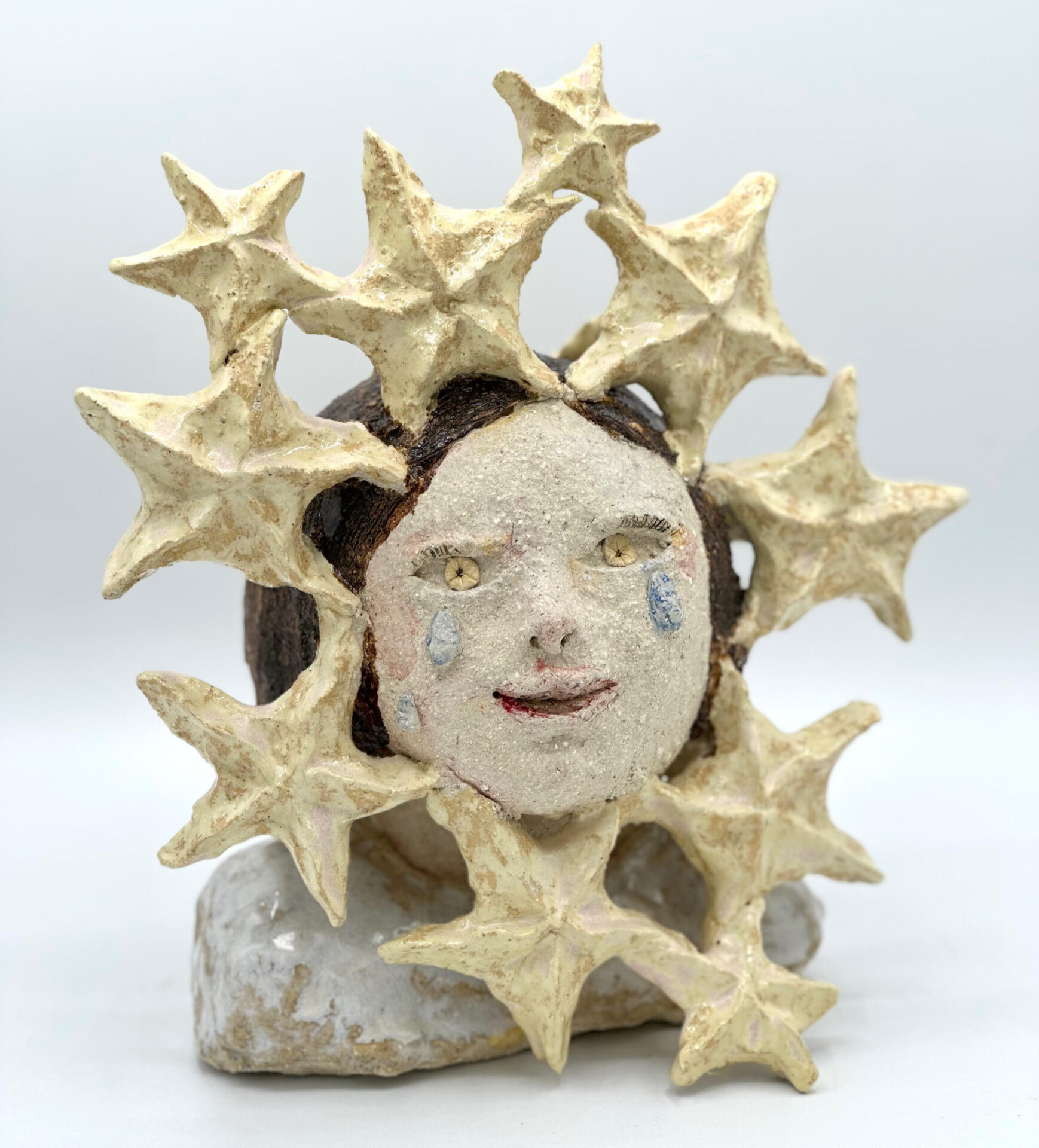
A celestial presence where fragility and wonder meet. Carrying traces of ritual, imagination, and the emotional language of dreams.
The Tenderness of Making
There is a distinct warmth in the world that Nuria creates.
Not sentimentality, nor nostalgia, but a gentler way of approaching form. Her sculptures often carry traces of humour, expressions that feel both strange and familiar. They seem to exist somewhere between imagination and memory: magical, yet deeply human.
Yet Nuria speaks about this emotional quality instinctively rather than intentionally.
“I work in a very intuitive way,” she says. “I let the forms appear without forcing them too much. Humor and tenderness emerge naturally during the process — it is my way of approaching them.”
Intuition shapes nearly every aspect of her practice.
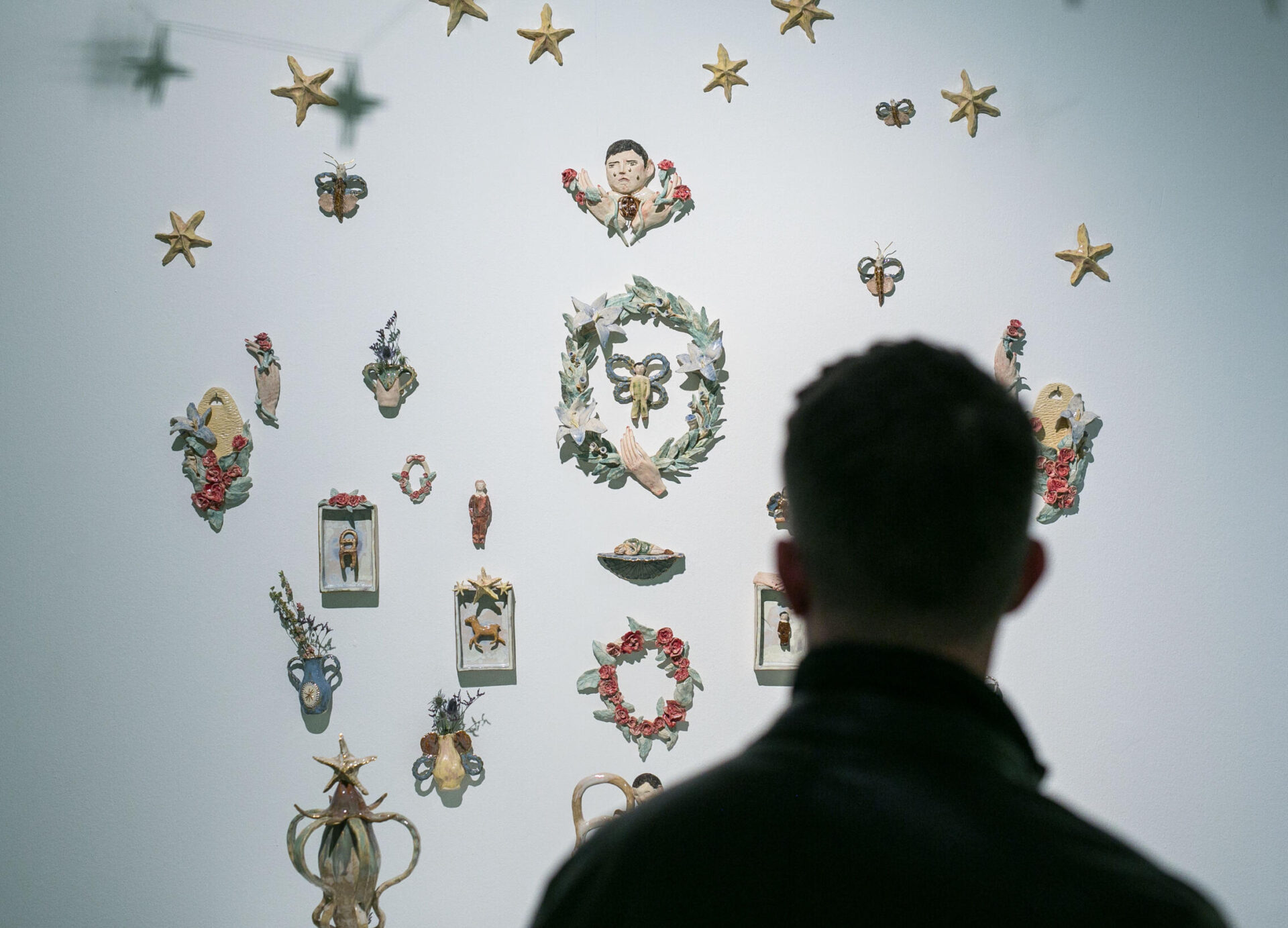
An intimate constellation of symbols, gestures, and fragile presences. Where devotion, memory, and everyday wonder quietly take shape.
In Casa Chamota, forms rarely arrive fully resolved. They emerge through experimentation, patience, and openness to uncertainty. There is no rigid formula, no insistence on perfection — only trust in process.
“I trust the process and let myself be carried by it,” she reflects. “I enjoy new challenges, trying materials, techniques, and new ways of doing things because they open paths for me.”
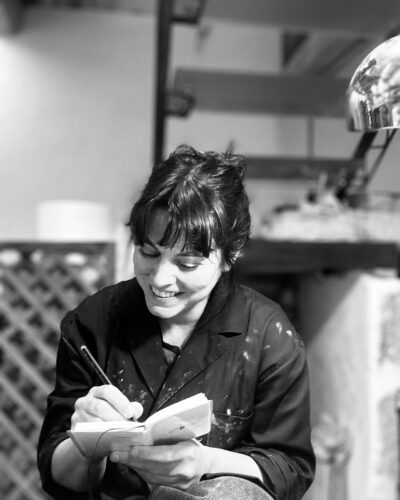
She draws, paints, writes, and fills notebooks with fragments. When moments of doubt arrive, she returns to them, following loose threads until something begins to move again.
Perhaps this explains why her work feels alive.
Nothing feels overly resolved. Slight asymmetries and unexpected gestures allow her sculptures to retain traces of becoming.
If intuition shapes the language of her work, care forms its emotional foundation.
When speaking about motherhood, Nuria becomes especially candid. She describes it not romantically, but as an ongoing tension — one that reshapes time itself.
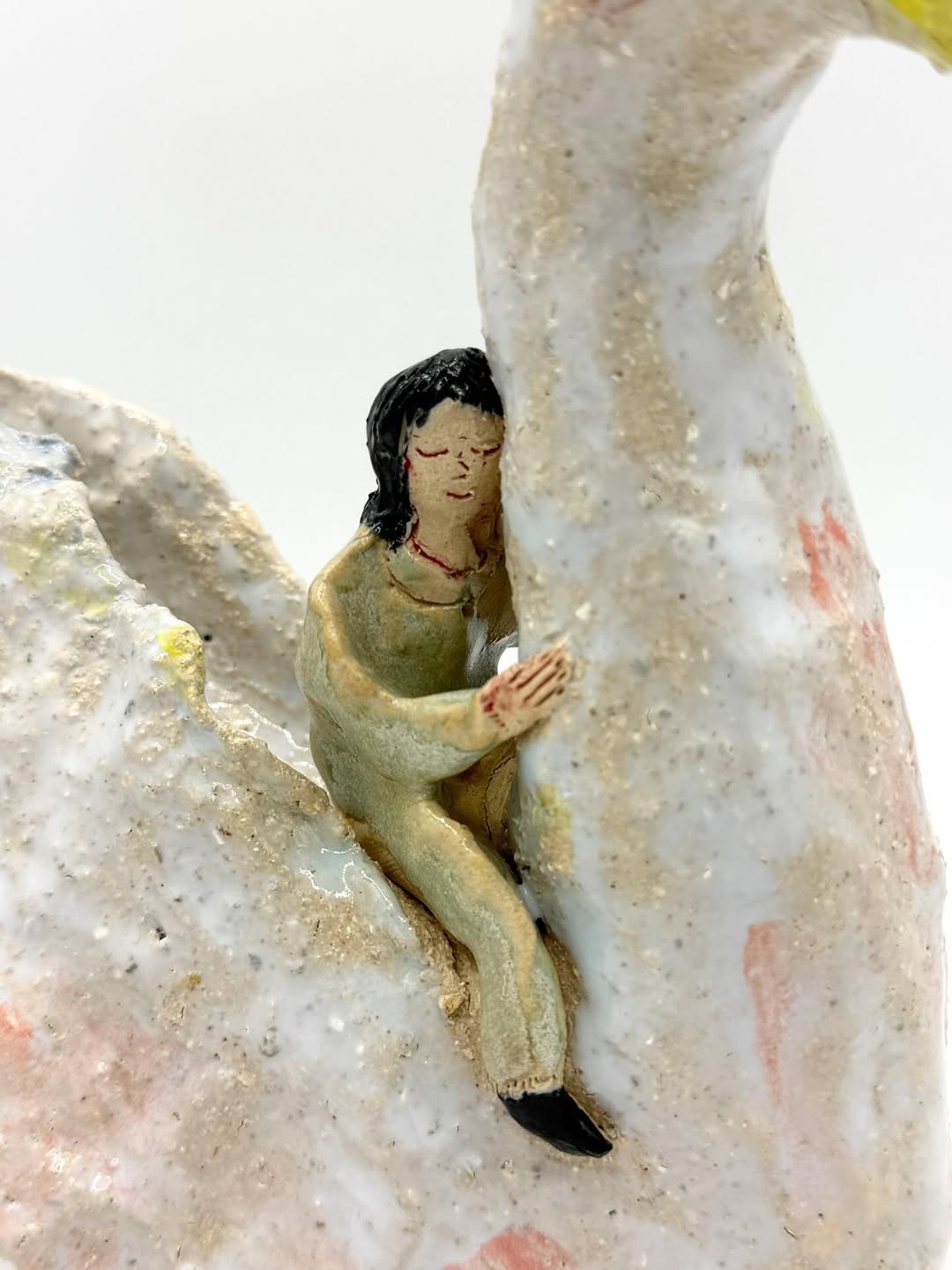
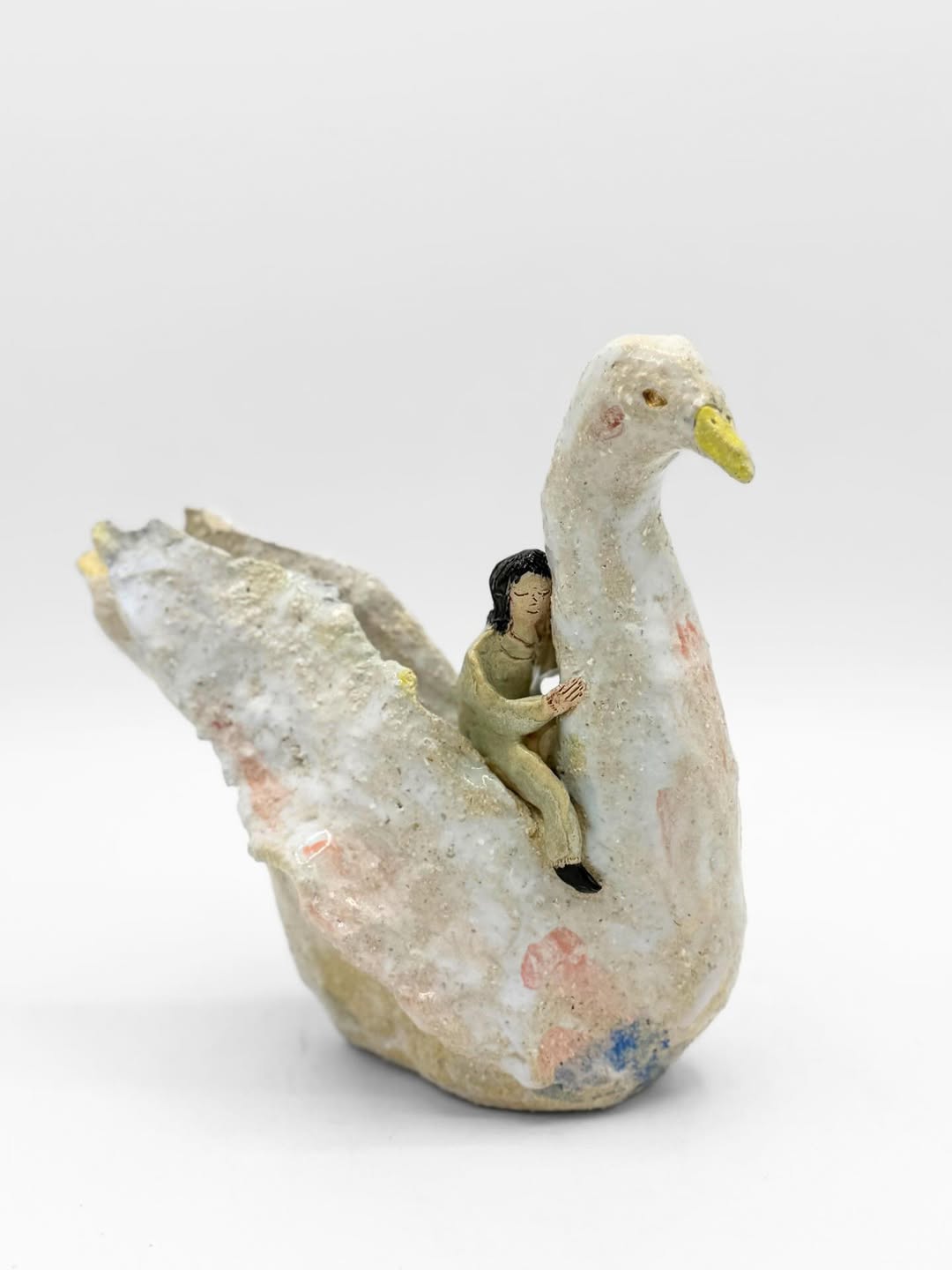
Un Viaje. A quiet moment of companionship, where care, trust, and the tenderness of imagined worlds unfold through a shared journey.
“Being a mother and an artist is a constant tension,” she says. “Care requires real time, sustained attention, and presence, and that time is often incompatible with many of the demands of an artistic career.”
Creative work changes when time becomes fragmented, when attention is shared, when ambition must coexist with responsibility.
Yet motherhood also emerges as a source of transformation.
“I enjoy my time with them deeply,” she says of her children. “It is very inspiring. They nourish me and remind me of how sensitive, fragile, and at the same time powerful childhood is.”
The sensitivity that runs through her work feels inseparable from this experience of care.
When asked what she hopes people might feel while living with her work, Nuria’s answer returns us gently to where everything began:
“I would like them to feel closeness and curiosity. That the pieces accompany them and invite them to imagine, to pause. That they connect with them, giving them new meanings.”
Perhaps this is the invitation at the heart of her practice:
to live alongside objects that gather meaning slowly,
to remain open to imagination,
and to remember that not everything essential needs to announce itself in order to remain present.