Designers (24)
Close
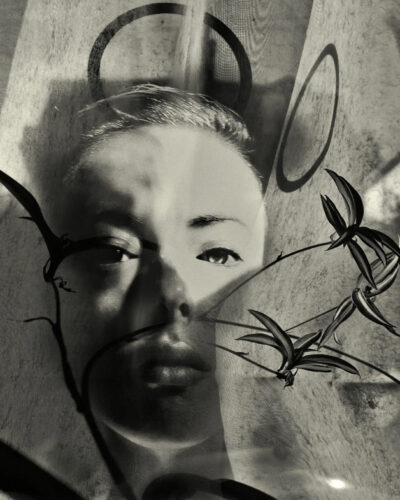
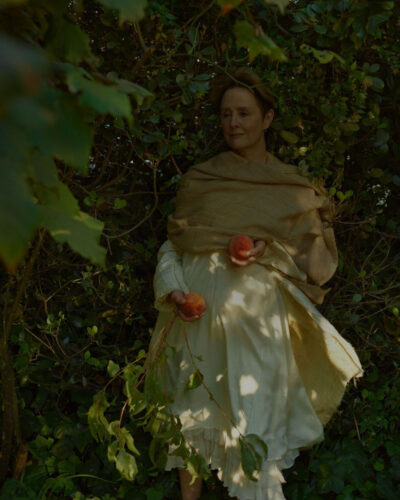
Clément Vayssières speaks about photography as if it were less a practice and more a state of being, an atonement to what is just about to happen or what has only just passed. His images hold that sliver of time in suspension, letting it stretch, inviting the viewer to linger in it.
“I like when a photograph suggests that something has just occurred or is about to occur. It’s not about action in the obvious sense. It’s about hinting at a narrative beyond the frame.”
Raised in southern France, he first encountered photography as a teenager, borrowing his father’s old film camera and teaching himself through trial and error. What captivated him wasn’t only the ability to record reality, but the realisation that a shift in perspective could transform it entirely. Even then, he understood that a photograph could be both fact and fiction, a document of the world and a personal translation of it. Around the same time, he was consumed by cinema, watching five or six films a day. “I didn’t realise it then, but I was training my sense of rhythm and composition just by watching.”

Clément Vayssiere Archives
His work is anchored in atmosphere. Before lifting his camera, he will often spend long stretches in a space, absorbing its qualities. Sometimes it is the change in the air before a storm, or the way a shadow falls across a wall in late afternoon. “These moments are small, but they can carry so much weight. When I finally make the image, I want it to hold that exact sensation.”
This attentiveness to place led him to photograph Rome’s EUR district, a vast, rationalist architectural project with deep political history. “The scale is monumental, the geometry is perfect, and yet it feels slightly surreal. I wanted to capture that tension between beauty and the strange atmosphere that lingers there.”
Over the years, Vayssières has moved fluidly between rural and urban environments, each leaving its imprint on his way of seeing. The countryside teaches him patience, to notice the gradual shifts of the seasons, to work with textures and silences. The city, by contrast, sharpens his instinct for rhythm, structure, and serendipity. Moving between the two keeps his eye alert, preventing the comfort of habit. He often returns to tactile impressions: the rough weave of linen, the granular feel of sand, the way different materials catch or absorb light. “Even if these elements aren’t literally in the frame, I think about them when I’m composing. They change the way I perceive the scene.”

Clément Vayssiere Archives

Clément Vayssiere Archives

Clément Vayssiere Archives
Minimalism runs through his photographs, but it is never emptiness. Within pared-back compositions, layers emerge: a muted reflection, the echo of a shape, a colour that vibrates against another. He is ruthless in his editing, removing anything that does not serve the mood or the idea. “Knowing when to stop is as important as knowing when to begin.” The result is imagery that appears simple at first glance but rewards a slower reading.
He draws from many influences: Irving Penn, Wolfgang Tillmans, Gregory Crewdson, François Halard, Morandi, Scarpa, Barragán, Wright, Niemeyer, Ando, and filmmakers like Kubrick, Herzog, Fincher, Greenaway, Anderson. “Photography is in dialogue with everything else. It’s not an isolated practice.”

Clément Vayssiere Archives

Clément Vayssiere Archives
“My process begins with an observation, a fragment of colour, the geometry of a building, the curve of a hand. I prefer to take fewer frames but with more attention.” Editing is deliberate and unhurried. “I let images rest before deciding their place. Printing is the final act of creation. Paper, scale, and texture determine how the photograph will live in the world.”
While much of his work is solitary, he values collaboration. Exchanges with designers, editors, and artisans open unexpected paths, though he always returns to the quiet of working alone.
Memory runs through his photographs. “I’m drawn to ambiguity. A photograph can point to a moment but still leave space for the viewer’s own memories to enter.”

Clément Vayssiere Archives
Looking ahead, he hopes to expand beyond the frame. “Larger-scale prints, installations, and sequences of images could allow viewers to inhabit the work physically.” He would also love to photograph scientific research facilities, observatories, and ancient sites. “There’s something about spaces designed for knowledge or built to last centuries. They hold time differently.”
For Vayssières, photography is not a pursuit of definitive answers but a way of asking questions about time, about perception, about what remains unseen. His images, quiet but insistent, do not demand immediate understanding. They invite the pause, the second look, the act of returning.
“If someone spends a little longer with one of my photographs, that’s enough. It means the image has found its place in their mind.”

Clément Vayssiere Archives

Clément Vayssiere Archives