Designers (24)
Close
In Todos Santos, dusk arrives like a soft unveiling. The light turns honeyed, slipping across palm leaves and adobe walls until the town glows in hues of amber and rose. Just beyond the centre, in La Cachora — a colonia bordered by farms and mango groves, yet only a few hundred meters from the Pacific — a gathering begins. The air is threaded with the scent of bread, carried by the salt wind, guiding guests toward a house where the evening will unfold.
It is here, in this quiet dwelling between farmland and sea, that Luis Ayala takes his place at the hearth.
Luis is not a chef in the conventional sense, though he has the precision of one. He is not a baker in the narrowest definition, though his bread holds the patience of years. What he creates is more elusive: a practice rooted in memory, ritual, and belonging. His kitchen for this evening, improvised within a hidden haven in La Cachora, veiled by gardens and brushed by the ocean breeze, is less a workplace than a threshold between past and present.
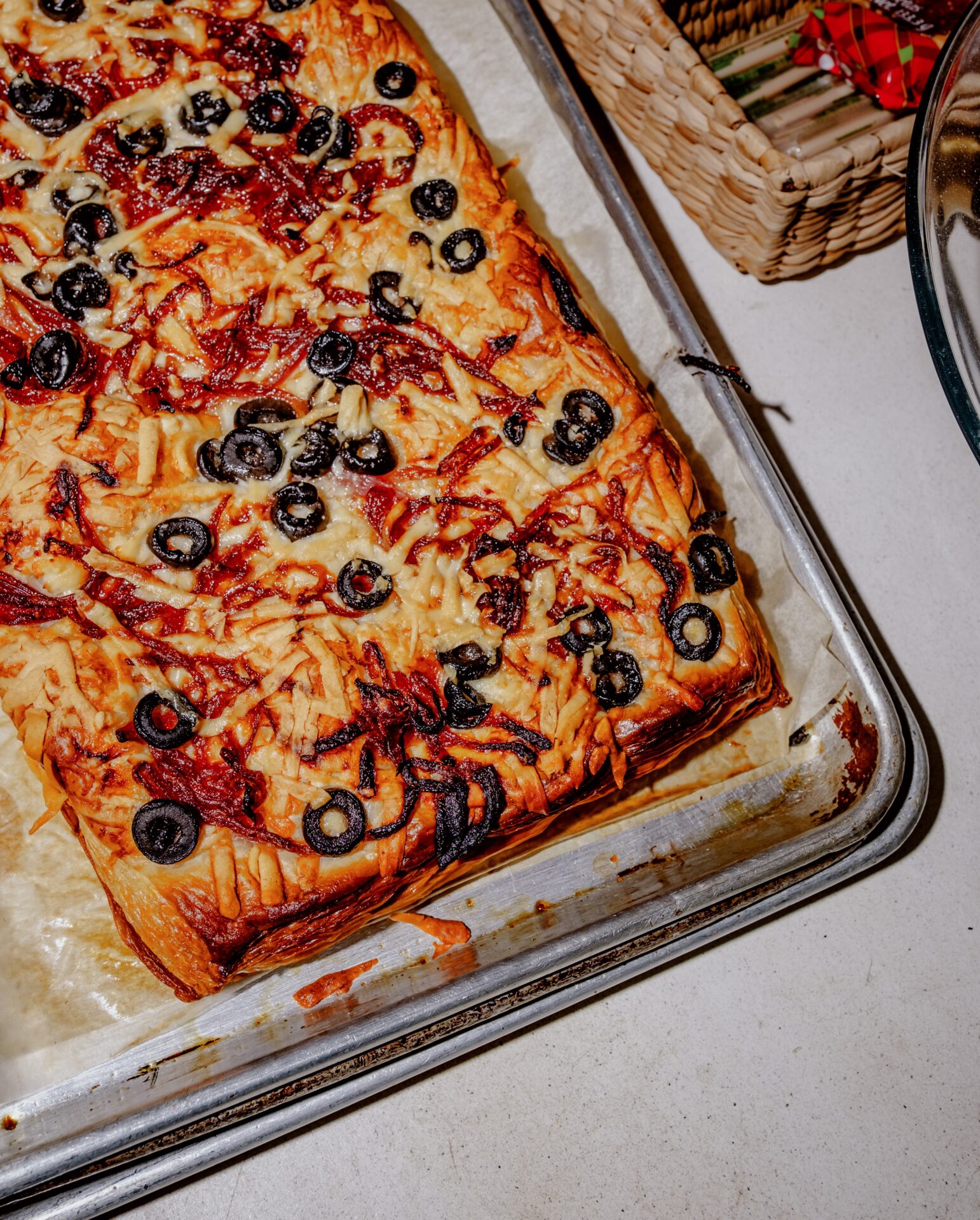
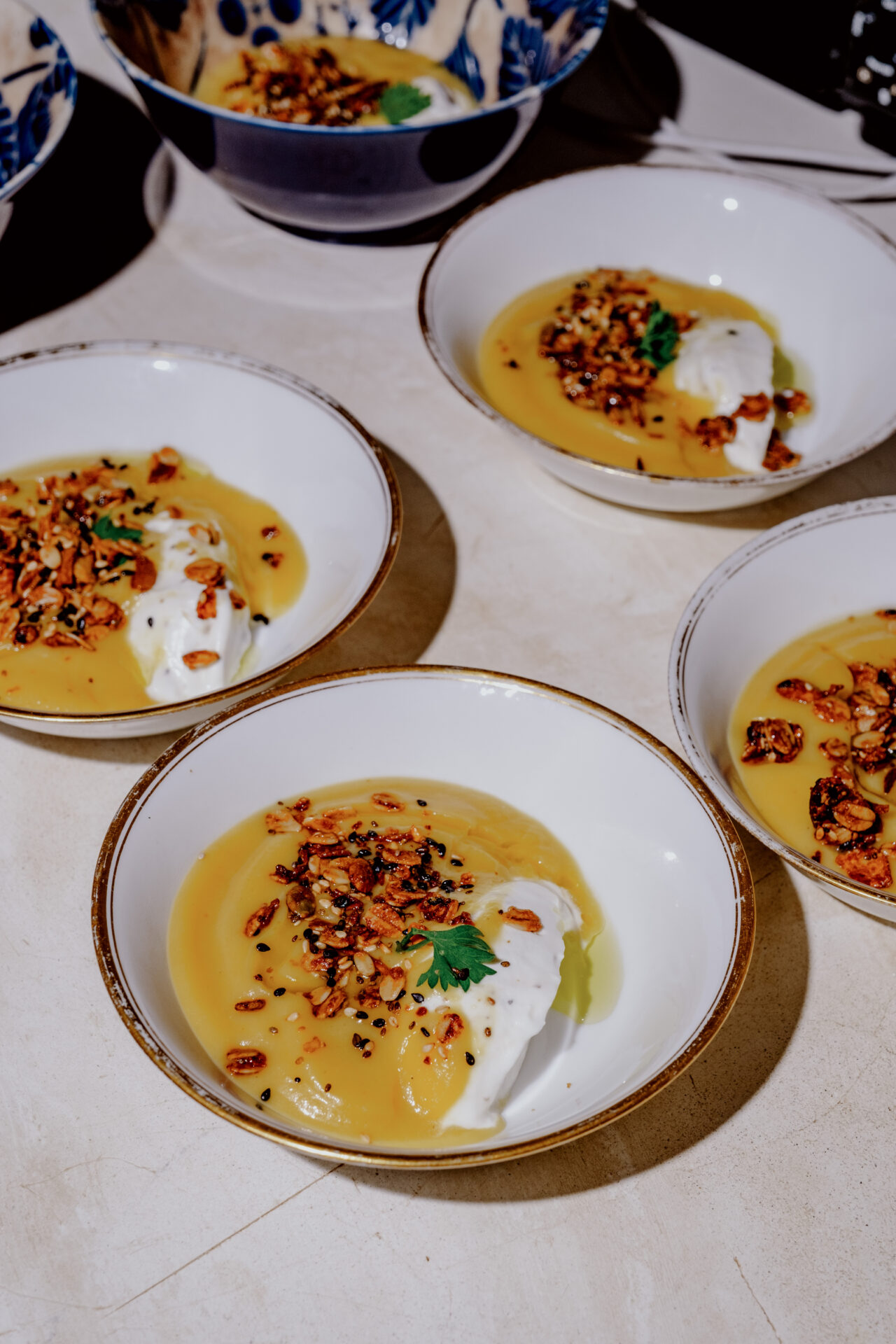
Golden focaccia and individual bowls prepared for service. Simple, generous dishes gathered around the table.
“I learned to cook by watching,” he says, though his gestures suggest more than observation. The way he folds dough, dusts flour across wood, or turns herbs gently in oil carries the weight of repetition — the kind learned around family tables, among neighbours, in markets alive with colour and noise. Cooking for Luis is not a performance but an inheritance, continuously reinterpreted.
Guests arrive slowly, crossing the garden where evening air mingles with the scent of earth after a long sun. Some come from nearby fields, others from the town centre, still others from farther afield. The property itself, with its openness and proximity to the ocean, feels both sheltered and porous. A fitting stage for what is about to unfold.
There is no menu handed out, no order placed. Dishes appear in rhythm with conversation: loaves still warm from the oven; vegetables ripened under desert sun, charred until they release their sweetness; fish from nearby waters, seasoned simply, carrying the salt of the sea. Every plate feels like a fragment of the place itself. Not just Todos Santos, but specifically La Cachora, where farming and ocean life meet in delicate balance.
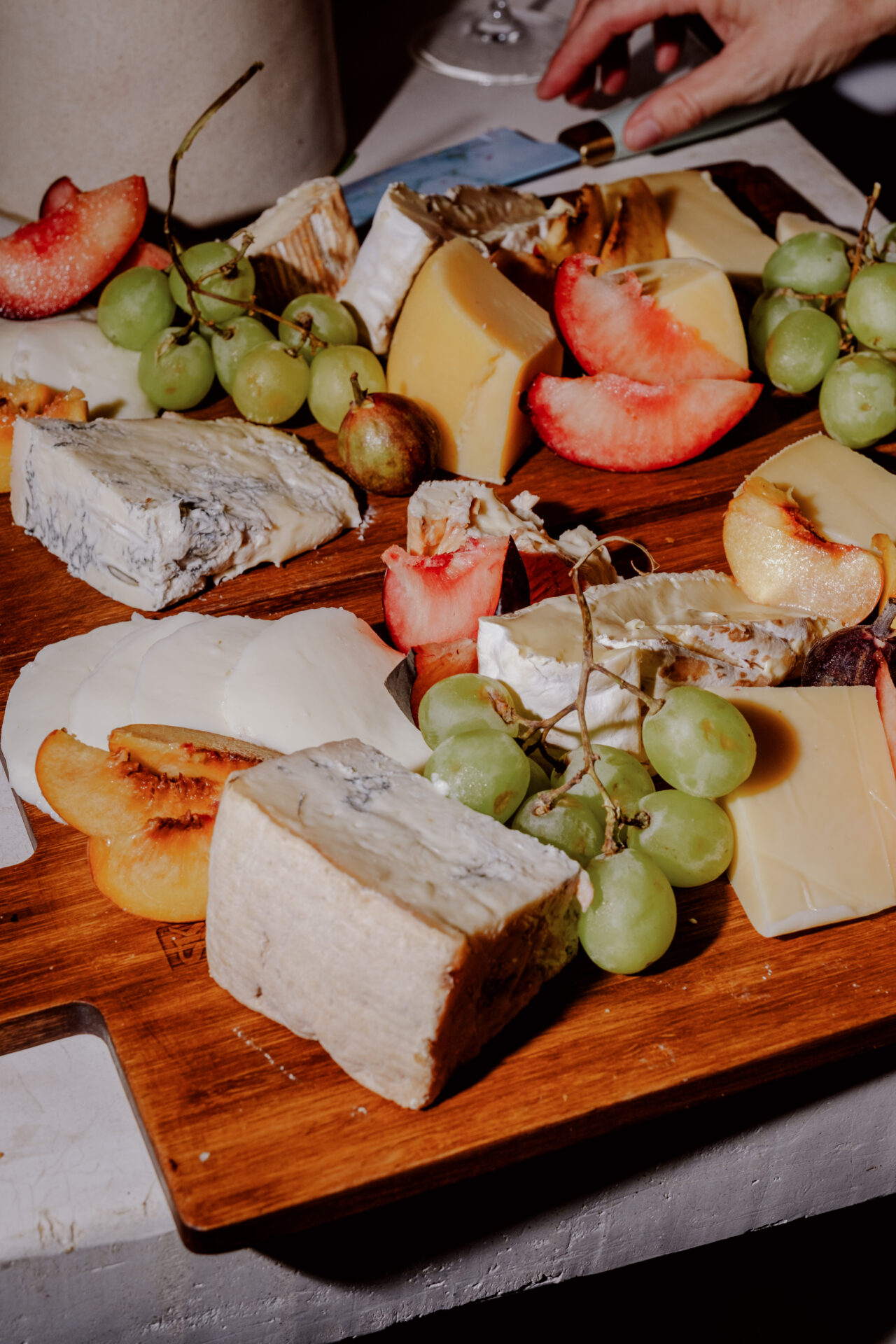
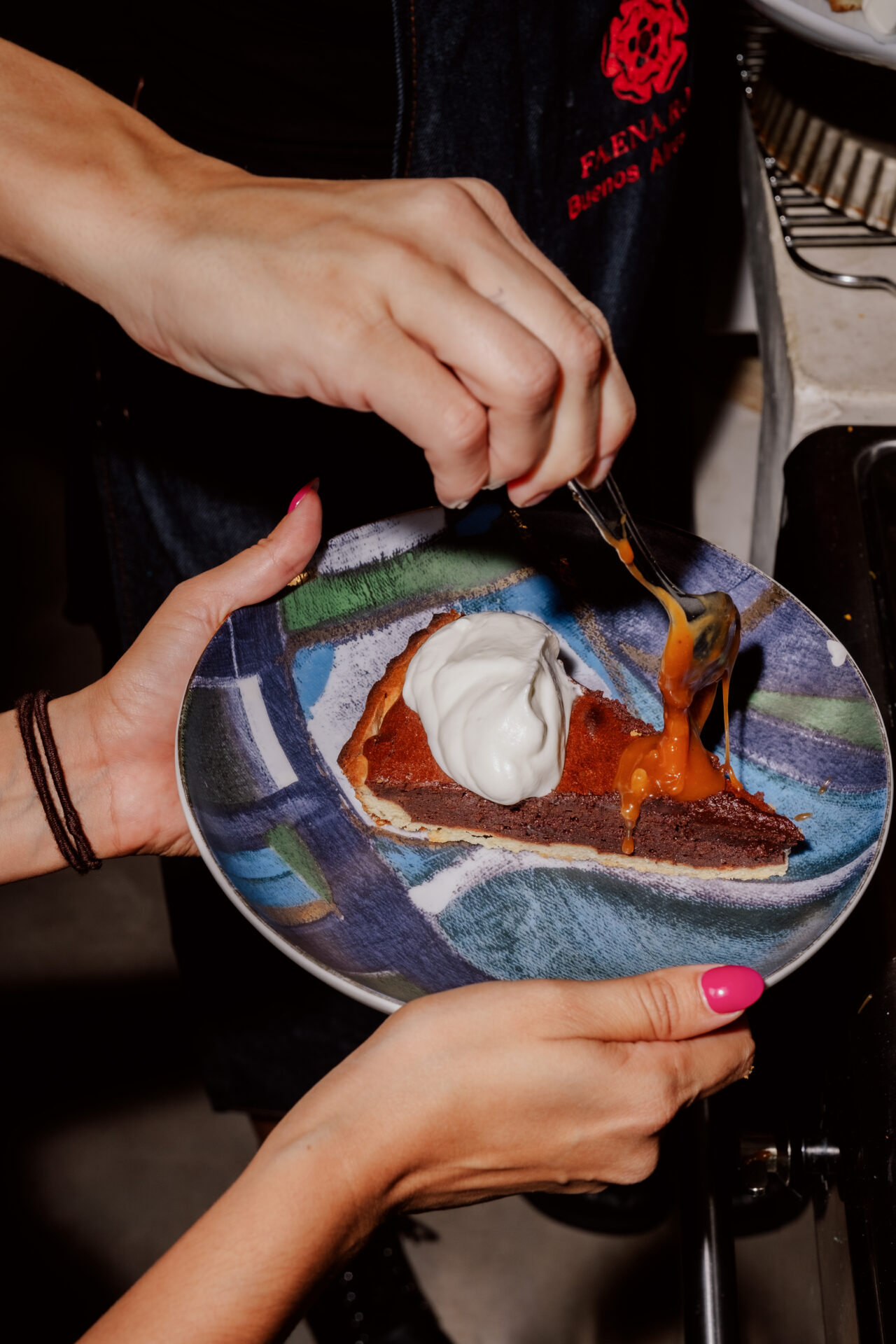
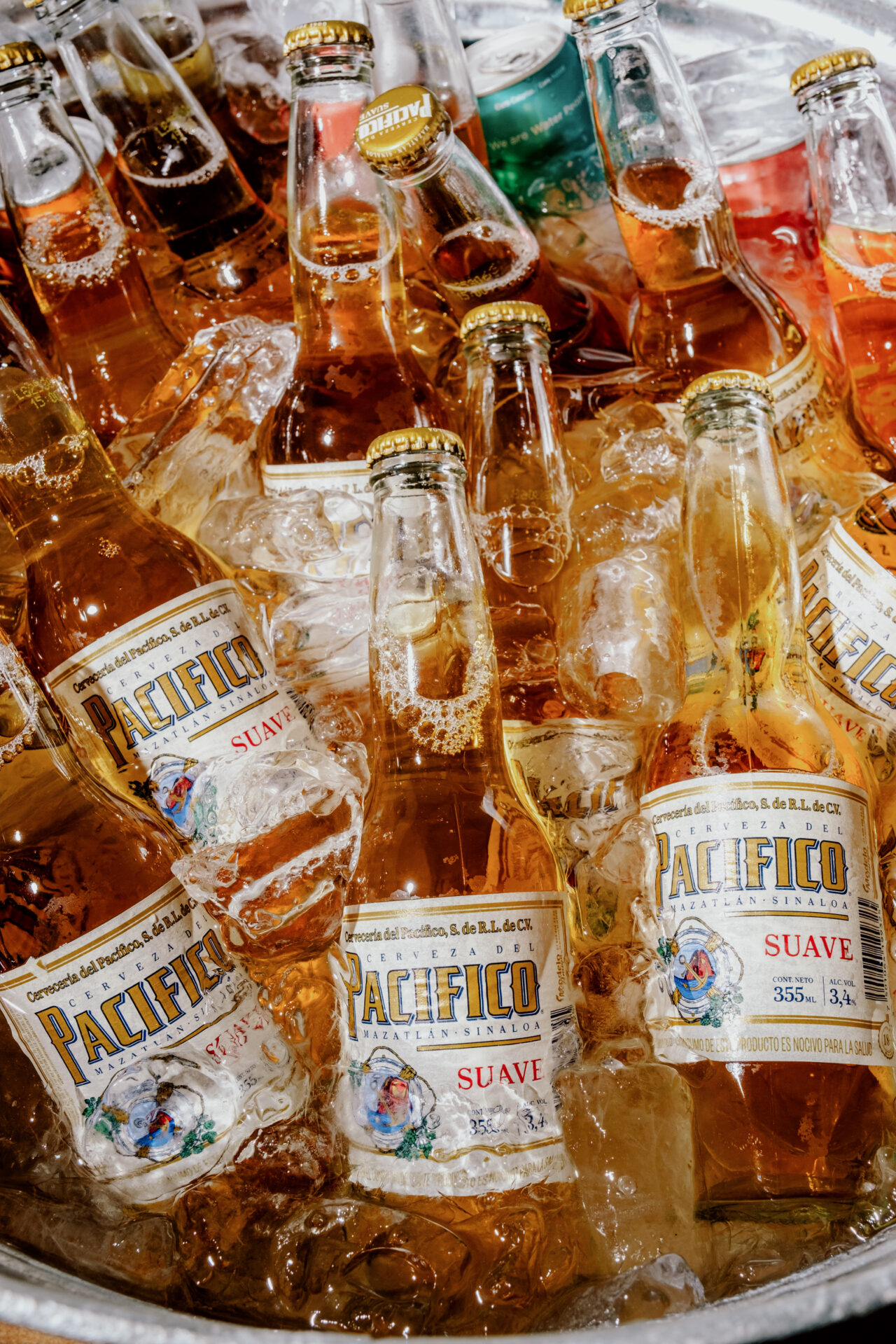
Cheese, dessert and cold Pacifico beers. The evening unfolding through generous, unfussy plates and drinks shared at the table.
The colonia is more than backdrop. It becomes an ingredient in the experience. Here, where rows of crops stretch toward the horizon and sea air drifts through mango trees, Luis’s cooking acquires a resonance. It mirrors the duality of this place; rustic yet refined, rooted yet open, quiet yet celebratory.
Around the long table, the atmosphere deepens. The guests are a mosaic: artists, farmers, surfers, expatriates, locals who have known these streets for generations. Some speak of the sea, others of the land, others of journeys that led them here. The house becomes more than a setting. It becomes a vessel for exchange, food dissolving barriers, knitting together voices that might never have otherwise met.
There are bursts of laughter, moments of attentive silence, times when the clatter of cutlery gives way to a hush as flavour is recognized. Bread torn by hand. Olive oil catching the glow of a candle. A glass of wine passed from one end of the table to the other. In these gestures, the night gathers its rhythm.
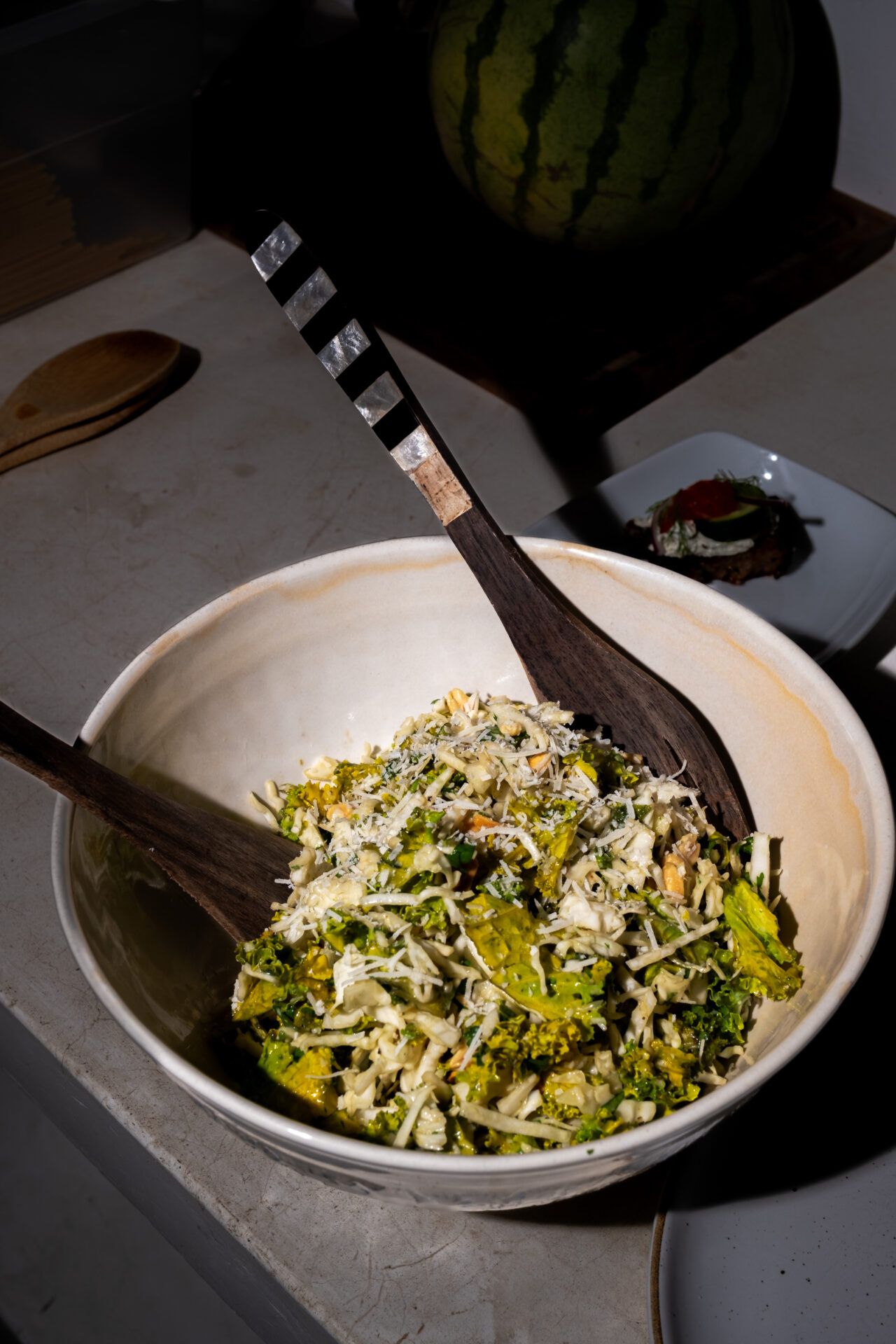
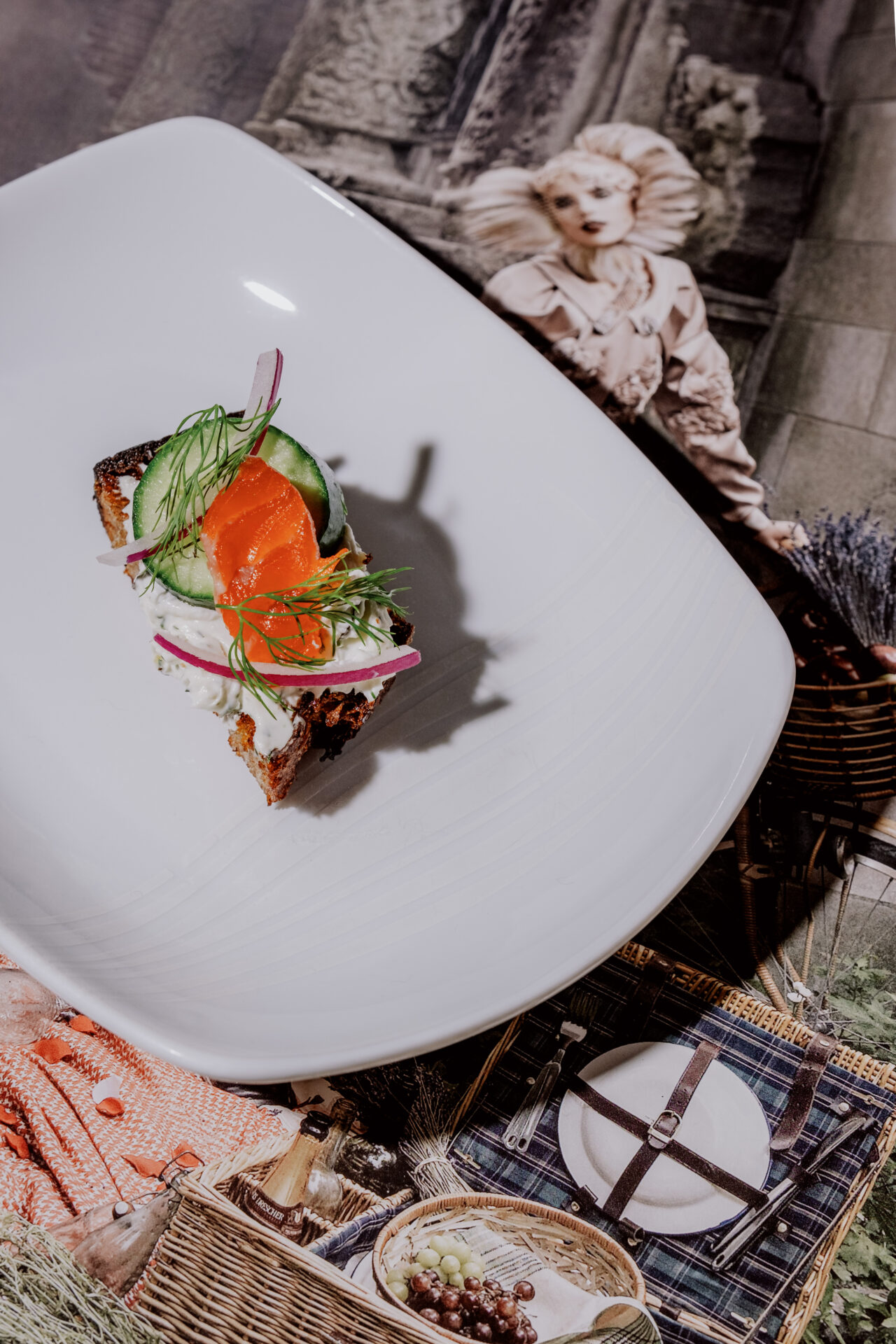
A generous salad and delicate salmon bites, prepared simply for sharing at the table.
Luis himself remains calm at the centre, never hurried, never strained. His movements are deliberate, assured, as though each step in the kitchen has been rehearsed a hundred times yet always remains alive to variation. He does not orchestrate in the sense of control; he allows. The evening unfolds as naturally as the desert twilight outside, subtle and inevitable.
Later, when the final dish is cleared and the last glass poured, the house falls into a quieter state. Guests linger in the garden, reluctant to step back into the darkened colonia dirt roads. The Pacific breathes just beyond, its tide pulling against the silence of the fields. What remains is more than memory of flavour. It is the echo of laughter, the warmth of strangers becoming companions, the sense of a night that will not be replicated but will always be remembered.
Luis Ayala’s work is not about innovation for its own sake, nor about fidelity to tradition. It is about the experience itself and what it means to share, to belong, to sit together and let food become a language. To sit at his table is to understand that food, at its most essential, is not only nourishment but connection. It lingers beyond the meal, in the body and in the mind, a reminder that the truest ingredient is experience itself.
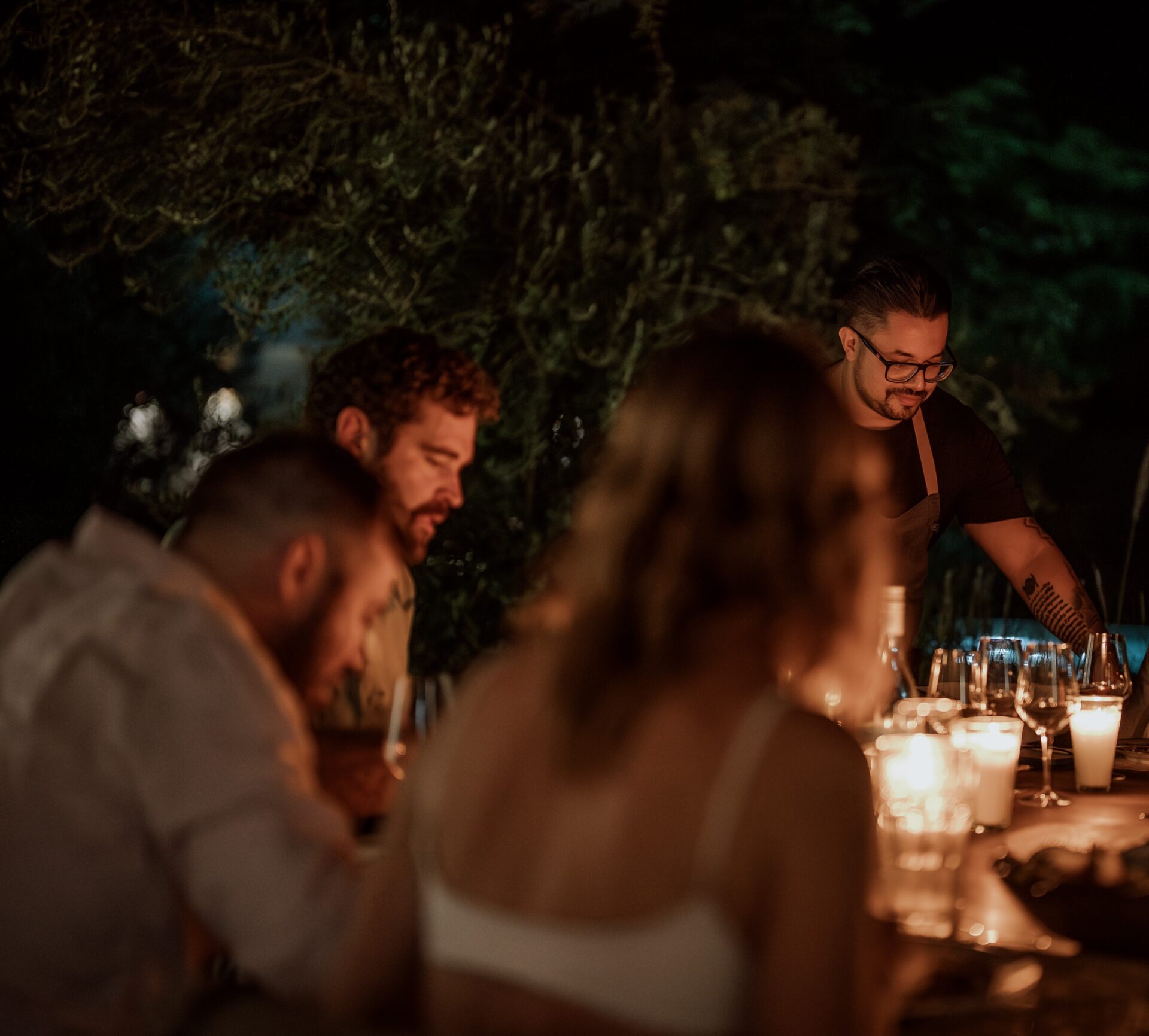
Luis Ayala at the table as dinner unfolds in the garden after dark.